No. 48864
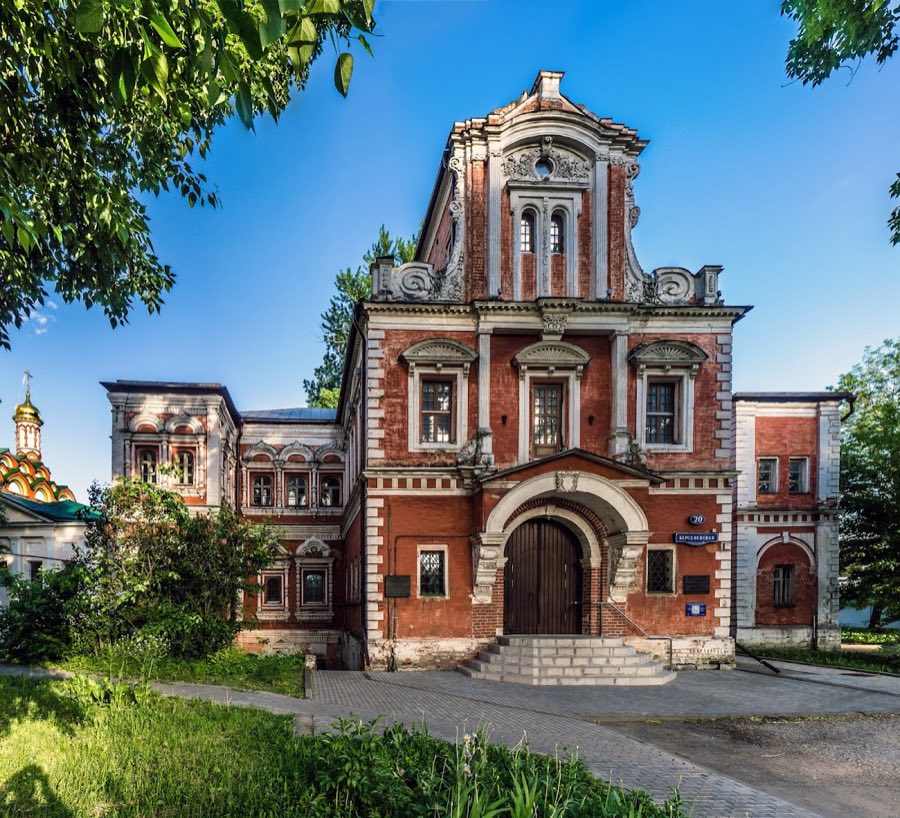
Averkiy Kirillov Palace
Russia
PalaceIntact17th century
No. 24950
Palace · Russia
No. 24950 · 55.782 N, 37.695 E
Quick summary
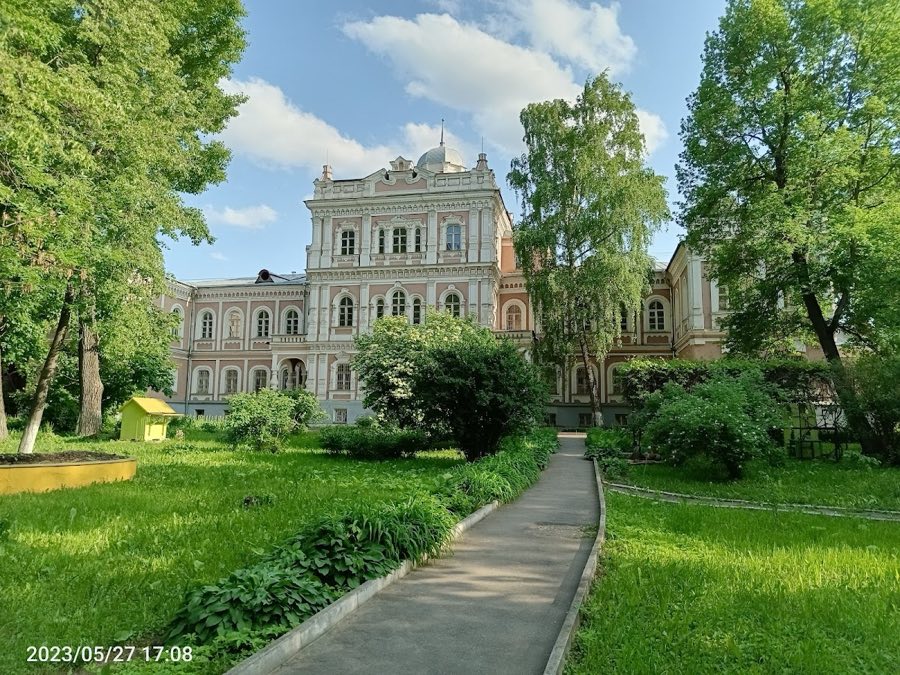
Elizabeth Palace, Sokolniki is a palace in Sokolniki, Russia with origins associated with the 18th century.
See all castles in RussiaThe Elizabeth of Russia palace in Sokolniki, Moscow, is an 18th-century royal residence erected under the Romanov household and associated with the architect B. F. Rastrelli. The site stands where the village of Pokrovskoye-Rubtsovo once lay and where the Rybinka River flowed, and it became notable when Grand Duchess Elizabeth Petrovna took up residence while Anna Ioannovna was on the throne, giving the estate a direct connection to the imperial court.
The plot was held in the 16th century by Protasy Vasilyevich Yuryev before passing into Romanov ownership, where a wooden manor occupied the ground. In 1737 that palace suffered severe damage in a fire. Two years later, a new shore-facing palace was constructed, and in 1752 a pleasure park was laid out around the house. A house church dedicated to the Resurrection was built as part of the complex and remained linked to the residence until it was officially abolished in 1790. After Elizabeth’s death the estate declined from its former use and prestige.
By the late 19th century the property changed purpose. In 1872 the building and grounds were transferred to the Pokrov Community of Sisters of Mercy and adapted to serve social needs; the community ran a school, an orphanage and shelter, a hospital, and a pharmacy, and the main house was substantially altered during that conversion. In 1920 the sisters’ community was shut down and the former palace rooms were subdivided into communal apartments, reflecting wider social and political changes of the period. In 1980 the former pond was filled and Gastello Street was cut through the area. In the 21st century the site is occupied by the State Research Institute of Restoration.
The ensemble preserves the footprint of an eighteenth-century palatial compound dominated by a single-storey main block that contained a lofty reception space rising through the house as a two-storey high hall. The earlier phase of occupation included a wooden palace on the site, reflecting the estate’s origins before the stone rebuilding of the mid-1700s. The later eighteenth-century plan placed the principal building on the shore of the local water feature, with parkland established nearby in 1752.
A church dedicated to the Resurrection stood attached to the palace building and functioned as the residence’s chapel until its formal abolition in 1790. The palace’s principal interior decoration was executed in Japanese and Chinese motifs during the eighteenth-century refurbishment, but those interior schemes have not survived. The house underwent substantial alteration when it was adapted for the Pokrov Community of Sisters of Mercy in 1872, and these nineteenth-century changes were later overlaid when the premises were divided into communal apartments from 1920 onward.
Physical traces therefore reflect successive reuses: the tall reception hall as a surviving spatial element of the eighteenth-century layout, the attachment point of the former chapel, and structural fabric that incorporates both the older wooden phase and later masonry rebuilds. The former water feature that defined the palace’s shore setting was filled in 1980 and covered when Gastello Street was laid through the site. Today the complex remains in use by the State Research Institute of Restoration, its appearance carrying layers of royal, religious, charitable, and communal modifications.
No. 48864
No. 98479

No. 93876
No. 13368
Comments
Comments for Elizabeth Palace, Sokolniki will require a verified account before posting.
We'll send a verification link before your first comment is published.