No. 91456
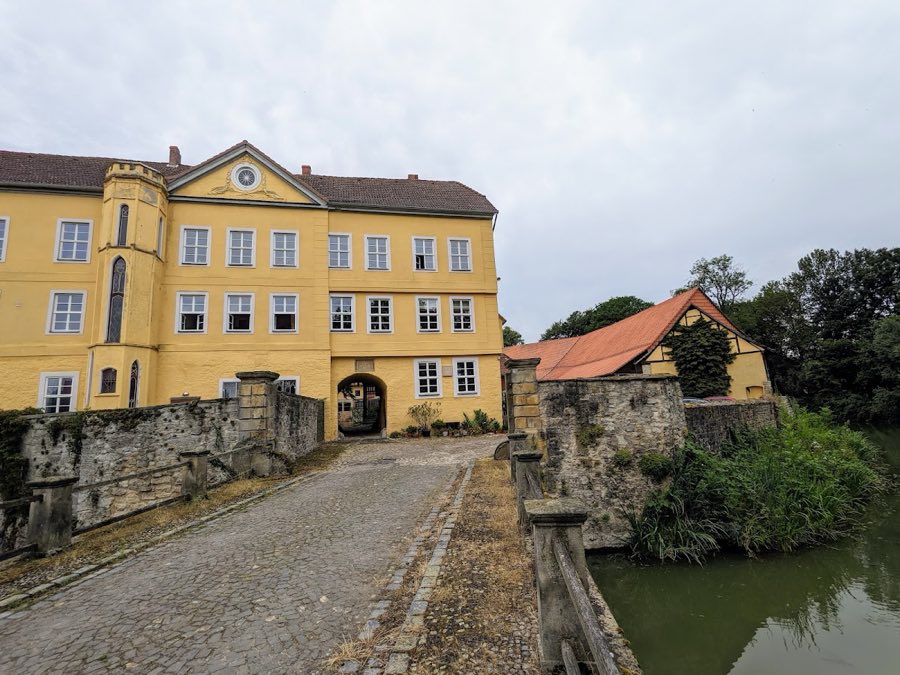
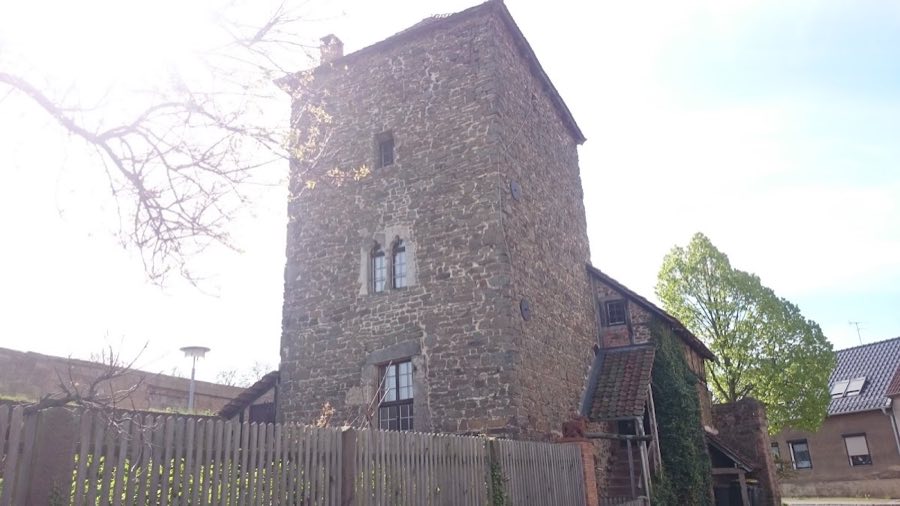
Burg Esbeck
Germany
Manor houseIntact13th century
No. 18741
Castle · Germany
No. 18741 · 52.144 N, 10.920 E
Quick summary
Elmsburg is a castle in Germany with origins associated with the 11th century.
See all castles in GermanyElmsburg is a medieval castle site located near the municipality of Schöningen in present-day Germany. The castle was established in the 11th century on the Elm ridge, a wooded hill range, and occupies a prehistoric ring wall, indicating the strategic significance of the location was recognized long before the medieval period.
The earliest known phase involved a small chapel dating to around the year 1000. By the 11th century, this chapel expanded into a larger Romanesque church. Historical records first mention Elmsburg in the early 13th century when Emperor Otto IV transferred the castle’s church to the nearby Scheverlingenburg monastery in 1213. This gift was altered a few years later when ownership shifted in 1218 to the St. Blasius monastery in Braunschweig. Soon after, in 1221, the castle and its associated lands were granted to the Teutonic Order, a medieval Catholic military order, who established a commandery—a local administrative and religious center—at the site.
During the mid-13th century under Duke Otto the Child, the Teutonic Order expanded its holdings around Elmsburg, acquiring additional forest and agricultural land. However, the limited space within the castle confines led the Order to move the main commandery to Lucklum in 1264. Despite this relocation, a smaller commandery with its own commander remained at Elmsburg until 1318, indicating the site’s continued ecclesiastical and administrative role.
After the 14th century, Elmsburg’s status declined. The castle is last referenced as an Order castle in 1364 before being granted as a feudal estate to the noble family von Ampleben and later passed to private bourgeois owners. A devastating fire in 1572 severely damaged the complex, initiating a period of gradual abandonment. Stones from the ruined castle were repurposed for local building projects and improvements in nearby forest roads, leading to the near-complete disappearance of the structure over time.
Interest in the site revived in the 19th and 20th centuries, with archaeological investigations beginning around 1840. Major excavations between 1959 and 1962 uncovered foundational remains, and a detailed re-excavation in 2018 fully exposed the layout of the medieval church. These findings have clarified much about Elmsburg’s historical development and its role during the medieval period.
Elmsburg occupies an oval area inside a prehistoric ring wall, a large circular earthwork measuring approximately 270 to 300 meters across. This earlier fortification featured an earth rampart reinforced by a surrounding ditch but lacked a stone core, serving as the outer defensive perimeter during medieval times. Within this prehistoric enclosure, the medieval castle itself occupied a smaller oval space between 114 and 137 meters in diameter. It was protected by a rampart to the south, a ditch to the northwest, and steep slopes rising sharply to the northeast.
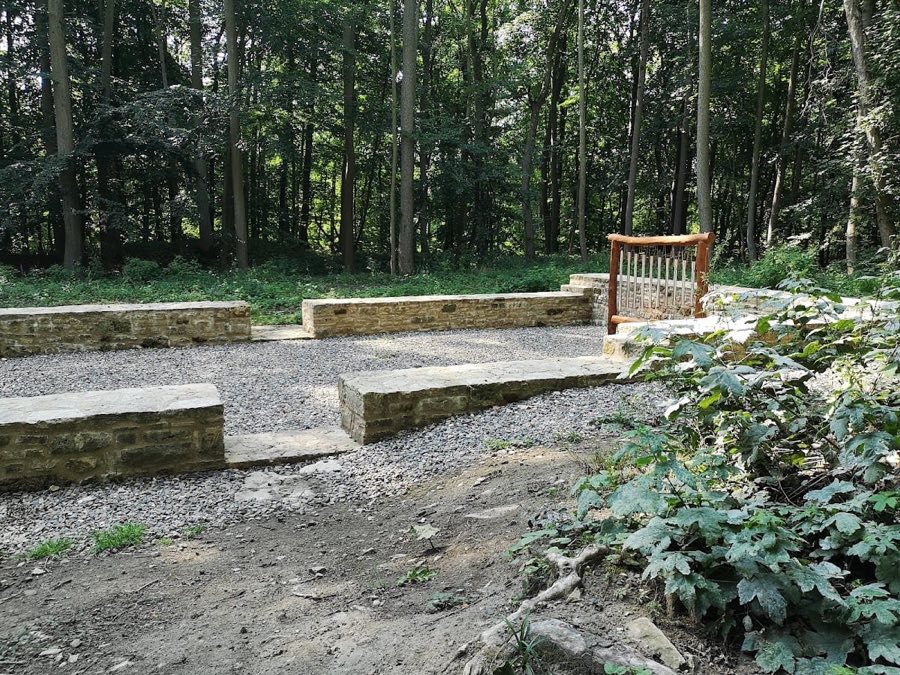
Excavations have revealed the foundations of three successive church buildings standing on the site. The earliest church was a modest, square chapel about eight meters wide and long, dating from around 1000 AD, featuring a semicircular apse, or rounded east end used for the altar. This chapel was expanded in the 11th century into a larger Romanesque church measuring roughly 24 meters long and eight meters wide. This structure included a central nave, the semicircular apse, and two side wings, creating a cruciform shape often seen in medieval church architecture. The walls of this Romanesque church were constructed from locally quarried soft red Keuper sandstone.
In the 13th century, following acquisition by the Teutonic Order, a new church was built largely atop the earlier foundations. This later building utilized Elm limestone (Elmkalkstein), a durable light-colored stone common in the region. Archaeologists found eight graves beneath the church floor containing skeletal remains, which suggest the site’s continued religious importance and use as a burial place.
Beyond the church, large earth depressions interpreted as collapsed cellars mark where other castle buildings once stood. A well, also uncovered and restored, provided water to the inhabitants.
Outside the prehistoric ring wall, eleven burial mounds from the Early Bronze Age Aunjetitz culture have been identified. Notably, these tumuli contain the skeletal remains of children, indicating the site’s deep historical roots reaching back millennia.
Recent conservation efforts have raised portions of the church foundations by up to 90 centimeters to better display the layout and partially reconstructed the altar area. Wooden benches and a sound installation have been placed within the former church to help convey its historical atmosphere. Informational signs and a circular walking path guide visitors around the site, highlighting its archaeological and historical features.
No. 91456
No. 66458
No. 28171
No. 74815
Comments
Comments for Elmsburg will require a verified account before posting.
We'll send a verification link before your first comment is published.