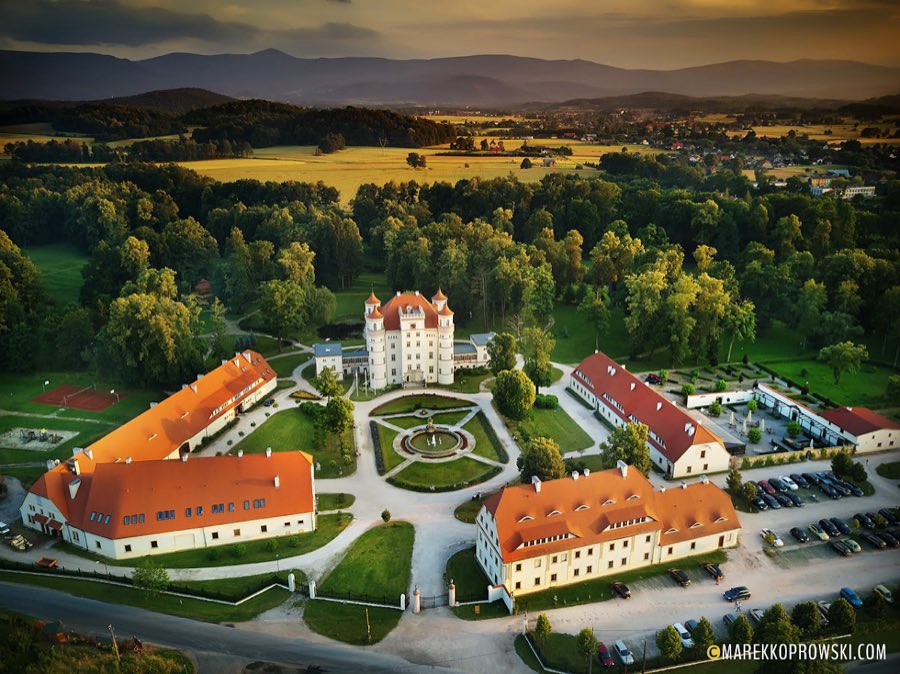
No. 25034
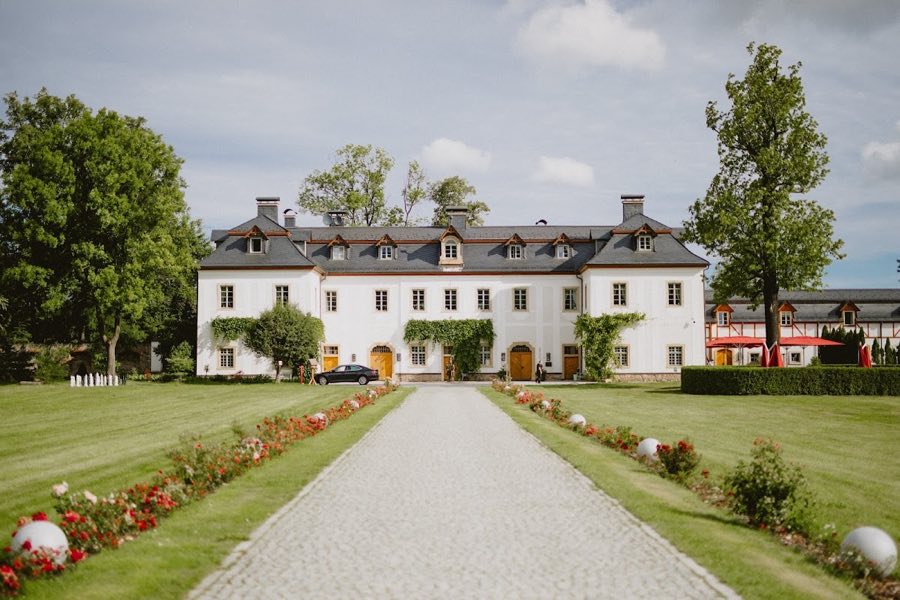
Wojanów Palace
Poland
PalaceRestoredFor rent19th century
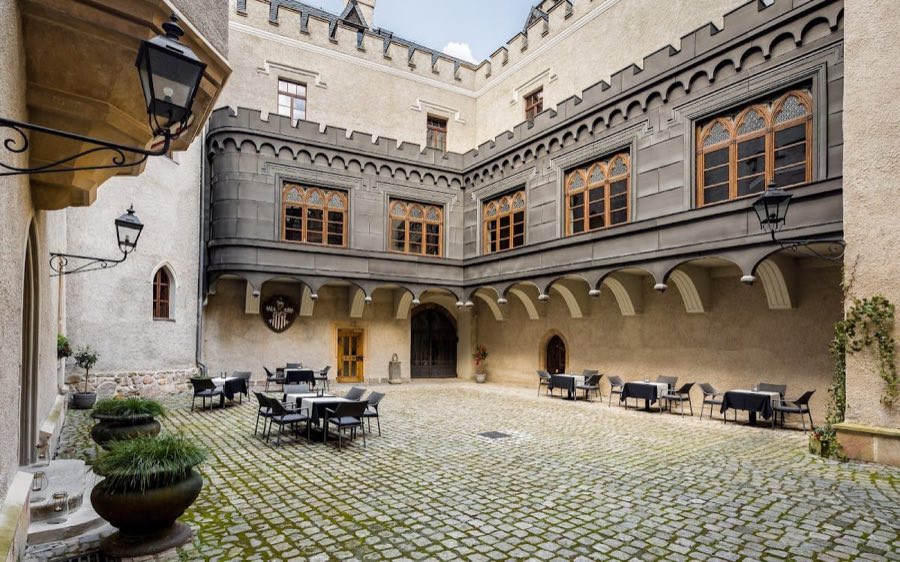
No. 20406
Castle · Poland
No. 20406 · 50.846 N, 15.850 E
For rent
Fischbach Castle is marked for bookable castle accommodation. Nightly pricing, sleeps count, stay rules, and amenities are displayed only when public operator data is available.
Rental type: Hotel / bookable stay, Short-stay rental
Short-term availability: Bookable accommodation signal
For events
Fischbach Castle is marked as a château or castle venue lead. Capacity, indoor/outdoor spaces, catering rules, and accommodation options are published only after public verification.
Event types: Private events, Cultural gatherings, Filming and photography
Accommodation: Accommodation signal present
Quick summary
Fischbach Castle is a castle in Poland with origins associated with the 14th century.
See all castles in PolandFischbach Castle, located in the municipality of Karpniki in present-day Poland, was originally built during the 14th century by the local medieval European nobility. This water castle lies at the foot of the Sokole Góry mountains and served as a noble residence in the region historically known as Silesia.
The earliest record of Fischbach Castle dates from 1369, when the estate was owned by Clericius Bolcze. It is believed that the castle’s initial construction was undertaken by knight Henryk Czirna, who controlled neighboring lands such as Płonina and Sokolec. Over the following centuries, the castle frequently changed hands, passing through several prominent noble families including the Schoff-Gotsch, von Kanitz und Talowitz, von Winterfeld, von Schönaich, von Schaffgotsch, and von Zedlitz. In 1822, the Hohenzollern dynasty acquired Fischbach, marking the last major dynasty to own the site.
Significant expansions and reconstructions occurred in various periods. In 1475, Kasper Schoff-Gotsch led a major development that added a tower and adjacent buildings to form a defensive courtyard on the castle island. The late 16th century brought a Renaissance-style remodeling initiated by Friedrich von Kanitz after 1580. This work culminated in 1603, as confirmed by a dated stone portal bearing Latin inscriptions honoring Friedrich, Elias, and Christoph Friedrich von Kanitz for their roles in the castle’s renewal.
In the 18th century, the castle’s quadrangle structure was heightened by one additional story, and the medieval tower received a Baroque-style helmet roof. The 19th century saw a further transformation under Prince Wilhelm of Hohenzollern, who commissioned the architect Friedrich August Stüler in 1844 to renovate Fischbach Castle in the Tudor-style neogothic fashion. This remodeling gave the castle its current appearance, with interiors adapted to more intimate proportions compared to larger contemporary palaces.
Fischbach Castle served multiple roles throughout its history. Beyond its origins as a defensive stronghold and noble residence, it became a distinguished cultural venue in the 19th century, hosting royalty and European aristocracy such as members of the Prussian royal family and Russian grand duchesses. Social events included elaborate balls, concerts, and theater performances. During World War II, it functioned as a wartime museum depot safeguarding valuable art, including the famous “Madonna” painting by Hans Holbein the Younger, relocated here from Darmstadt for security. The castle suffered severe plundering and damage when Soviet troops occupied the area in 1945.
Post-war uses shifted from educational to social welfare; Fischbach housed a primary school until 1950 and from 1956 served as a residential facility for disabled children. Later, it was used as a summer camp before being abandoned in 1973. After decades of neglect and several ownership changes, restoration work began in 2009, ultimately converting the structure into a luxury hotel while preserving its historical integrity.
Fischbach Castle is a distinctive water castle built on an artificial island surrounded originally by a protective moat, characteristic of medieval defensive architecture. The initial layout featured an irregular plan consisting of a main residential building and a cylindrical corner tower. By the late 15th century, this expanded to include a tower and two separate buildings enclosed by connecting walls, together forming a courtyard on the water-bound island.
The Renaissance reconstruction completed in 1603 introduced new wings and restored the original tower. One key feature is the semicircular Renaissance portal adorned with an agrafe, a decorative iron clasp or brooch-like element, embellished by heraldic shields representing the noble families von Kanitz, von Hatzfeldt, von Koseritz, and von Neuhoff. A Latin inscription commemorates the construction as undertaken by three members of the von Kanitz family. This portal stands as a surviving element from the early 17th-century renovation.
The tower, originally medieval, was later topped with a Baroque-style helmet roof, reflecting 18th-century architectural trends. The entire castle quadrangle was raised by an additional floor during this period, enhancing its scale and interior space. The 19th-century neogothic refurbishment, influenced by Friedrich August Stüler’s design, gave the building a Tudor-style appearance with smaller, lower rooms compared to large royal palaces such as Berlin’s Stadtschloss.
Surrounding the castle, an English romantic-style park was developed, featuring charming auxiliary structures including Marianne’s Cottage, a greenhouse, a Swiss chalet, and a monument dedicated to Archangel Michael. Inside, the castle retains sections of 16th-century Renaissance wall paintings within what is now called the Renaissance Suite. Additionally, 19th-century decorative elements are preserved in the so-called Royal Suite. Historically, the interiors showcased a range of artistic craftsmanship such as sculptures, collections of jewelry, weapons, and stained glass windows. Furthermore, a rich manuscript library was housed on the first floor of the northern wing, indicating the castle’s cultural and intellectual importance.
Throughout the 20th century, the castle endured notable damage during wartime plundering, especially in 1945. Restoration efforts in the 1960s mitigated some deterioration, with comprehensive refurbishment reprised from 2009 onward. These works included cleaning and repairing the facade, restoring ceilings, and rehabilitating interior rooms for adaptive reuse as a hotel. The Renaissance portal, stolen in 1993, was successfully recovered and reinstalled to its original location, preserving an important historical artifact in situ.
Today, Fischbach Castle stands as a testament to its layered historical development, with its water-surrounded setting and architectural features reflecting the successive changes it underwent from the medieval period through the Renaissance and neogothic eras.
No. 25034
No. 57069
No. 48827
No. 27029
Comments
Comments for Fischbach Castle will require a verified account before posting.
We'll send a verification link before your first comment is published.