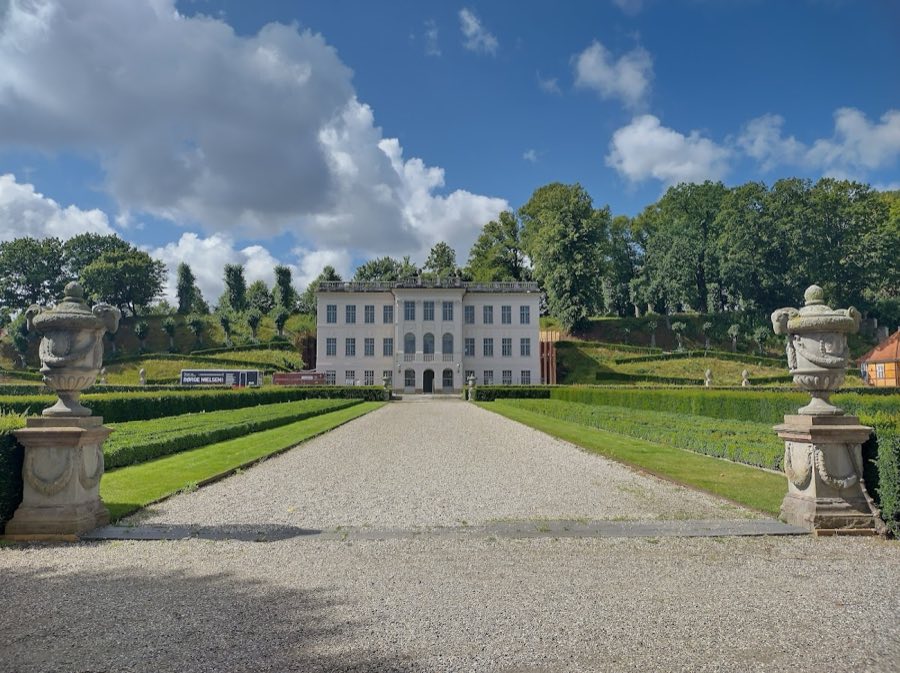
No. 10142
Marienlyst Castle
Denmark
PalaceRestoredFor rent16th century
No. 94628
Palace · Denmark
No. 94628 · 55.982 N, 12.396 E
For events
Fredensborg Palace is marked as a château or castle venue lead. Capacity, indoor/outdoor spaces, catering rules, and accommodation options are published only after public verification.
Event types: Private events, Cultural gatherings, Filming and photography
Quick summary
Fredensborg Palace is a palace in Denmark with origins associated with the 20th century.
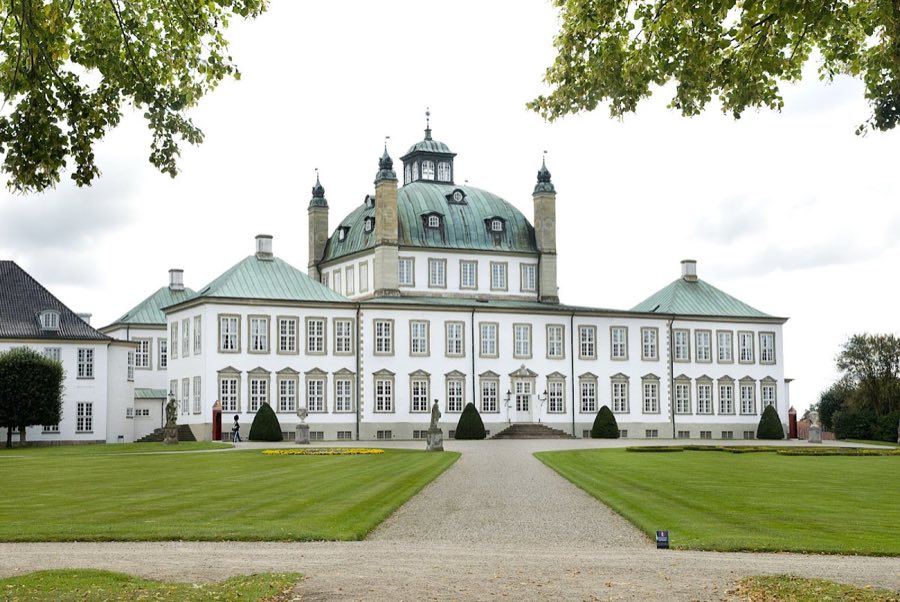
See all castles in DenmarkFredensborg Palace in Fredensborg, Denmark, is an early 18th‑century Baroque royal residence built for the Danish monarchy. Erected during the years after the Great Northern War, the palace became a principal royal home and a regular setting for state receptions and official events. Its name, Fredens Borg, which translates as “Peace’s Castle,” commemorates a peace treaty signed on the site that ended Denmark’s active participation in the Great Northern War.
Work on the pleasure palace began around 1720 on land that formerly belonged to a farm called Østrup. Construction progressed through the early 1720s, with the main building formally opened on 11 October 1722, the king’s fifty‑first birthday. While the complex was still being built, a peace agreement between Denmark–Norway and Sweden was signed there on 3 July 1720; that treaty decided the fate of Skåne and brought an eleven‑year Danish involvement in the war to an end, giving the palace its commemorative name.
Development continued after the initial inauguration. A separate chancery building was finished in 1731 and later served as a private residence for the queen mother well into the 20th century; in more recent years it has been used as a royal summer home. Mid‑18th‑century alterations raised the palace roof and added a stone balustrade, the orangery was adapted for living quarters for members of the court, and four corner pavilions with pyramid‑shaped copper roofs were appended to the main block.
In the 19th century the palace hosted annual family gatherings under King Christian IX and Queen Louise. Their grandchildren, among them future Emperor Nicholas II of Russia and the men who became Kings George V, Haakon VII and Constantine I as well as Queen Maud, spent time playing in the palace park. During the late 20th century the long, radiating garden avenues were restored, and a modern orangery opened in 1995. Following extensive garden restorations, the Fredensborg Palace Garden received the 2021 European Union Prize for Cultural Heritage, recognized for its exemplary redesign.
The woodland landscape around the palace also has royal origins. Two nearby forests were laid out in the 1680s for par force hunting under King Christian V, using a mathematically planned network of straight access roads. These hunting landscapes are included in the UNESCO World Heritage List as part of the Par force hunting landscape in North Zealand.
The palace complex centers on a compact, almost square main house of one and a half storeys capped by a dome with roof lanterns. The building sits at the precise centre of a hunting star, a pattern of straight, intersecting paths laid out across the game reserve that provided lines of sight and routes for mounted hunting.
Beneath the dome, the large central hall measures roughly fifteen by fifteen metres and rises to a height of about twenty‑seven metres. The interior contains elaborate plasterwork and a painted ceiling, reflecting the decorative programme of the early 1700s, and the proportions of the hall make it a dominant, vertically oriented space within the otherwise low main block.
In front of the palace an eight‑sided forecourt is ringed by single‑storey service wings known as the Red Wing. These buildings present exposed timber framing below a red tile roof and served the household’s domestic staff. Immediately east of this court lie a circular riding arena and an extended stables range, forming the complex’s equestrian service area.
Further to the east an orangery and a single‑storey house known as the Margrave House stand beside the main building. The original orangery was equipped with very large glasshouse windows to protect plants through the winter and was later converted to living quarters for court attendants. A narrow passageway once linked the orangery to the main block, allowing passage to the chapel without crossing wet ground.
The chapel occupies the space between the two eastern buildings. It is marked by a tall copper spire, a façade articulated with pilasters facing the riding ring, and a richly carved gable that carries a relief bust of King Frederik IV executed by a named sculptor. To the west of the chapel the Courtiers Wing, built as residences for court clerks and household members in the mid‑1720s, shows influences of Dutch Baroque and later Rococo taste.
A separate one‑storey chancery building finished in 1731 stands at the southern edge of the complex near the riding ring. It is built with dark glazed tiles and has a half‑hipped roof, giving it a distinctive contrast to the palace’s lighter masonry. Later 18th‑century work altered the main block’s roofline and added a stone balustrade, and the four symmetrical corner pavilions with copper pyramid roofs completed the main house’s present silhouette.
The gardens surrounding the palace are among Denmark’s largest historic garden ensembles and represent a clear example of Baroque garden planning. Long straight avenues that radiate from the centre were restored in the late 20th century, while the spaces between them contain substantial wooded areas with winding paths. A large sculptural programme populates the grounds, most statues created by one sculptor, and a feature called the Valley of the Norsemen contains approximately seventy carved figures of Norwegian and Faroese rural people by another named artist. Productive kitchen gardens continue to supply vegetables to the household, and a new orangery built in 1995 supports the estate’s plant collections. The principal palace block has remained essentially unchanged in form since its inauguration in 1722.
No. 10142
No. 28947
No. 52680
No. 73440
Comments
Comments for Fredensborg Palace will require a verified account before posting.
We'll send a verification link before your first comment is published.