No. 32905
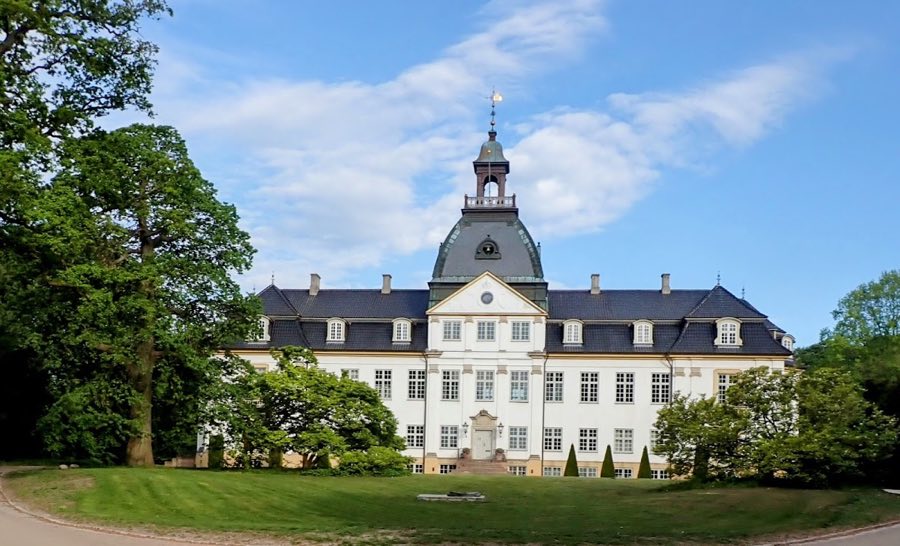
Charlottenlund Palace
Denmark
PalaceRestoredFor sale18th century
No. 73440
Palace · Denmark
No. 73440 · 55.758 N, 12.552 E
For rent
Bernstorff Palace is marked for bookable castle accommodation. Nightly pricing, sleeps count, stay rules, and amenities are displayed only when public operator data is available.
Rental type: Hotel / bookable stay, Short-stay rental
Short-term availability: Bookable accommodation signal
For events
Bernstorff Palace is marked as a château or castle venue lead. Capacity, indoor/outdoor spaces, catering rules, and accommodation options are published only after public verification.
Event types: Private events, Cultural gatherings, Filming and photography
Accommodation: Accommodation signal present
Quick summary
Bernstorff Palace is a palace in Denmark with origins associated with the 18th century.
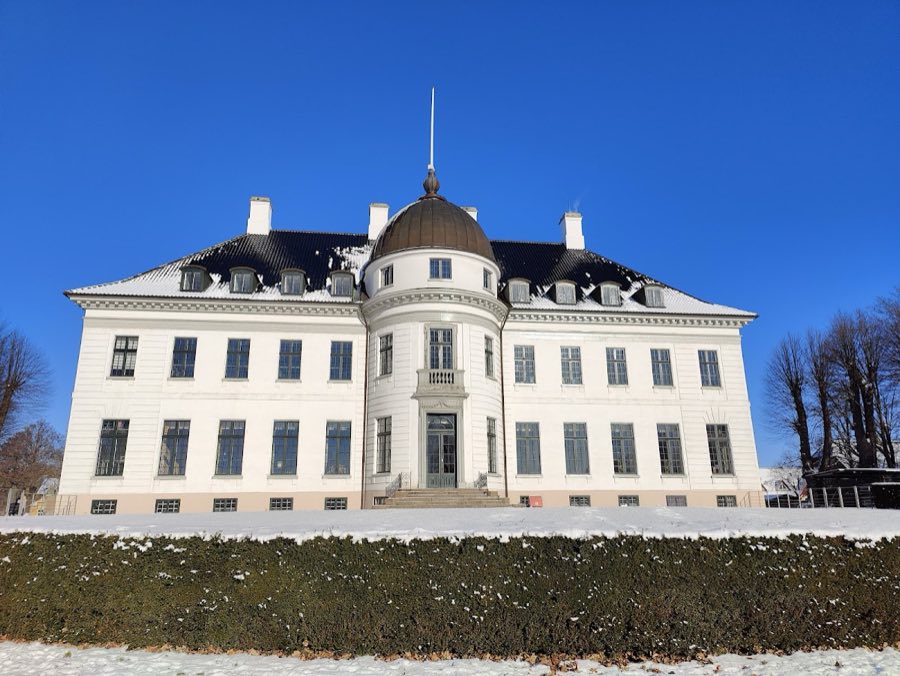
See all castles in DenmarkBernstorff Palace in Gentofte, Denmark, is an 18th-century Neoclassical country house built for the Danish foreign minister Johann Hartwig Ernst von Bernstorff. Erected in the mid-1700s, the building stands among the earliest Neoclassical works in Denmark and served as both a private residence and, later, a royal retreat. Its long life reflects changes in ownership, taste in landscape design, and shifting roles within the Danish realm.
Construction took place in the middle of the 18th century for Count Bernstorff, with completion dates given as May 1765 in one record and May 1756 in another. A French architect who had been invited to Denmark to continue work on a major Copenhagen church drew the plans and introduced a restrained classical vocabulary then new to the country. The house belonged to the Bernstorff family until the early 19th century. Count Bernstorff himself was dismissed by the regent Johann Friedrich Struensee and left Denmark in 1770.
Ownership changed several times after 1812. The palace was sold that year and changed hands again the next year before a wealthy planter from the Danish West Indies bought it in 1817. That owner reshaped the grounds in the English-style park fashion then in vogue. By the time of his death in 1838 the building had fallen into neglect, and most of the surrounding land was sold in 1839. At an auction later that year the house was bought for 25,850 rigsdaler by a private purchaser who considered demolition but did not carry it out.
In 1842 King Christian VIII acquired the property and ordered a thorough rebuilding and reorganization of the interior, during which a mezzanine (an intermediate floor) was inserted and the arrangement of principal rooms on the first floor was altered. From 1854 onward the palace was placed at the disposal of Crown Prince Christian, who later reigned as King Christian IX; he made the house his preferred summer residence. During his long occupancy the palace received notable visitors including Tsar Alexander III of Russia and Edward, then Prince of Wales, later King Edward VII of the United Kingdom.
Following the Nordic Exhibition of 1888, Queen Louise had a timbered Swedish pavilion brought to the grounds and adapted to serve as guest accommodation. On Christian IX’s death in 1906 the property passed to Prince Valdemar, who used it as a summer home until his death in 1939. Princess Margaret of Denmark was born at the palace. In later decades the complex was used by the Danish Emergency Management Agency as an academy for non-commissioned officers. On 1 May 2009 the palace reopened for use as a hotel and conference centre under a private agreement.
The palace presents as a two-storey, classically inspired building with a long, balanced facade and a roofline that originally carried a number of decorative elements. At the top of the house there were small ornamental garrets and attic sections crowned with sculpted vases, and a broad balcony ran along the roof ridge. On the garden side a projecting pavilion rises the full height of the house and is capped by a dome. The exterior shows the restrained ornament and symmetrical planning typical of Neoclassical design.
Inside, rooms are relatively modest in size, arranged for domestic life rather than grand public display. Most principal rooms are lined with wood panelling, have parquet floors and are topped by decorated ceilings. Large wall mirrors appear in several rooms, and Norwegian marble fireplaces stand in three of the larger chambers. Above four south-facing rooms, decorative panels have been fitted over the doorways, painted by an 18th-century artist of the Danish court. A Latin motto appears over the main entrance, its sense conveying that the house is set aside for honest rest between periods of work.
The mid-19th-century renovation left a visible imprint: a mezzanine (an intermediate floor) was added and the arrangement of the ground-floor reception rooms was reshaped to suit changed domestic needs. These interventions altered room proportions and circulation while preserving the building’s classical character.
The surrounding grounds were laid out in the Romantic landscape manner that became fashionable in Denmark from the 1760s, combining open lawns with stands of trees, a rose planting, a small orchard and a garden pavilion used for tea. The estate’s kitchen garden once produced apricots, peaches, grapes and a range of rare apples and pears, alongside cherries, plums and cultivated vegetables introduced from France and the Netherlands such as cucumbers, artichokes, lettuces and melons. A variety of exotic trees and shrubs were planted, among them chestnuts, acacias, plane trees, tulip trees, medlars, azaleas, barberries, quinces and lilacs. By the mid-19th century many of the exotic specimens had declined and were replaced with native oaks and beeches on the orders of King Christian IX’s garden inspector; those Danish oaks and beeches remain evident in the park today.
Within the grounds a timbered Swedish-style villa erected after the 1888 exhibition survives. Built in a traditional Swedish wooden manner, it was adapted for guest use and later came under the care of a foundation. The building now serves as a small cultural space, hosting art displays, musical performances and functioning as a café.
No. 32905
No. 38933
No. 60955
No. 74920
Comments
Comments for Bernstorff Palace will require a verified account before posting.
We'll send a verification link before your first comment is published.