No. 10142
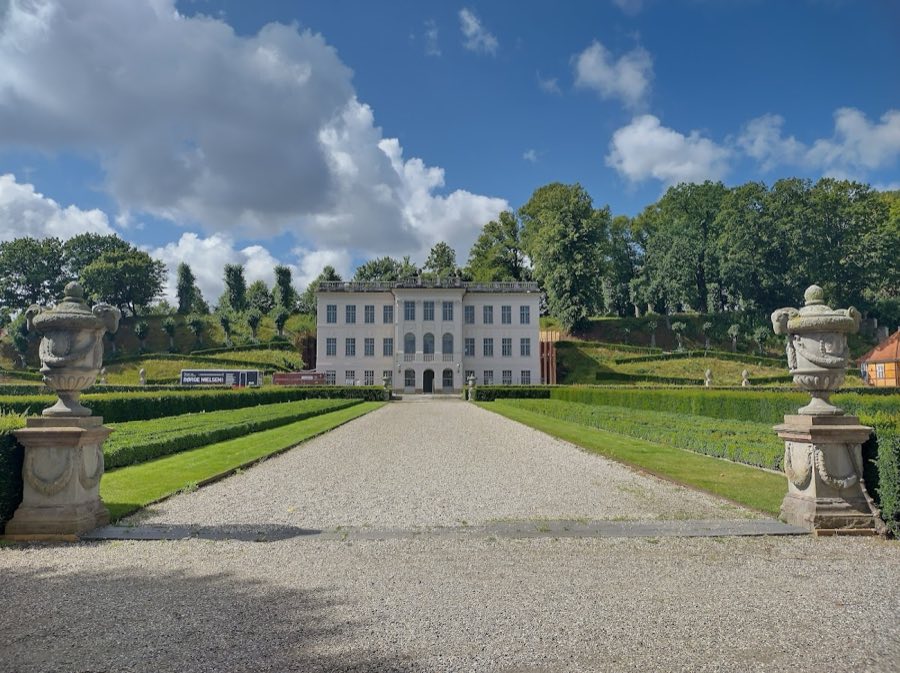
Marienlyst Castle
Denmark
PalaceRestoredFor rent16th century
No. 28947
Castle · Denmark
No. 28947 · 56.039 N, 12.622 E
For events
Kronborg Castle is marked as a château or castle venue lead. Capacity, indoor/outdoor spaces, catering rules, and accommodation options are published only after public verification.
Event types: Private events, Cultural gatherings, Filming and photography
Quick summary
Kronborg Castle is a castle in Denmark with origins associated with the 16th century.
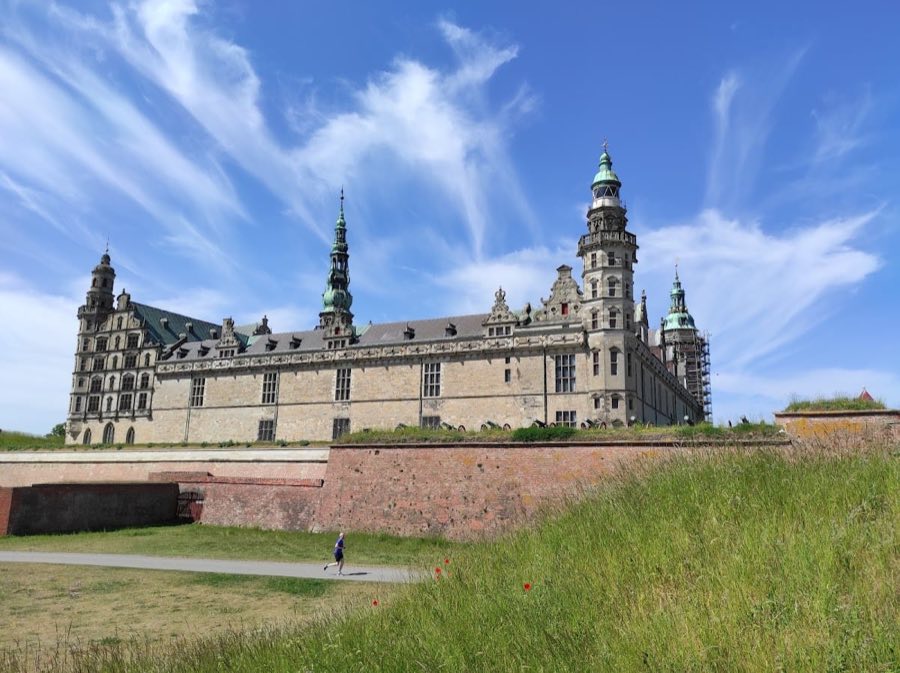
See all castles in DenmarkKronborg Castle is located in the municipality of Helsingør, Denmark. It was originally constructed by the Danish crown during the medieval period to oversee and control maritime passage through the Øresund, the narrow strait between Zealand and Scania. The site’s strategic significance is evident from its early use as a military fortress controlling access to the Baltic Sea.
The initial construction began in the 1420s under King Eric VII of Denmark, who established the fortress known as Krogen. This stronghold served primarily to enforce the collection of Sound Dues, a toll on ships navigating the Øresund. Its location on a sandy peninsula allowed it to work in tandem with Helsingborg’s Kärnan fortress, together securing maritime traffic in this crucial waterway.
In the mid-16th century, King Christian III enhanced the fortress’ defenses by adding bastions to the existing medieval curtain walls between 1558 and 1559. These additions responded to evolving military needs and threats, reinforcing Krogen’s role as a key defensive structure.
A major transformation occurred during the reign of King Frederick II from 1574 to 1585. He commissioned a radical reconstruction of the fortress into a grand Renaissance castle, renaming it Kronborg, which means “Crown Castle.” This project incorporated the expertise of Flemish architects Hans Hendrik van Paesschen and Anthonis van Obbergen, with sculptural work overseen by Gert van Groningen. During this time, Kronborg also became a cultural venue; Frederick II sponsored theatrical performances starting in 1579.
In 1629, a large fire caused by workers devastated much of the castle, sparing only the chapel. King Christian IV took charge of restoration efforts, which lasted from 1631 until 1639. The exterior was restored to its former grandeur while the interiors were updated in the Baroque style, reflecting contemporary tastes.
During the Dano-Swedish War of 1658–1660, Kronborg was besieged and captured by Swedish troops commanded by Carl Gustaf Wrangel. The Swedish occupation led to the removal of numerous valuable artworks as spoils of war. Following their withdrawal, Danish authorities undertook substantial reinforcement of the castle’s defenses. Between 1688 and 1690, the advanced Crownwork line of fortifications and new ramparts were constructed, solidifying Kronborg’s reputation as one of the strongest fortresses in Europe.
From 1739 well into the 20th century, the castle was repurposed as a prison. Detainees were assigned to labor tasks related to maintaining and expanding the fortifications under supervision. Notably, Queen Caroline Mathilde was imprisoned within Kronborg in 1772. The castle ceased functioning as a royal residence in 1785, after which it was converted into army barracks until military use ended in 1923. Subsequent restoration efforts culminated in reopening the site to the public by 1938.
Throughout its history, Kronborg’s primary role was to regulate maritime commerce through the Sound Dues, with the Danish monarch exercising the unique right to purchase cargo declared by shipmasters at fixed prices, ensuring avoidance of undervaluation and loss of revenue.
The castle’s fame is also tied to literature. It is identified as Elsinore in William Shakespeare’s tragedy “Hamlet,” with the first recorded staging of the play at the castle performed by the garrison in 1816. Since then, numerous notable actors and ensembles have brought the play to life at Kronborg.
A longstanding legend connects the castle to Ogier the Dane, a mythical Danish king said to slumber within the fortress until Denmark is in dire need, when he will awaken to defend the realm. This tale is commemorated by a statue of Ogier placed inside the castle’s casemates.
In recognition of its remarkable Renaissance architecture and rich history, Kronborg Castle was designated a UNESCO World Heritage Site in 2000.
Kronborg Castle occupies a promontory rising approximately 12 meters above sea level at the narrowest point of the Øresund strait, northeast of Helsingør’s historic center. Its layout is characterized by a square courtyard enclosed within sturdy curtain walls that integrate medieval and Renaissance construction phases. The primary building material is sandstone sourced from nearby Scania, while the distinctive roof is sheathed with copper sheets.
The oldest part of Kronborg, originally called Krogen, consisted of a square curtain wall encircling multiple stone structures. Within this enclosure stood the king’s residence at the northeastern corner, a large arched banquet hall located in the southwestern corner, and a smaller chapel towards the southeast. Significant portions of these medieval walls have been preserved and form part of the current castle’s fabric.
The Renaissance transformation under Frederick II expanded and unified the separate buildings into three main wings. The north wing contained the royal apartments and chancellery offices. The south wing housed a newly built chapel with vaulted windows and above it a grand ballroom. The east wing was noticeably heightened to include the Queen’s Gallery, a connecting passageway between the queen’s chambers and the ballroom.
Inside the royal chambers of the north wing, original furnishings from around 1576 survive, alongside refurnishings from the post-fire renovation led by Christian IV. These include ceiling paintings, intricately carved stone portals, and chimneypieces. The floors were initially covered by striking black-and-white tiles but were replaced with wooden boards in the mid-18th century. Walls were adorned with gilt leather, and currently the chambers display exquisite 17th-century furniture of Netherlandish origin. Prominent features include a large bay window in the King’s Chamber overlooking the main entrance, allowing observation of arrivals, and a vaulted tower adjoining the Queen’s Chamber that offers views of the adjacent Flag Bastion.
The ballroom measures roughly 62 meters by 12 meters, making it the largest hall of its kind in Northern Europe at the time of completion in 1582. Its walls are decorated with a series of large paintings originally created between 1618 and 1631 for the Great Hall at Rosenborg Castle. These artworks depict various scenes such as children attending school, feminine pastimes, jousting tournaments, academic gatherings, and noble celebrations. The current floor and fireplaces date from the 20th-century restoration undertaken between 1924 and 1938.
Adjacent to the ballroom lies the Little Hall, whose walls are embellished with seven tapestries from a set originally comprising forty pieces commissioned by Frederick II around 1580. These tapestries portray a line of one hundred Danish kings, with notable individual depictions including King Oluf (reigned 1376–1387) and King Knud VI (reigned 1182–1202). While seven other tapestries from the series are held at the National Museum of Denmark, some have been lost over time.
The chapel, located on the ground floor of the south wing, was inaugurated in 1582. It underwent conversion to a gymnasium and fencing hall in 1785 when the castle was converted to army barracks, with original furnishings removed and stored. A restoration in the 19th century reinstated much of the chapel’s original furniture, leading to its reinauguration in 1843.
The entire approach from the town to Kronborg is protected by multiple moats and gates, enhancing its defensive capabilities. After the Swedish conquest in the mid-17th century, a new line of fortifications known as the Crownwork was added between 1688 and 1690. This, together with new ramparts, strengthened the castle’s defenses, contributing to its renown as one of Europe’s most formidable fortresses.
Within the castle casemates, an important symbolic feature is found: a statue of Ogier the Dane, a legendary figure tied to Danish folklore and Kronborg’s mythology, immortalizing the castle’s cultural as well as military significance.
Kronborg Castle today preserves a remarkable continuity of medieval and Renaissance architecture, reflecting its layered history and careful restoration following the destructive fire of 1629 and 20th-century renewal efforts. Its fortified walls, grand halls, chapel, and royal chambers remain testament to its enduring role in Denmark’s maritime and political history.
No. 10142
No. 52680
No. 94628
No. 73440
Comments
Comments for Kronborg Castle will require a verified account before posting.
We'll send a verification link before your first comment is published.