No. 12977
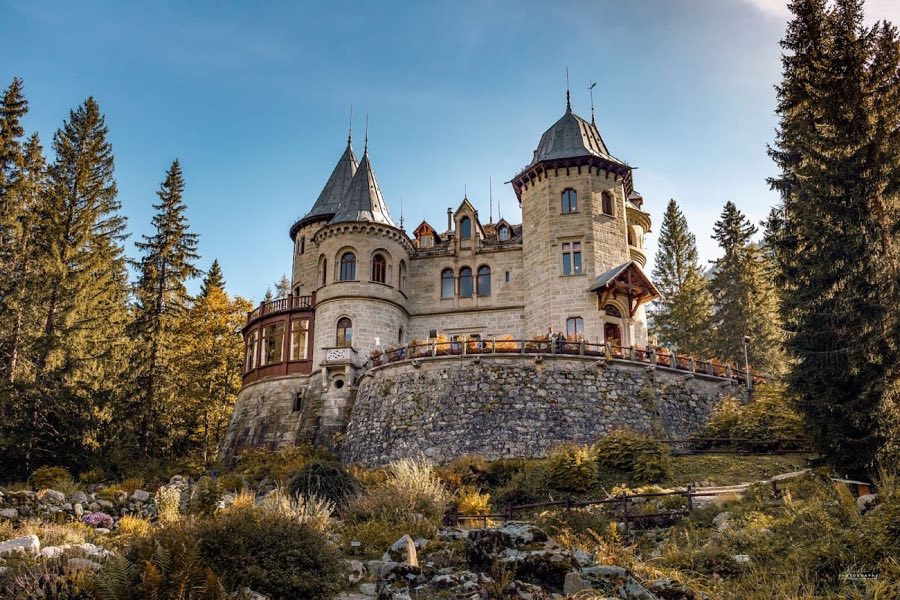
Castel Savoia
Italy
PalaceIntact19th century
No. 89941
Castle · Italy
No. 89941 · 45.745 N, 7.601 E
Quick summary
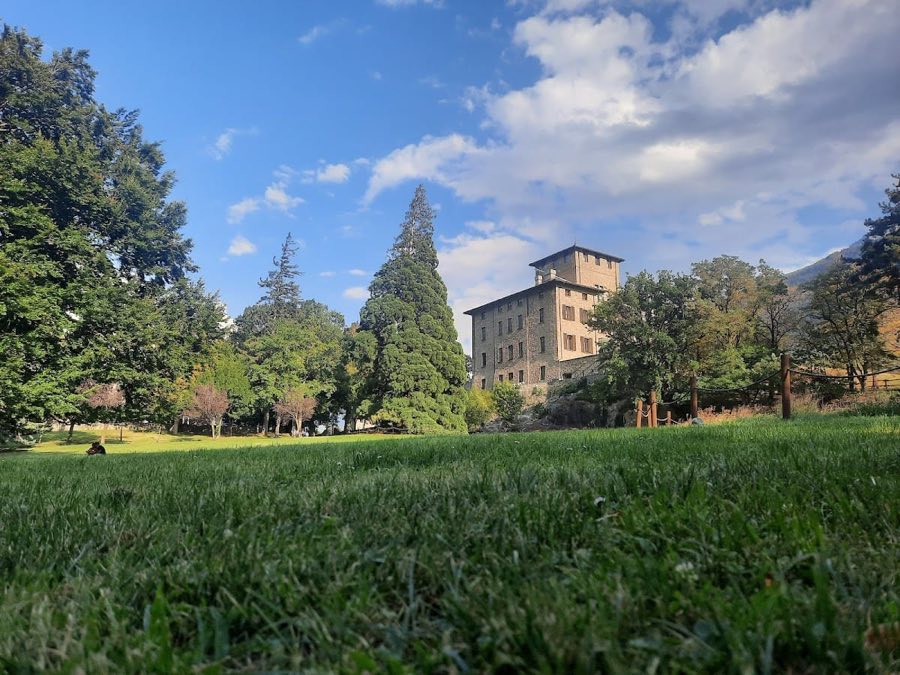
Gamba Castle is a castle in Italy with origins associated with the 20th century.
See all castles in ItalyGamba Castle is located in the municipality of Châtillon, Italy. It was constructed in the early 20th century, making it the youngest of the three castles found in Châtillon, a town with a history extending back to medieval times through its other castles, Passerin d’Entrèves and Ussel.
The castle was built in 1911 at the direction of Baron Charles-Maurice Gamba and his wife Angélique d’Entrèves, herself a member of a noble family descended from Count Christin d’Entrèves. Their vision was realized through the work of engineer Carlo Saroldi, who designed the structure to echo earlier castle architectures but within the context of the modern era.
Throughout the 20th and early 21st centuries, Gamba Castle evolved from a private noble residence into a cultural site. On June 18, 2008, its surrounding park gained prominence when it hosted more than 4,000 spectators attending Bob Dylan’s final performance in Italy. Subsequently, between 2011 and 2012, the castle underwent a comprehensive restoration to accommodate a new public role. Reopened in October 2012, it was transformed into a museum dedicated to modern and contemporary art, thereby establishing the castle as a regional center for cultural activities. Since that reopening, it functions as the seat of the regional art gallery and includes both permanent and temporary exhibitions, linking its early 20th-century origins to the contemporary cultural life of the region.
Gamba Castle reveals a straightforward, restrained architectural style reminiscent of older castle designs. Its main building forms a compact, nearly cubic volume rising four floors high and is anchored by a substantial square tower situated centrally. This tower provides a commanding vertical emphasis, typical of defensive architecture while serving as a dominant visual feature.
On the northern side, the castle extends with a service building, consisting of two parallel wings connected through a vaulted corridor that encloses a modest courtyard. This arrangement suggests a separation of functions within the castle complex, with the service areas designed to support the main residential quarters.
The southern facade offers views over the Dora Baltea river, positioning the castle within a natural landscape that enhances its presence. From a modern vantage point, the building stands clearly visible to travelers along the nearby A5 highway, underscoring its prominence within the local geography.
Surrounding the castle is a substantial public park, covering between five and seven hectares. The park includes walking paths with benches and a wooden fountain, integrating leisure elements within the green space. Notably, the park is home to three monumental trees protected under regional law. These include a giant sequoia planted in 1888, measuring 37 meters tall with significant girth, located near the castle; a roughly century-old Judas tree standing in the center of the park; and a bald cypress positioned at the park’s western edge. These trees contribute both to the historical landscape and to the conservation of notable natural specimens within the estate.
Inside, the castle’s interiors are organized for museum use, with thirteen rooms on the first and second floors housing a collection of approximately 150 contemporary artworks owned by the regional administration. The uppermost floors, including the third floor and the attic within the central tower, are reserved for temporary exhibitions, often featuring works by local artists. This layout preserves the castle’s historical form while adapting its spaces to new cultural functions.
No. 12977

No. 74445
No. 44324
No. 24561
Comments
Comments for Gamba Castle will require a verified account before posting.
We'll send a verification link before your first comment is published.