No. 44355
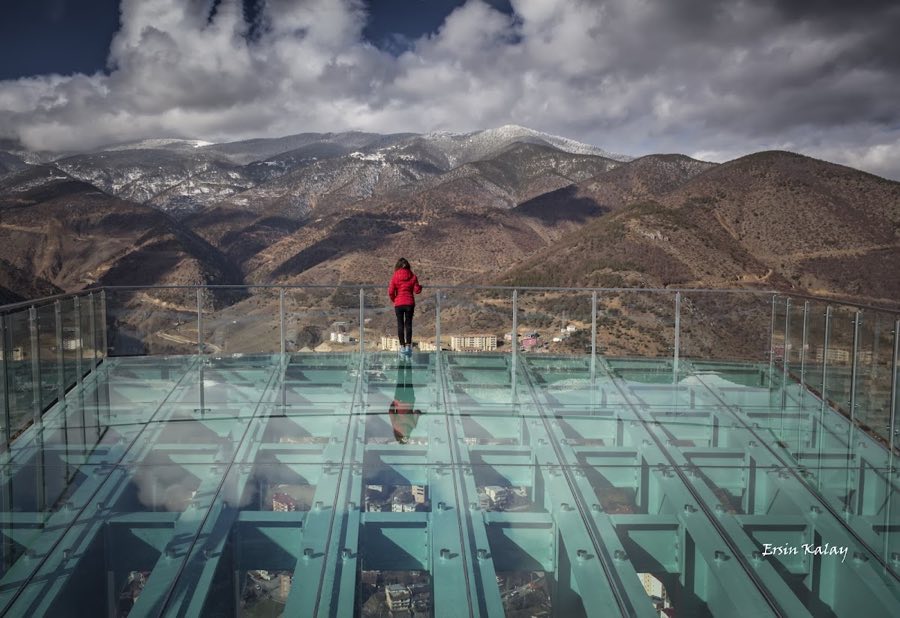
Torul Castle, Torul
Torul, Turkey
CastleRuin15th century
No. 39111
No. 39111 · 40.921 N, 38.392 E
Quick summary
Giresun Castle is a castle in Turkey with origins associated with the 2th century.
See all castles in TurkeyGiresun Castle, in Kale Mah, Merkez, Turkey, was built by the Pontic kingdom under Pharnaces I in the 2nd century BCE.
The earliest construction belongs to the Hellenistic and Roman eras, when the stronghold first rose on the northern peninsula. Ancient writers described the place as a fortress with walls likened to bronze. The Roman state entered the city in 63 BCE, after which the settlement resumed the name Kerasus or Cerasus.
The fortress saw later repairs and enlargement during the medieval period. Around 1301 Emperor Alexios II of Trebizond ordered restoration work, and by the 14th century the castle served as one of the Empire of Trebizond’s last frontier strongholds.
Ottoman forces took control of the fort without fighting. Ottoman records of 1486 record a garrison of 114 men and 22 widows, all identified as Christian, holding tax exemption, and note four Muslim inhabitants within the fortress. Documentary listings from about 1515 itemize the fortress armament as six cannons, twenty-eight firearms, three catapults and twenty-eight bows. By 1525 the settlement inside the walls included thirty-one Muslim and 221 Christian households with a garrison of twenty-three men.
A mosque known as the Hüdâvendigâr and a bathhouse existed within the fortress in the Ottoman period, the mosque attributed in some records to Sultan Selim I. A report of 1556 asserted that the fortress could provide shelter for five thousand to ten thousand people. From the second half of the 16th century the settlement began to extend beyond the castle walls and develop as a port.
Local power struggles affected the castle in the 18th century. In 1764 two local leaders, Dizdaroğlu Ali and Abdi, seized the fortress and were then besieged and bombarded by forces under the Vali of Trabzon, Numan Paşa, and the Muhassıl of Canik, Hacı Ali Bey; the seizeurs abandoned the position. A document of 1780 records 363 Janissaries stationed at the stronghold. In 1788 fortress artillery reportedly repelled a Russian naval landing, and in 1798 the French consul in Izmir and nine companions were interned in the fortress. Reports from 1789–1790 described the fortifications on the hill and the nearby island as ruinous. Military operations to reassert order in 1806 and again in 1808–1809 caused further damage. On 10 October 1840 Jakob Philipp Fallmerayer observed decayed fortifications and dried cisterns at the site.
In the present day the top of the site contains the tomb of Topal Osman (described in some records as Atatürk’s personal guard), a martyr’s cemetery occupies the north, and the tomb of the dervish Kurban Dede stands on the sea-facing side.
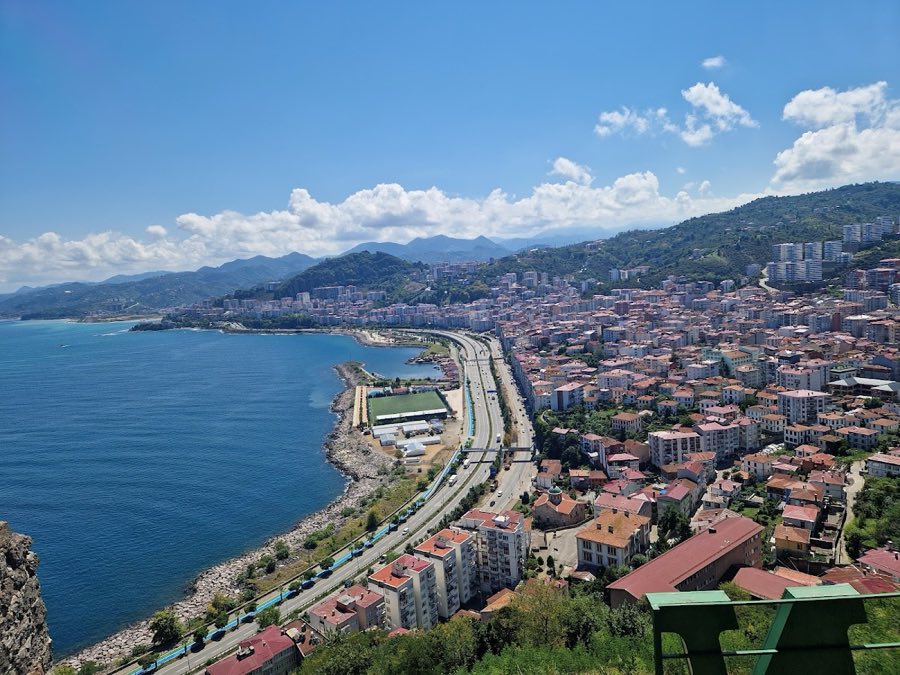
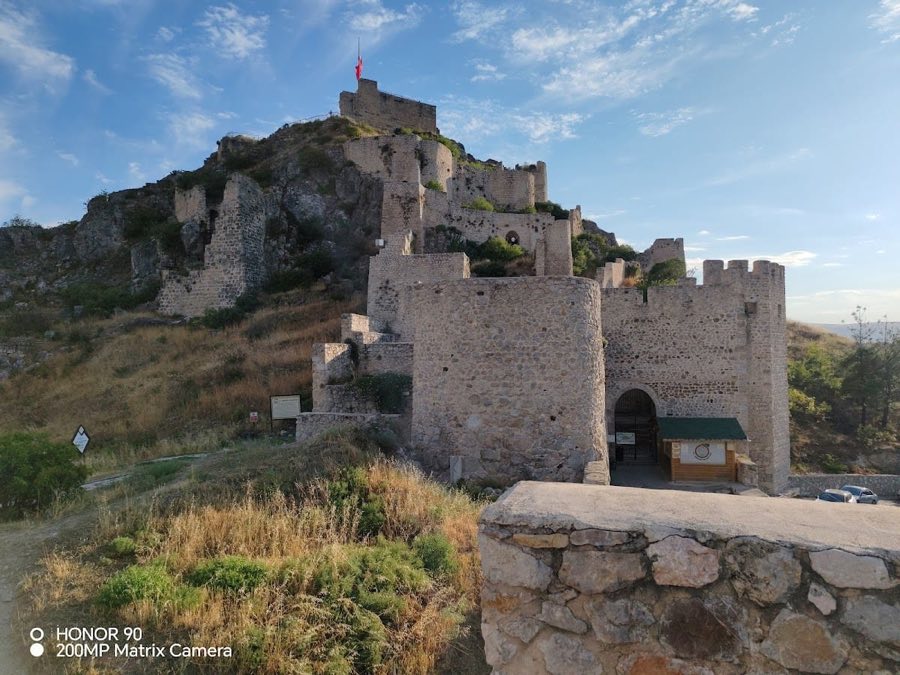
The castle occupies the summit of the northern peninsula of Giresun and commands wide views over the Black Sea, coastal routes and the nearby island, at coordinates 40.921458 N, 38.391831 E. The visible layout presents a central strong point with adjoining curtain walls that once enclosed a larger defended area. Foundation courses of the walls show large rectangular stone blocks and other masonry that attest to the site’s antique origins, linking the standing fabric with the Hellenistic and Roman construction phases.
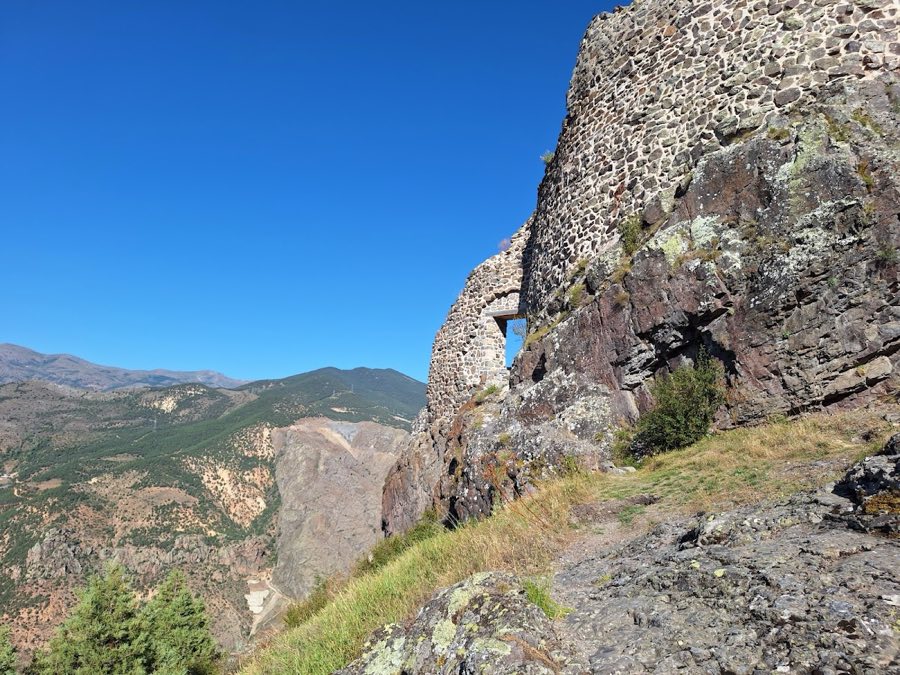
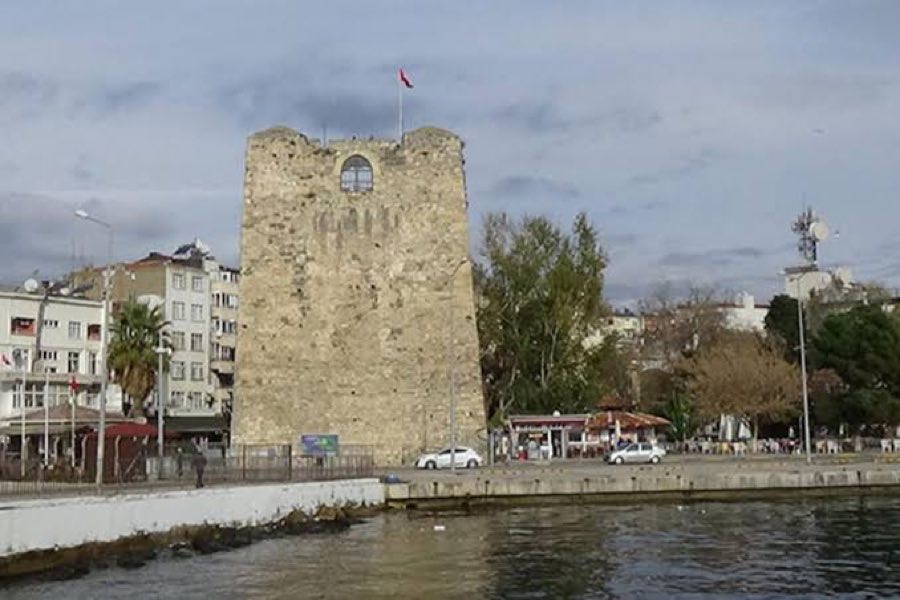
A central tower stands within the surviving fabric and wall remains attach to its southern side. Parts of the outer defensive walls remain in place; these elements exhibit repairs and rebuilding from later periods as well as traces of their early construction. Foundation work of heavy stone blocks reflects building methods from the second century BCE and later reuse during medieval restorations.
Within the historical enclosure Ottoman-period structures are recorded, including the Hüdâvendigâr Mosque and a hamam, both incorporated into the castle complex during Ottoman administration. Cisterns are attested on the hill and were observed as dried out by an eyewitness in 1840. Documentary records from the 16th century also record artillery emplacements and stored weapons, indicating areas of the fortress served military functions into the early modern era.
The highest point retains funerary elements from the modern period, with the tomb of Topal Osman occupying the summit. The north, sea-facing slopes contain a martyr’s cemetery and the tomb of the dervish Kurban Dede. Surviving masonry and these commemorative structures present the sequence of use from the ancient foundation through medieval and Ottoman phases, now visible as fragmentary walls, the central tower and later-built memorials in situ.
No. 44355
No. 99946
No. 56542
No. 17634
Comments
Comments for Giresun Castle will require a verified account before posting.
We'll send a verification link before your first comment is published.