No. 99946
Canca Castle
Turkey
CastleIntact21st century
No. 44355
Castle · Turkey
No. 44355 · 40.556 N, 39.298 E
Quick summary
Torul Castle, Torul is a castle in Torul, Turkey with origins associated with the 15th century.
See all castles in TurkeyTorul Castle in the municipality of Torul, Turkey, was constructed by Genoese who came from Trabzon during the Fourth Crusade.
The earliest phase of the site reflects its origins as a communications tower, erected to serve as a fire or beacon station. Its location and form were intended to relay signals across the landscape. The Genoese builders established the fortification during the upheavals of the crusading period in the eastern Black Sea region.
In later medieval centuries the site is also identified as Zegan, or Zigana, Castle. In the early 1400s the castle served as the residence of Haldia’s duke Cyril Cabasica. During the same general period the Georgian Kabazites family, dukes of Haldia, used the stronghold as their home and imposed a chimney tax on Turks passing nearby. Members of the Kabazites carried out raids and engaged in armed clashes with local Çepni groups. Sheikh Cüneyd attempted several times to take the castle, which at that time was occupied by Greeks or Georgians, but his efforts did not succeed.
Military control changed in 1479 when Rakkas Sinan Bey captured the fortress by order of the Amasya governor Bayezit, acting under a firman issued by Ottoman Sultan Mehmed II. Contemporary accounts describe this action as the final conquest of the Haldia district. Over subsequent centuries the structure fell into disuse and decay and is now described as ruined. Between 2016 and 2018 a glass viewing terrace was added at the site, and the terrace recorded large numbers of visitors in the months and years following its construction.
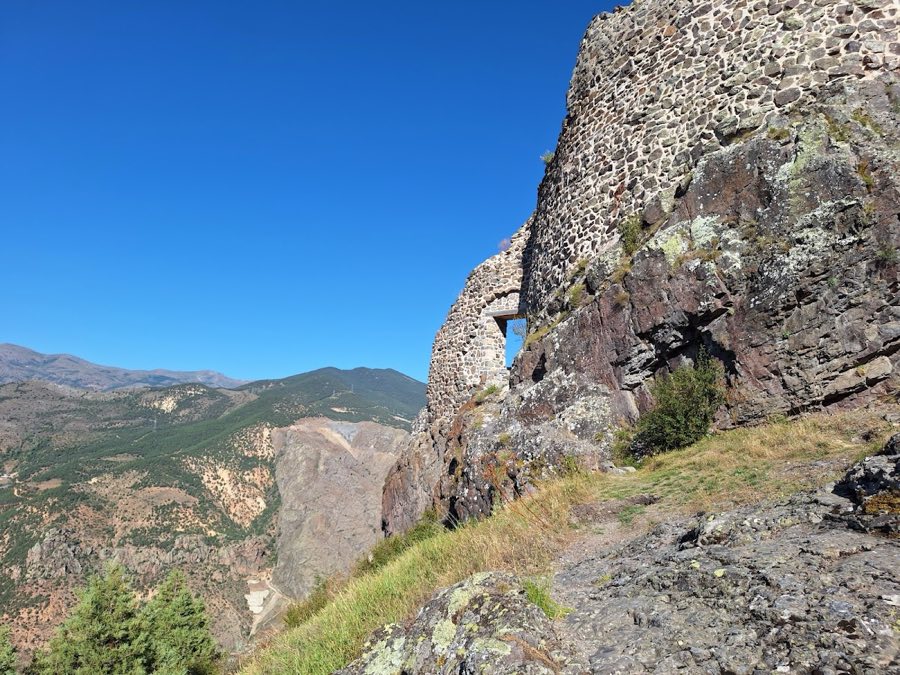
The castle occupies a high rocky position and presents a compact layout focused on a single fortified plateau with its main gate oriented to the east. Surviving masonry shows walls built in natural rock tones, combining rubble stone with regularly hewn blocks set in lime mortar. Wall remains stand between roughly three and five metres in height in places, and the overall plan and surviving fabric reflect its original role as a signal and defensive point rather than a sprawling palace.
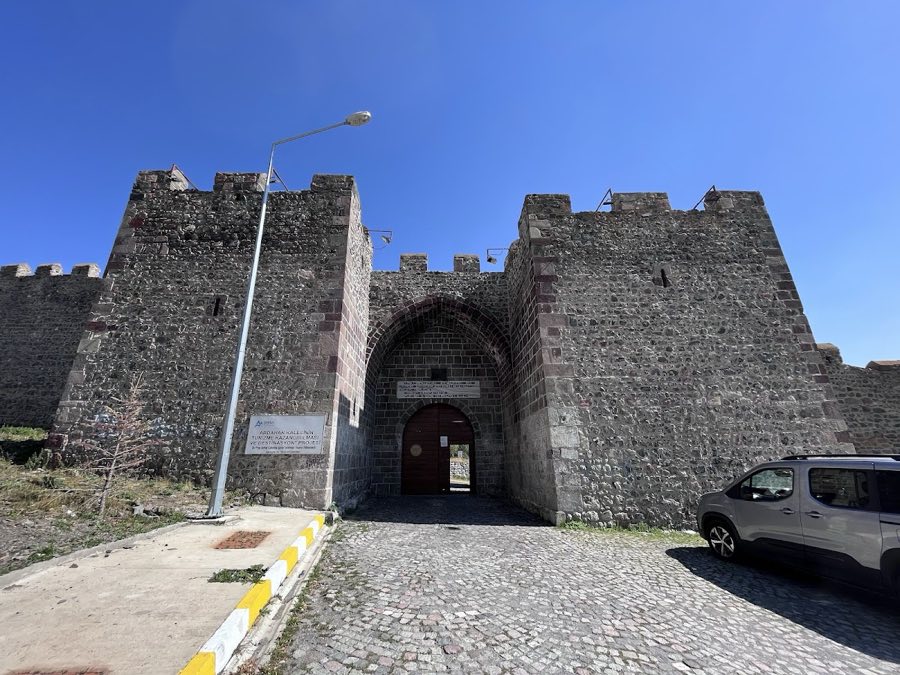
The eastern gateway marks the principal entrance and is tied to the site’s circulation and defensive arrangement. The gate led directly onto the elevated terrace where beacon fires would have been tended; this function is documented for the castle. The masonry around the entrance and adjoining wall stretches displays the same combination of rough and dressed stone bonded with lime mortar, and today these elements survive in a fragmentary, ruinous state.
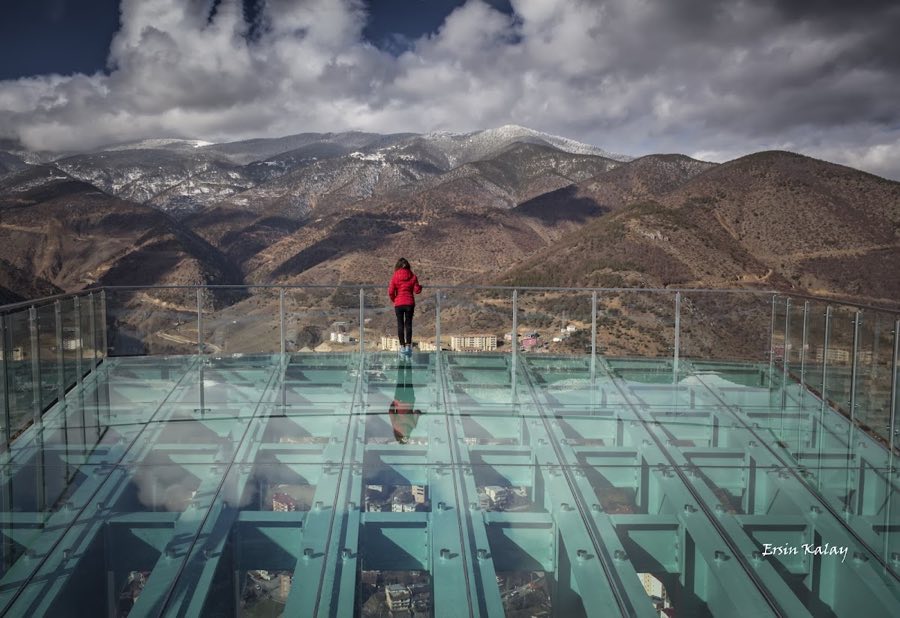
A modern glass viewing terrace was constructed on the site between 2016 and 2018. The platform sits at an elevation recorded as 240 metres in height, covers about 90 square metres, and is rated for fifty people at one time. A forty-five metre flagpole on the terrace flies a Turkish flag measuring ten by fifteen metres. From this vantage point the Harşit River, the district centre, and surrounding mountains are all visible. The contemporary platform represents a recent intervention distinct from the medieval fabric, and it has been installed where visitors can observe the castle ruins and the wider landscape.
No. 99946
No. 39111
No. 39485
No. 39829
Comments
Comments for Torul Castle, Torul will require a verified account before posting.
We'll send a verification link before your first comment is published.