No. 23127
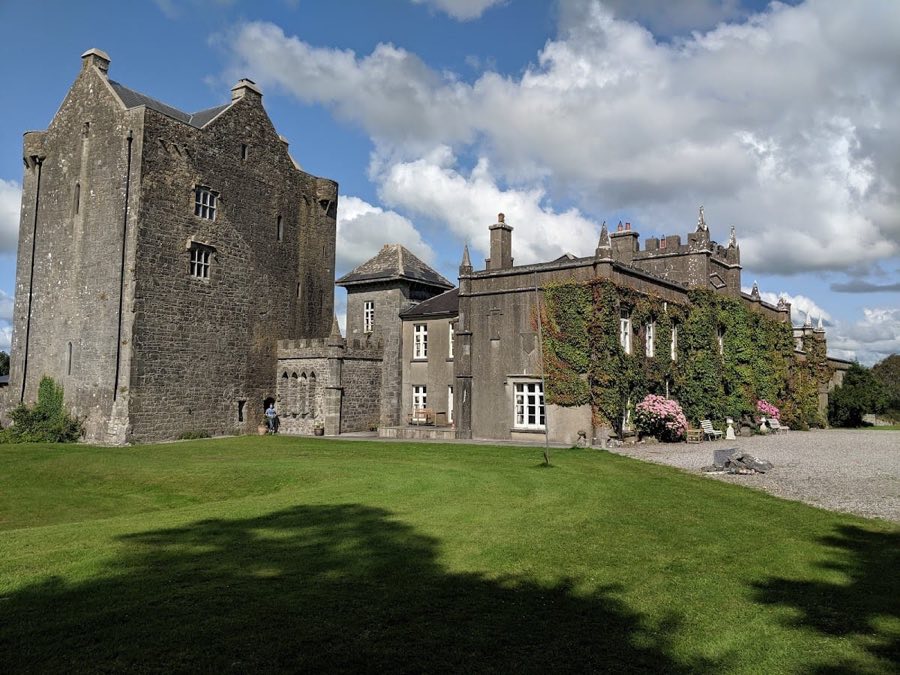
Springfield Castle
Ireland
CastleRestored15th century
No. 82993
Tower house · Ireland
No. 82993 · 52.384 N, 9.107 W
For events
Glenquin Castle is marked as a château or castle venue lead. Capacity, indoor/outdoor spaces, catering rules, and accommodation options are published only after public verification.
Event types: Private events, Cultural gatherings, Filming and photography
Quick summary
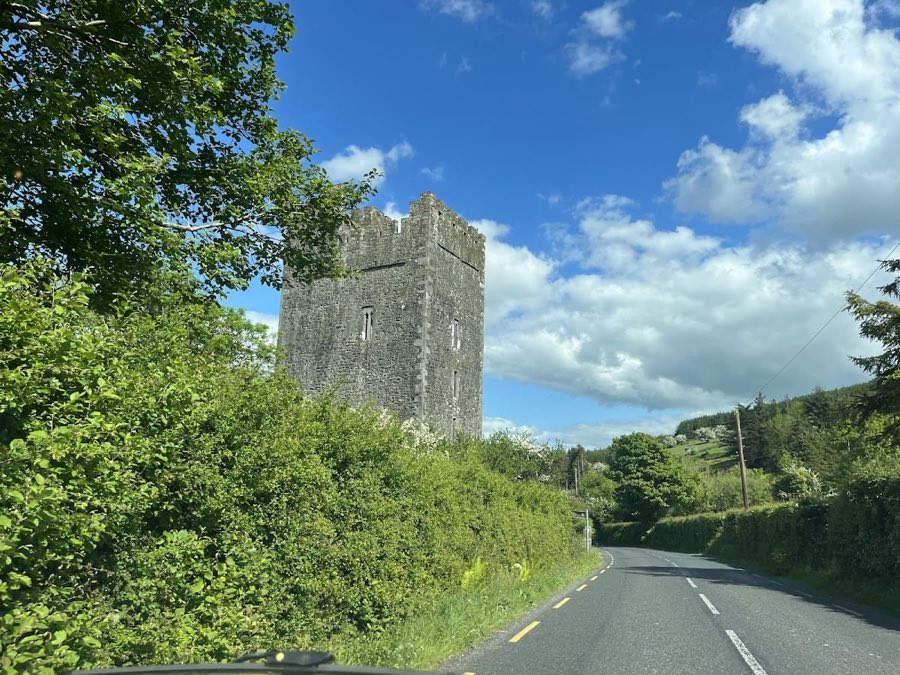
Glenquin Castle is a tower house in Ireland with origins associated with the 15th century.
See all castles in IrelandGlenquin Castle is located in Glenquin, County Limerick, Ireland. The castle visible today was built by the Irish Ó hAilgheanáin family in the mid-15th century on land that had hosted a structure since at least the late 10th century.
The earliest recorded site dates back to AD 983, suggesting this location has long been of strategic importance. In 1462, the Ó hAilgheanáin (O’Hallinans) constructed the six-storey tower house that stands as the core of Glenquin Castle. During the latter half of the 16th century, control of the castle shifted due to regional conflicts. Around 1569, it was taken by the Uí Briain (O’Briens) and soon after became a stronghold for the Geraldines during the Desmond Rebellions, a series of uprisings against English rule.
In 1571, following these rebellions, the English Crown confiscated lands held by the Geraldines, including Glenquin Castle. The castle then endured partial demolition under the direction of Walter Raleigh, a prominent English officer. Ownership passed through several hands in the following decades: the Hungerford family acquired it by 1587, followed by Sir William Courtenay in 1591, and Captain Collum in 1595.
Two centuries later, in 1840, William Courtenay, the 10th Earl of Devon, undertook restoration works on the castle, preserving its structure. In 1916, during the events of the Easter Rising, Glenquin Castle served as a gathering point for about 300 Irish Volunteers, though no fighting took place there. A further restoration occurred in the 1980s, after which the Office of Public Works took responsibility for maintaining the castle.
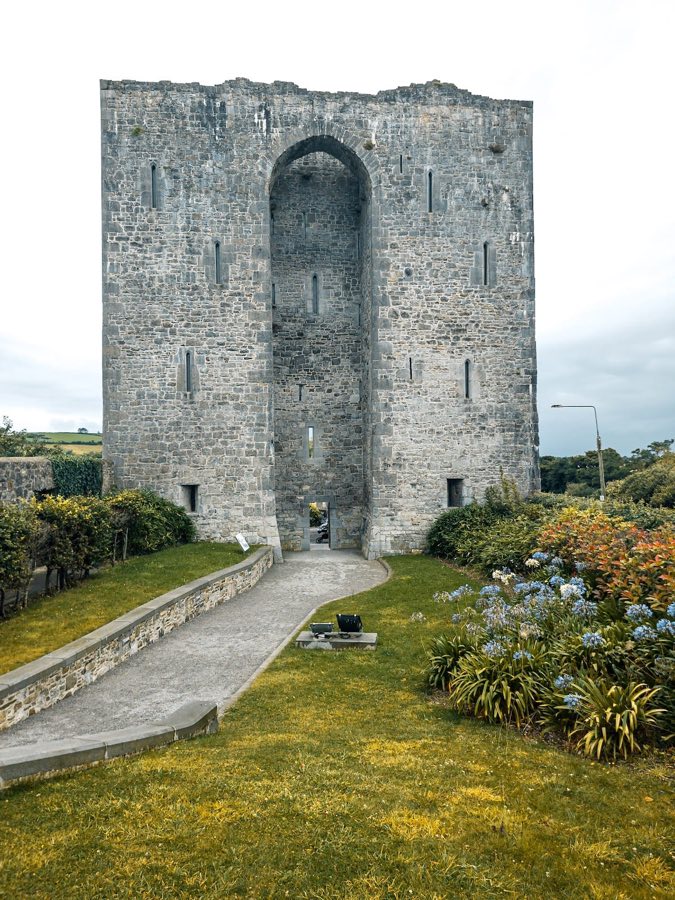
Glenquin Castle is a square tower house rising six storeys high, built principally from limestone, a common local material. Its overall layout is typical of fortified Irish residences of the late medieval period, designed to offer strong defensive capabilities alongside living quarters. The castle exhibits battlements with crenellations, which are the alternating high and low sections atop the walls allowing defenders to shield themselves while observing or attacking.
The uppermost floor preserves remnants of arrow slits, also known as embrasures. These narrow vertical openings enabled archers to fire while remaining protected. Inside, two chambers feature barrel vaults—these are curved stone ceilings shaped like a half-cylinder, known from medieval architecture for their strength. These vaulted rooms would have helped support the structure above while providing fireproof interior spaces.
Several phases of reconstruction and conservation have left Glenquin Castle in a state of preservation that allows its defensive elements to be clearly visible today. The visible battlements and arrow slits serve as reminders of its original purpose as a fortified home capable of withstanding attacks. Restoration efforts in the 19th and late 20th centuries have helped maintain its stonework and overall form for current and future generations.
No. 23127
No. 14775
No. 20600
No. 72081
Comments
Comments for Glenquin Castle will require a verified account before posting.
We'll send a verification link before your first comment is published.