No. 34324
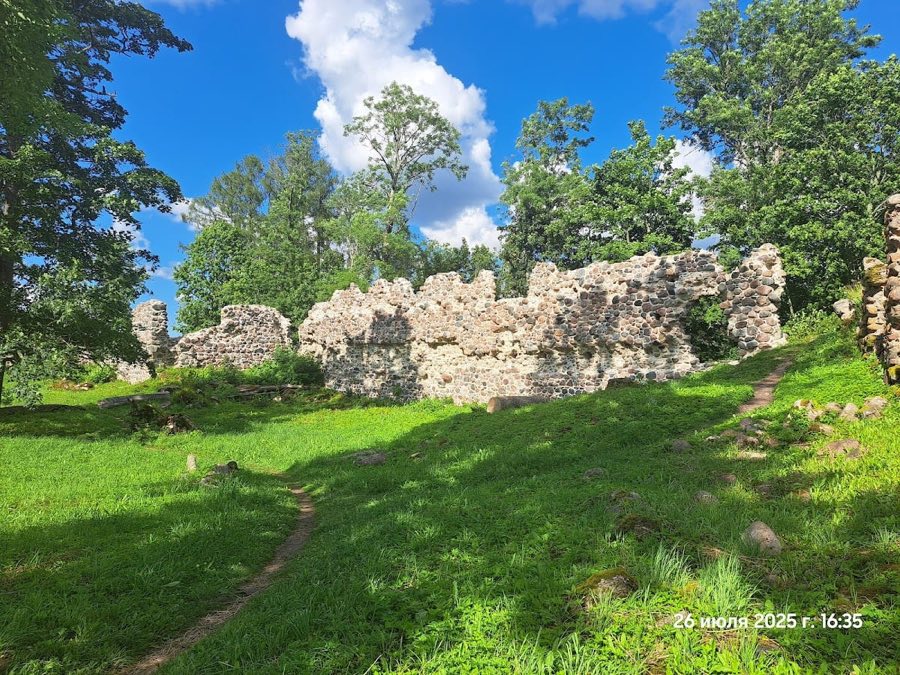
Helme Castle
Estonia
CastleRuin14th century
No. 16146
Castle · Estonia
No. 16146 · 58.154 N, 26.227 E
Quick summary
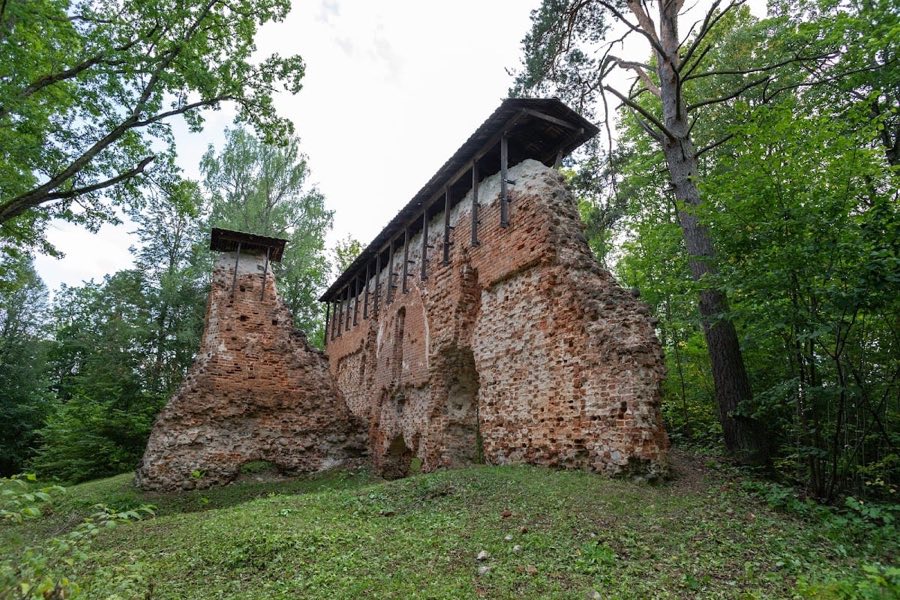
Rõngu Castle is a castle in Estonia with origins associated with the 14th century.
See all castles in EstoniaRõngu Castle is located in the municipality of Rõngu, Estonia, and was built by the medieval Livonian clergy under the Bishopric of Dorpat, an ecclesiastical state during the 14th century. Its foundation dates back to around 1340, constructed as a defensive stronghold to protect the southwestern border of the bishopric from threats posed by the Livonian Order and Lithuanian forces.
During the late 15th century, the fortress came under the possession of the Tödwen noble family. Its strategic position at the junction of major roads—one leading from Tartu toward Viljandi and Riga, crossing with the route between Rannu and Otepää—underscored its military and administrative significance in the region. By the early 15th century, the castle included a chapel dedicated to the Holy Cross inside its gatehouse, first recorded in 1413, with visitors and benefactors receiving papal indulgences, reflecting its religious importance.
The Livonian War brought significant upheaval to the castle. In August 1558, Russian troops led by voivode Pjotr Šuiski captured Rõngu Castle. However, by October of the same year, forces of the Livonian Order under coadjutor Gotthard Kettler recaptured the fortress. Despite this, the castle was deliberately set on fire and subsequently abandoned in November 1558, marking the end of its role as a military stronghold during this turbulent period.
Following the conclusion of the war, the Jesuit Order occupied the site, maintaining a presence until 1625 when Swedish authorities took control of the region and ordered the destruction of the castle. Throughout the 18th and 19th centuries, the remnants of Rõngu Castle changed hands among several private owners including Dmitri Wolkow in 1759, Count Manteuffel in 1766, Richard von Loewis of Menar in 1874, and Conrad von Anrep the following year.
Historical records and drawings from between the 17th and 19th centuries document the castle ruins and attest to their continued recognition as a landmark near the modern village of Lossimäe, north of Rõngu.
Rõngu Castle was constructed as a hilltop fortress of the castellum type, a medieval design characterized by a compact, fortified enclosure. It occupied the southern tip of the oval-shaped Lossimäe hill, rising approximately 12 meters above the nearby Rõngu River and standing around 73 meters above sea level. The main defensive area covered roughly 30 by 30 meters, oriented along the four cardinal directions, shaped naturally by the topography of the hill.
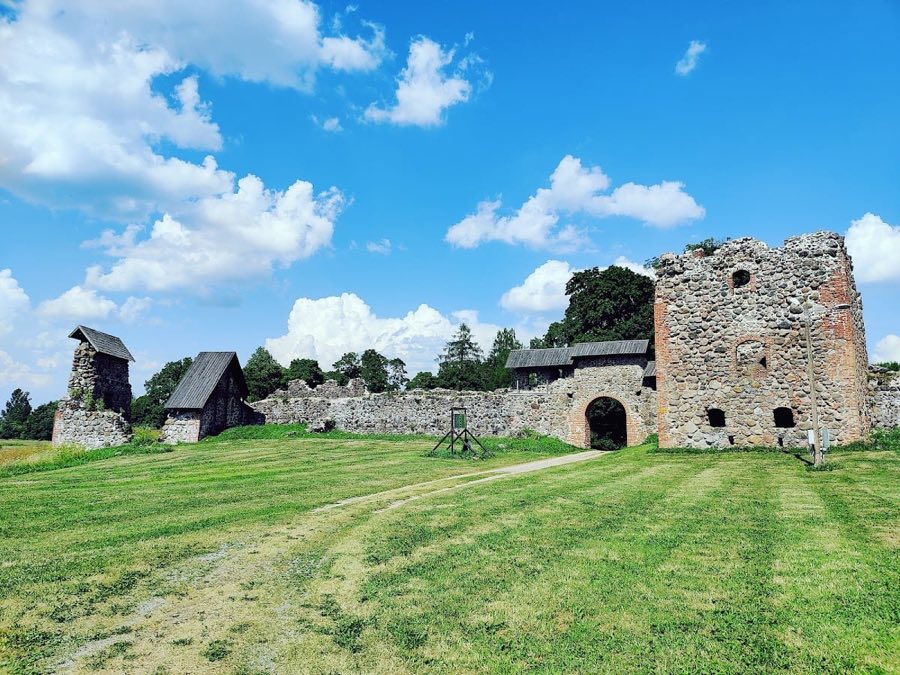
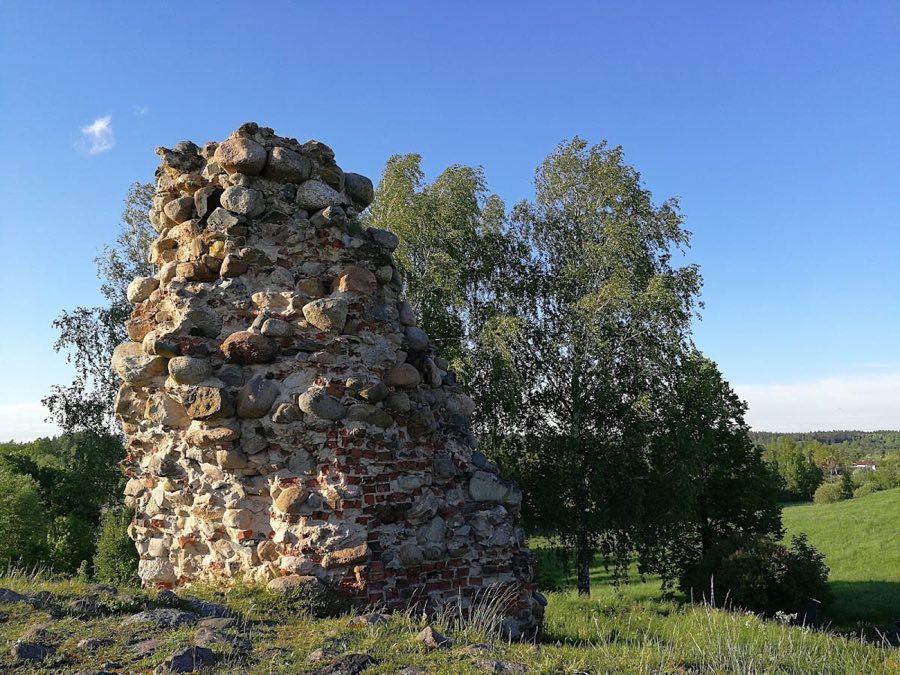
The central courtyard within the castle was rectangular and surrounded on all sides by wings of the main building, creating a courtyard enclosed by walls and structures. Today, only a small fragment of these buildings remains, near where the main gate once stood. The principal entrance was marked by a large gatehouse featuring a vaulted chamber above, which was later extended by a projecting gate structure. This addition housed the Holy Cross Chapel on its upper floor, a religious space noted as early as the early 15th century and associated with granting papal indulgences.
One tower stood guard over the main entrance, consistent with the castellum style which emphasized controlled access and defense through a single strong point. Among the surviving ruins, only a portion of the northeastern wall of the main fortress has endured as a fragment of brick masonry. The rest of the fortress lies in a ruined state, with its outer ward, or bailey, known to have existed although its exact location within the hill’s vicinity remains unclear.
Near the castle site lies the Rõngu Mikael parish church, situated about 1.5 kilometers southwest from the castle crossroads, highlighting the connection between the fortress and local religious centers. The surviving structures, especially the gatehouse and chapel remains, provide a glimpse into the castle’s combined military and ecclesiastical functions during its centuries of use.
No. 34324
No. 39876
No. 58198
No. 79397
Comments
Comments for Rõngu Castle will require a verified account before posting.
We'll send a verification link before your first comment is published.