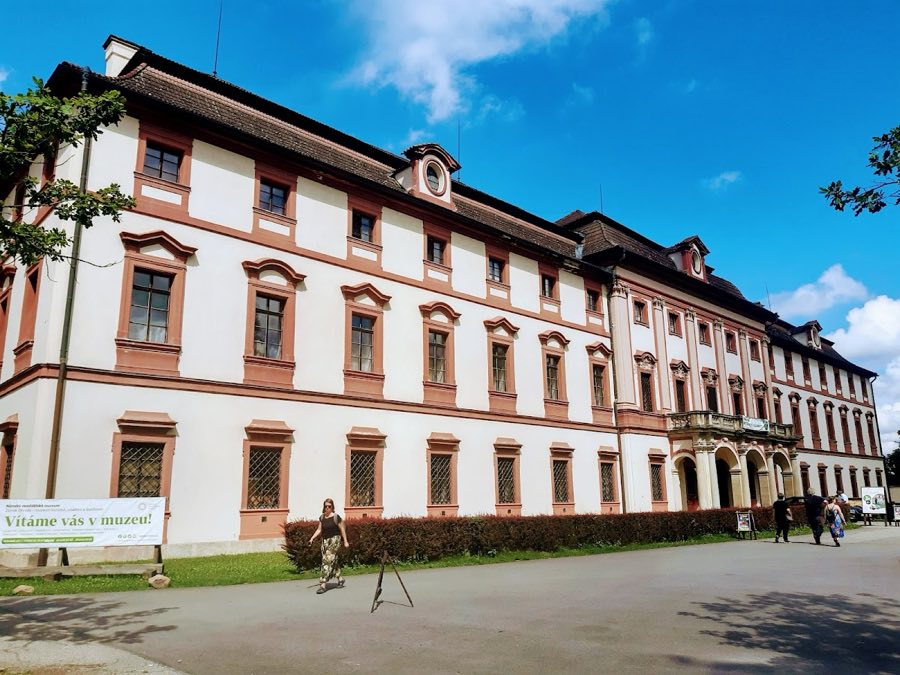
No. 47225
Lovecký zámek Ohrada
Czechia
CastleIntact20th century
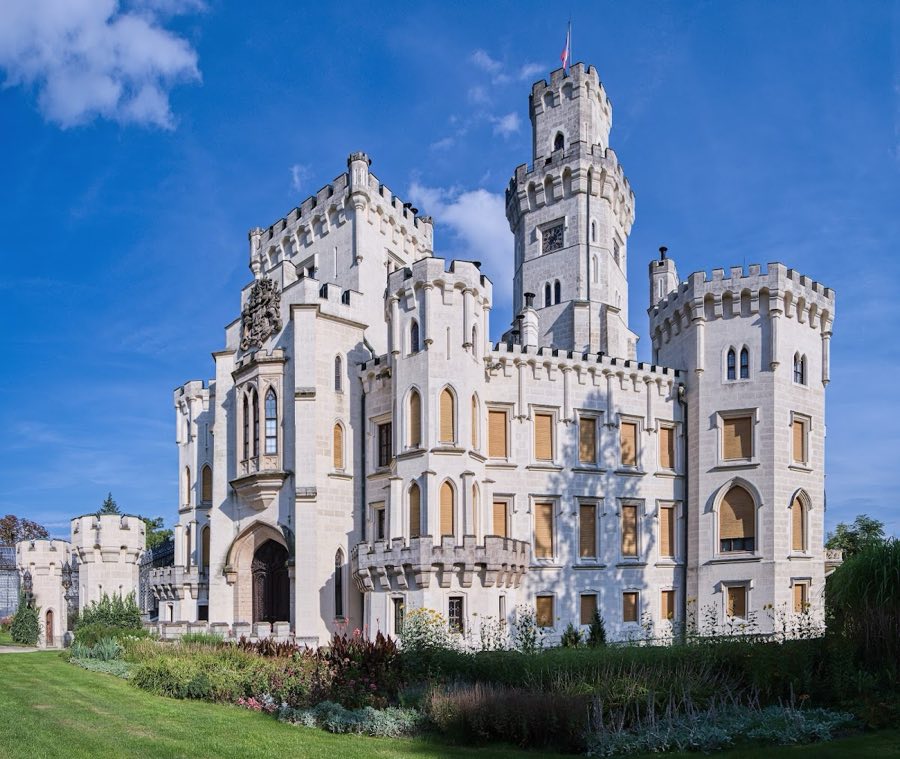
No. 44486
Castle · Czechia
No. 44486 · 49.051 N, 14.442 E
Quick summary
Hluboká Castle is a castle in Czechia with origins associated with the 13th century.
See all castles in CzechiaHluboká Castle in Hluboká nad Vltavou, Czechia, began as a medieval stronghold built by members of the Přemyslid dynasty in the middle to later decades of the 1200s, originally taking shape in the Gothic period and historically known under names such as Frauenberg, Froburg and Frohnfeste. Its position and successive rebuildings made it an enduring seat of noble power in the region from the late Middle Ages into modern times.
The earliest written notice appears in 1285, at which time the castle belonged to the Vítkovci family. In the closing years of that century the crown reasserted control, with royal recovery of the site recorded in 1290 after disturbances involving Vítek and his kin. During the late 1400s the fortress underwent a pronounced Gothic renewal under Vilém II of Pernštejn, reinforcing its medieval character.
In 1562 the estate passed to Joachim of Neuhaus, known as one of the lords of Hradec, and in the decades that followed Adam II of Hradec carried out an extensive reconstruction in the Renaissance taste, employing Italian builders and craftsmen between 1571 and 1587. The castle then reflected Renaissance planning and decoration layered over earlier medieval fabric.
After the Battle of White Mountain, the property was confiscated and transferred in 1622 to Baltasar Marradas, who ordered work on the outer castle between about 1620 and 1638. Ownership changed hands among heirs and buyers until the Schwarzenberg family acquired the estate in 1660–1661. The Schwarzenbergs made Hluboká their principal residence for nearly three centuries and ordered major alterations in successive styles. In the early 1700s Adam Franz von Schwarzenberg initiated Baroque rebuilding that reshaped parts of the complex. In the nineteenth century Johann, known also as Jan Adolf II von Schwarzenberg, commissioned a wide‑ranging Romantic transformation in a neo‑Gothic, Tudor-Gothic idiom modeled on Windsor Castle. Exterior and interior programs took place through the mid‑1800s, with the principal interiors finished by 1871. The Schwarzenberg family remained in residence until late 1939, when Adolf Schwarzenberg and his wife left the country to avoid collaboration with occupying authorities; the Gestapo took control of the property in 1940. After the Second World War the state enacted the Lex Schwarzenberg in 1947, a law that placed these holdings beyond restitution, and the castle became national property and a state museum in the same year. Parts of the former stables and the glazed orangery were adapted to house the Alš South Bohemian Gallery from 1956 onward. The complex is protected as a National Cultural Monument.
The castle stands today as a unified nineteenth‑century neo‑Gothic palace ensemble set within an English landscape park of roughly 190 hectares. The group occupies a high rocky promontory above the Vltava River, the rock rising about 83 metres above the water, and presents a compact silhouette of pinnacles and towers that reflect the nineteenth‑century Romantic redesign inspired by English models.
The main built complex contains about 140 rooms arranged around two inner courtyards, and is punctuated by eleven towers. A glazed orangery, a glass‑roofed greenhouse for wintering tender plants, and a large former stable range form part of the service wing. The surviving walls and roofs reflect the extensive nineteenth‑century reconstruction, which provides the present external appearance of the castle; the ensemble operates now as a public museum and is subject to national monument protection.
Interior finishes are rich in woodwork, with walls and ceilings clad in fine timbers and elaborate carving. The principal library preserves a coffered ceiling that was brought to the Schwarzenberg collection from Štammberg. Furnishings and movable collections include mounted hunting trophies, a high‑quality armory, notable furniture—especially in the breakfast room—paintings from the sixteenth through the eighteenth centuries, chandeliers, stained glass panels, Delft faience, family portraits, and woven tapestries. The porcelain, faience and glass holdings include pieces with recorded provenance back to 1604.
Named interior spaces retain distinct identities and fittings. Eleanor’s bedroom with its associated wardrobe, a small private cabinet known as the Hamilton cabinet, a dedicated reading room, and the principal library, the largest single hall, survive with historic decoration. A neo‑Gothic chapel contains an altar set beneath a large late‑Gothic arch. The former stables and the glazed orangery have been converted to gallery use since 1956, while the rebuilt nineteenth‑century palace otherwise preserves the unified appearance produced by the Romantic reconstruction.
No. 47225
No. 17632
No. 85345
No. 36835
Comments
Comments for Hluboká Castle will require a verified account before posting.
We'll send a verification link before your first comment is published.