No. 17632
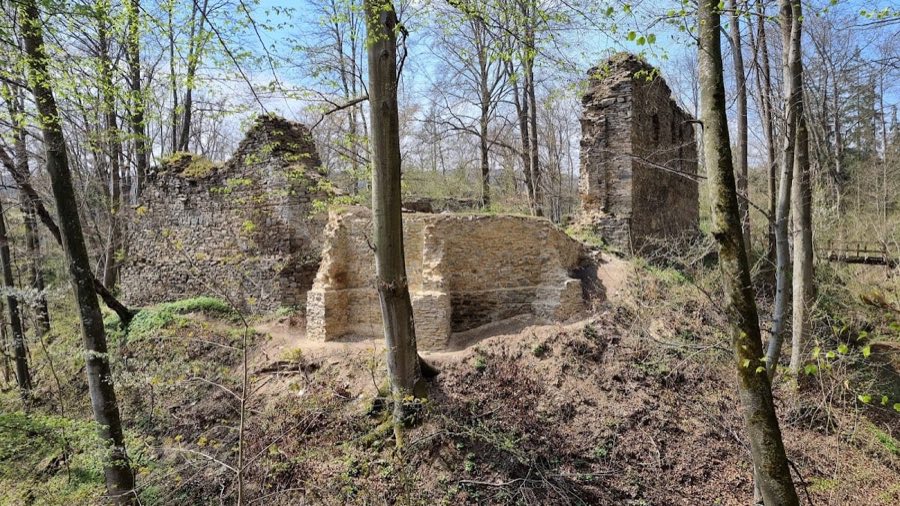
Karlův Hrádek
Czechia
CastleRuin13th century
No. 85345
Castle · Czechia
No. 85345 · 49.181 N, 14.386 E
Quick summary
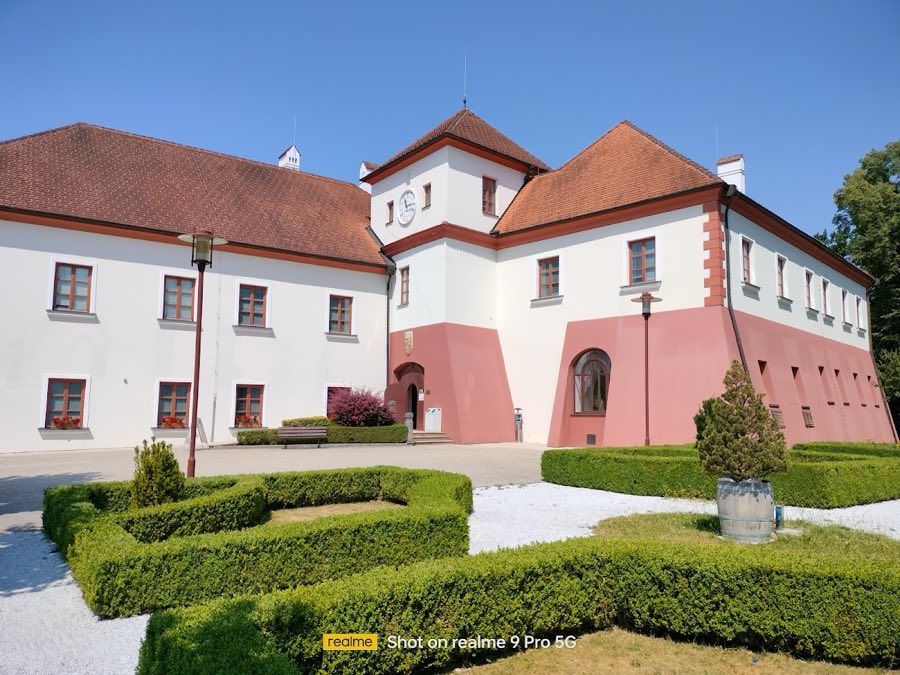
Vysoký Hrádek, Březí u Týna nad Vltavou is a castle in Březí u Týna nad Vltavou, Czechia with origins associated with the 14th century.
See all castles in CzechiaVysoký Hrádek in Březí u Týna nad Vltavou, Czechia, is a medieval estate originally developed by local Bohemian nobility, the Lords of Březí, and first appears in records in 1367. Its origins lie in a 14th-century farmstead that was expanded into a small fortified residence, and the site later took on greater significance as the centre of a rural manor with agricultural lands, forestry and dependent villages. A major architectural transformation in the early 1600s gave the residence a Renaissance character, and further rebuilding took place in the early 19th century, marking the site’s continued role as a local noble seat across several centuries.
During the late medieval and early modern period ownership passed through several noble families. After the Hussite wars the original line of the Lords of Březí died out and the property passed to relatives, the Lords of Býšov; named holders in surviving records include Oldřich of Býšov around 1440 and Jindřich of Býšov in the early 1500s. In the 1520s the Rendl von Uschau family briefly held the estate, and later in the 16th century it came into the hands of the Malovec family of Malovice. Under Václav Malovec Liběšický the former fortress was reshaped into a Renaissance castle at the beginning of the 17th century.
The estate remained contested property through the 18th and 19th centuries. A later Václav Malovec, inheriting in 1790, commissioned a remodelling completed in 1805, a change commemorated by the family coat of arms and the initials WM above the main entrance. In 1825 Franz Malowetz sold the property to Josef Hirsch and his wife Barbara, and by 1840 the manor included extensive agricultural holdings, forestry, several villages and a house in Temelínec; the castle contained a private chapel dedicated to Saint Anna and the administrative office of the estate. Ownership changed several more times in the late 19th and early 20th centuries, passing through the Wenzel and Sailer families, then to the Kovář family from 1914, and after a period of frequent transfers was acquired in 1933 by Václav and Jindřiška Diviš.
Political upheaval in the mid-20th century brought drastic change. The 1948 land reform led to the expropriation and nationalization of the estate under the new government, and during the communist period the castle and its park suffered heavy damage while used by the collective farm. Villages near the castle were cleared for construction of the Temelín Nuclear Power Station, and in the late 1980s the building served industrial and social functions, including a works kitchen, office space and a kindergarten. Conservators carried out roof renewal and other repairs between 1987 and 1989 with the intention of using the building as a municipal museum depot, but those plans were not completed.
After the 1989 political changes the property was returned to the Diviš family. In 1994 the energy company ČEZ bought the then-ruinous structure and carried out renovation work. Since 1997 the restored building has housed the Temelín Nuclear Power Station information centre, and the surrounding park, which includes two ponds, is open to the public seasonally.
The surviving building is a single-storey, two-winged house linked by a compact, two-storey gate tower that marks the former entrance. The wings are reinforced by external buttresses and the tower presents the strongest vertical emphasis in the composition, reflecting the site’s evolution from fortified farm to noble residence. Above the main doorway the Malovec family coat of arms remains visible with the initials WM and the date 1805 carved into the stone, a durable trace of the early 19th-century remodelling.
The castle stands at the northeastern edge of the Temelín power station grounds in the southern foothills of the Písecké Mountains, and a northward park contains two ponds that frame the building’s setting. Historically the interior included a private chapel dedicated to Saint Anna and a chancellery that served the estate’s economic administration; these rooms belonged to the building as part of its role as a manor centre. After restoration and adaptation in the 1990s the ground floor now accommodates an auditorium for educational films, a small cinema and lecture hall, a cloud chamber exhibit, and a compact display on the castle’s history, all integrated into the rehabilitated fabric.
Conservation work undertaken between 1987 and 1989 provided a new roof covering and stabilising repairs, and further renovation by ČEZ in the 1990s returned the structure from a ruinous state to usable condition. Today the building functions as an information centre and the refreshed park is accessible to visitors from April until October, preserving both the castle’s historic fabric and its immediate landscape.
No. 17632
No. 44486
No. 47225
No. 77003
Comments
Comments for Vysoký Hrádek, Březí u Týna nad Vltavou will require a verified account before posting.
We'll send a verification link before your first comment is published.