No. 44486
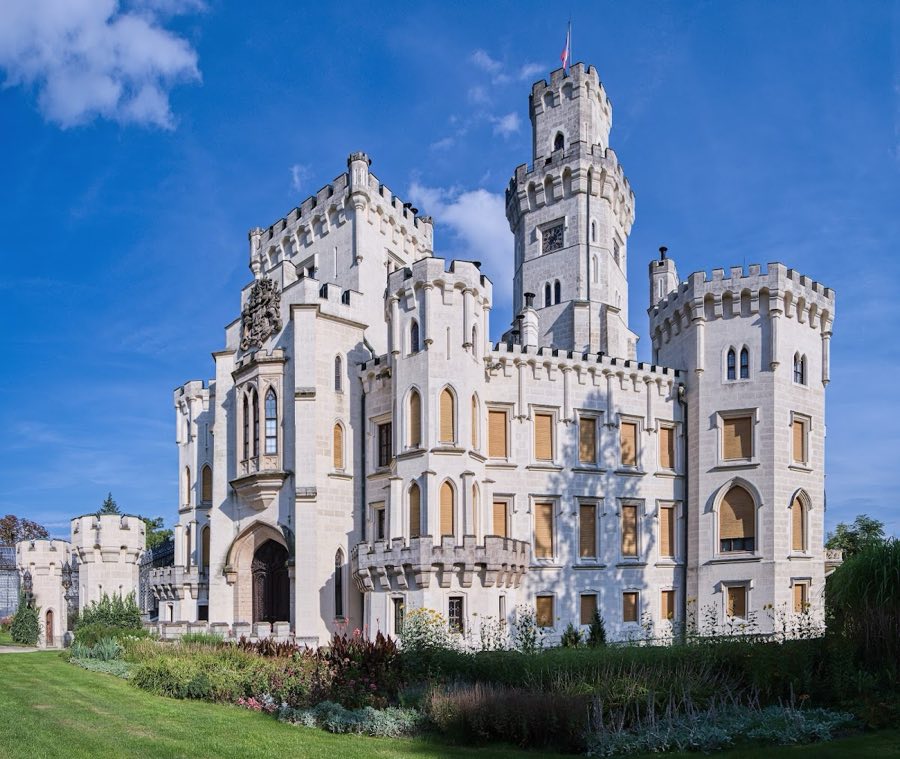
Hluboká Castle
Czechia
CastleRestored13th century
No. 17632
No. 17632 · 49.110 N, 14.460 E
Quick summary
Karlův Hrádek is a castle in Czechia with origins associated with the 13th century.
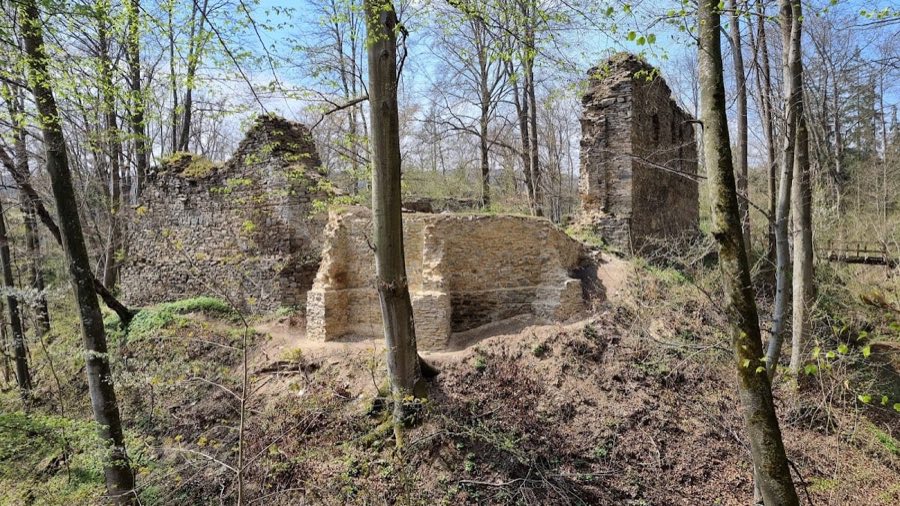
See all castles in CzechiaKarlův Hrádek is a historic castle ruin located within the municipality of Hluboká nad Vltavou-Purkarec in the Czech Republic. It was constructed by medieval Czech rulers as part of their territorial and administrative network in the region.
The earliest written mention of Karlův Hrádek appears in 1357, linked to a dispute between King Charles IV and the noble Rožmberk family. At that time, the castle was intended to function as the center of a new estate separated from the nearby town of Hluboká. Although Charles IV has traditionally been credited with founding Karlův Hrádek shortly before this date and naming it Karlshaus, recent archaeological investigations conducted in 2019 and 2021 have revealed that the castle’s origins are older. These studies suggest the fortress was established in the latter half of the 13th century, probably under King Přemysl Otakar II, predating Charles IV’s involvement.
During the reign of Charles IV, Karlův Hrádek may have served as a personal retreat. Its design and spatial arrangement appear influenced by the palaces of French monarchs, which Charles IV admired. However, the castle’s defensive capabilities were limited, and during the subsequent turbulent period under King Václav IV, it likely lost strategic importance. The only known official associated with the castle is Petr of Nasavrky, who served as its burgrave (castle administrator) in 1364.
After Charles IV’s attention shifted elsewhere, the castle was abandoned and fell into disrepair. By around 1370, it was probably deserted, a fate shared by the small settlement that once existed alongside it. Some historians identify this vanished village with the present-day locality of Purkarec. Beneath the medieval structures, archaeological evidence points to even older human activity at the site, indicating the area held significance well before the castle was built.
Karlův Hrádek is situated on a raised promontory roughly 400 meters above sea level, overlooking the left bank of the Vltava River. Its strategic location offered commanding views of the surrounding landscape. The castle’s core is enclosed within a polygonal shape formed by thick earthen ramparts and surrounded by a deep moat. This enclosure creates a strong defensive perimeter characteristic of medieval fortifications in the region.
In front of the castle, there lies a large fortified enclosure bordered by an earthwork rampart. This area likely hosted the medieval settlement associated with the castle, serving both residential and protective functions for those connected to the estate.
Entry to the castle was from the north, through a gate passage that includes small seating niches built into the walls. These niches would have provided space for guards or attendants overseeing access. The interior of the castle was organized around palace wings forming a single, unified complex. Among the interior spaces, a large chapel stands out, located in the eastern corner. This chapel features a vaulted ceiling supported by two bays of cross-ribbed vaults, an architectural element that allowed for both structural stability and aesthetic elegance. It was illuminated by several large pointed-arch windows, characteristic of the Gothic style.
Above the main floors, traces of timber-framed chambers have been found, suggesting the upper storeys were constructed using wood, offering lighter and more flexible living or storage areas. On the northern and eastern sides, a barbican—a fortified outwork designed to strengthen the castle’s defense—extends protection further beyond the main ramparts.
Excavations conducted in recent years recovered a variety of artifacts including fragmented ceramics, metal objects, animal bones, and charred wood. These finds document both the medieval occupation of the site and the earlier prehistoric activity evidenced below the castle’s foundations. Today, the ruins remain accessible in situ, preserving a tangible connection to the layered history of this distinctive medieval fortress.
No. 44486
No. 47225
No. 85345
No. 77003
Comments
Comments for Karlův Hrádek will require a verified account before posting.
We'll send a verification link before your first comment is published.