No. 44486
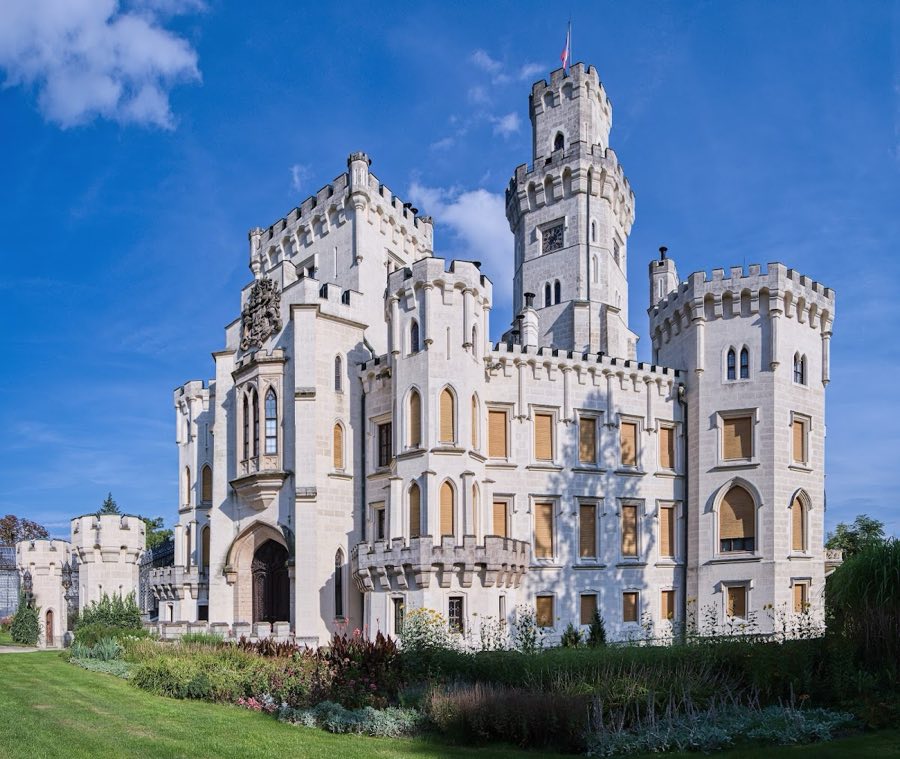
Hluboká Castle
Czechia
CastleRestored13th century
No. 47225
Castle · Czechia
No. 47225 · 49.042 N, 14.421 E
Quick summary
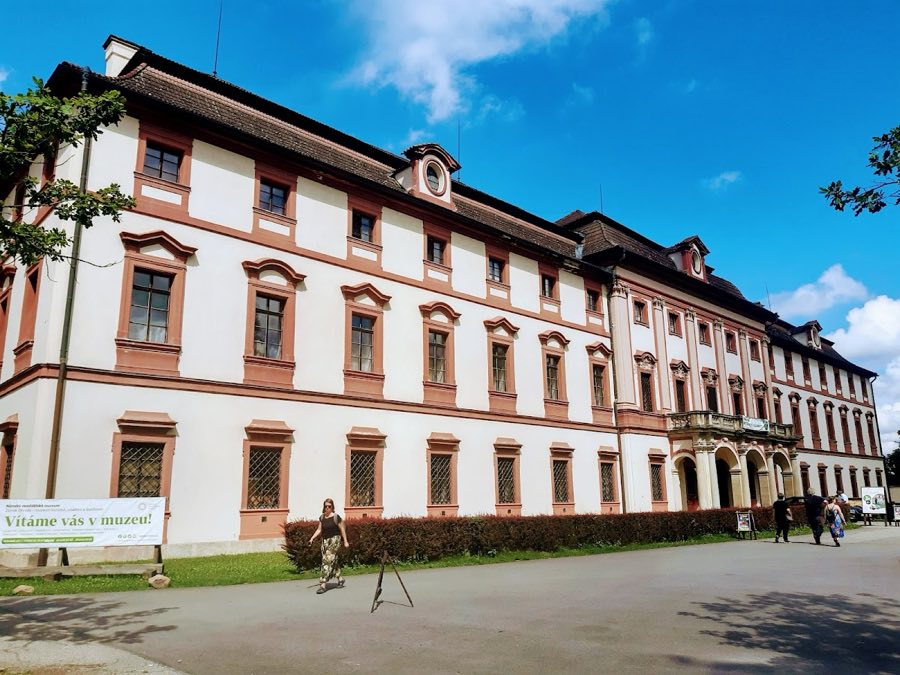
Lovecký zámek Ohrada is a castle in Czechia with origins associated with the 20th century.
See all castles in CzechiaLovecký zámek Ohrada in Hluboká nad Vltavou, Czechia, is a Baroque hunting castle erected by the Schwarzenberg princely house between 1708 and 1713. Commissioned to serve the princely court, the building was created to stage parforce hunts and to host the social festivities that accompanied large-scale hunting on the Schwarzenberg estate, placing it within the ritual and recreational landscape of early 18th‑century Bohemian nobility.
Construction proceeded in distinct stages across the early 1700s. An arsenal was put up on the western side of the site first, followed by the addition of south and north wings intended for stables and kennels. The sequence concluded with the principal block, which contained a large Hunting Hall and a first‑floor chapel. The chapel was devoted to Saint Eustace, patron of hunters, and its ceiling showing the Holy Trinity was painted in 1715; an altar dedicated to Saint Hubert received its decorative program by 1720 and included an altar image from a Flemish painter. Interior decorative schemes included hunting and mythological scenes and elaborate stucco work installed during this early phase.
In 1842 Prince Johann Adolf II zu Schwarzenberg created a purpose-built museum within the castle, assembling hunting trophies, weapons and mounted animals into what became the first hunting museum there. During the 20th century the building accommodated forest administration offices and served as military hospitals. At the outset of the First World War German military authorities occupied the site. Following the end of that conflict the castle was transferred into state hands under the Czechoslovak government.
From 1961 the Prague Agricultural Museum took responsibility for the site and reoriented its displays toward forestry and fishing. A major program of repair and renewal was carried out between 1986 and 1990. In 2001 the castle received legal protection as a national cultural monument of the Czech Republic. The complex today houses the Museum of Forestry, Hunting and Fishing, an institution whose origins make it among the earliest museums in the Czech lands; several of the large oil paintings that once decorated the Hunting Hall are now held in Austria.
The site sits on the southern shore of Munický Pond, near the Ohrada zoological garden and the Vondrov farm, and its plan reflects its function as a hunting establishment. The surviving layout preserves the ordered sequence of buildings begun in the early 18th century: a western arsenal, paired service wings to the south and north that originally contained stables and kennels, and a central main block that held the principal ceremonial spaces, including the Hunting Hall and the chapel.
The chapel, placed on the first floor of the main block and dedicated to Saint Eustace, retains its painted ceiling showing the Holy Trinity, completed in 1715 by a Viennese artist. The altar honoring Saint Hubert preserves the layered decorative program completed in 1720, which includes an altar picture by a Flemish painter. These painted and sculptural fittings were installed as integral devotional furnishings for the princely household and the hunting court.
Interior decoration throughout the castle combines painted ceiling scenes, figural ceiling work featuring hunting and mythological subjects, and applied stucco ornament. Ceiling paintings that include episodes with the goddess Artemis form part of the pictorial scheme, while interior stucco was executed by a noted craftsman of the period. Stone elements such as principal chimneys and the entrance portal are attributed to a Prague stonecutter of the early 18th century, indicating the use of skilled masonry and carved stone in key architectural features.
The principal ceremonial space, the Hunting Hall, was furnished with large oil paintings by a Scottish court painter active for the Schwarzenbergs in the years after 1709. Those canvases have been removed from the building and are now preserved in Austria. The castle underwent extensive restoration work between 1986 and 1990, and since then it has been managed as the Museum of Forestry, Hunting and Fishing; the site’s protected status was confirmed in 2001 when it was declared a national cultural monument.
No. 44486
No. 17632
No. 85345
No. 36835
Comments
Comments for Lovecký zámek Ohrada will require a verified account before posting.
We'll send a verification link before your first comment is published.