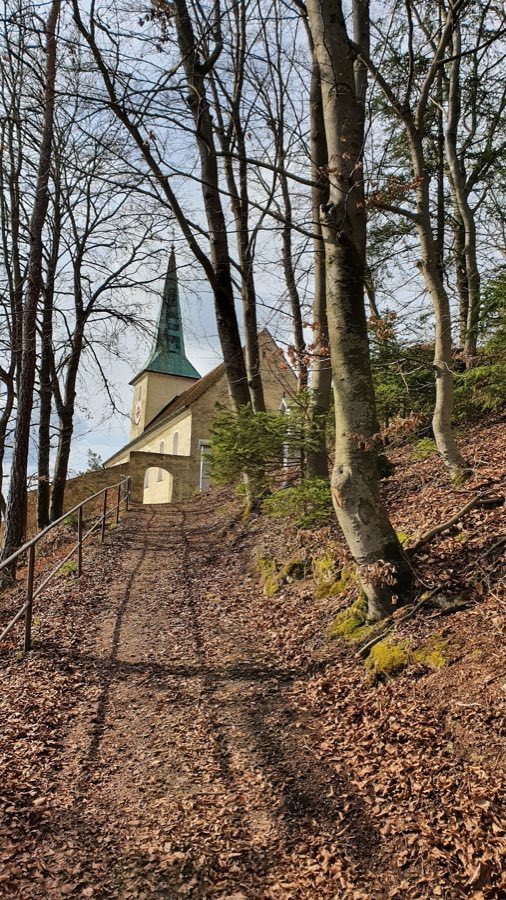
No. 32188
Burgruine Zant
Germany
CastleRuin12th century
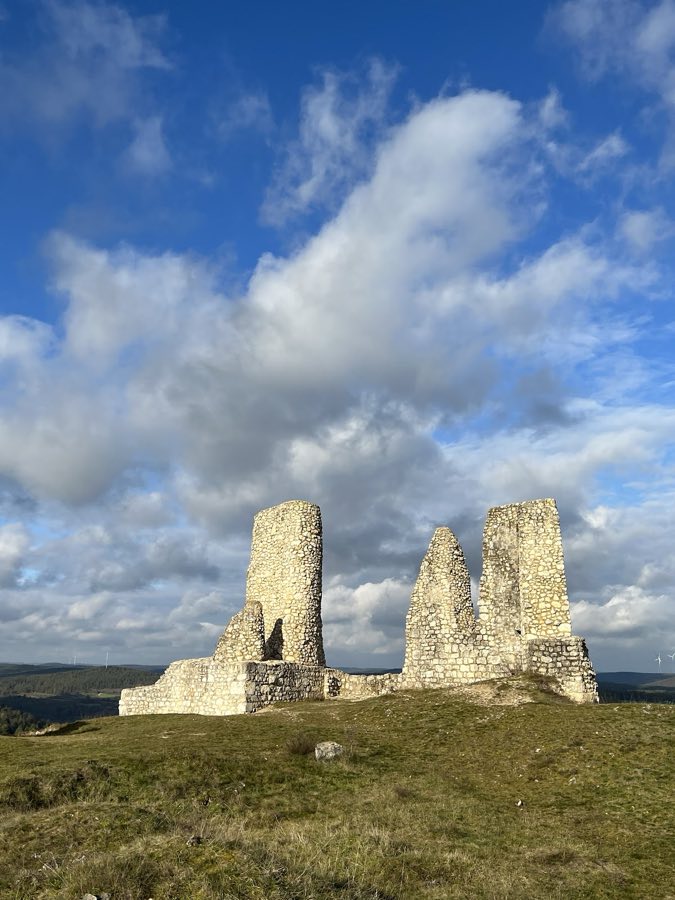
No. 45707
No. 45707 · 49.291 N, 11.793 E
Quick summary
Hohenburg (Hohenfels) is a castle in Germany with origins associated with the 16th century.
See all castles in GermanyBurgruine Hohenburg (Hohenfels) stands above the village of Hohenburg in Germany and was built before the year 1000 by the Margraves of Hohenburg of the Diepoldinger family.
The earliest phase of the site served to control a medieval trade route that ran from the lower Elbe down through Forchheim to Regensburg. The Margraves who built the complex are first mentioned in written records in 1050, and the fortress on the summit of the hill functioned as a strongpoint for protecting and overseeing that line of travel and commerce.
Ownership passed to the Bishopric of Regensburg under an inheritance contract, after which the castle was occupied and administered by the bishopric’s appointed stewards. Those appointed stewards carried out the administrative and defensive duties associated with the site until the end of the 16th century, when they departed and the castle then fell into decline.
In 1468 the Franconian knight Livin von Wirsberg, who had been sentenced to life imprisonment for heresy, died within the castle. Over the centuries the complex was altered several times; it underwent enlargements and reconstructions, and by the 1500s contemporaries described it with the term “castle-like.” Following its period of decay after the late 1500s the ruin remained until it was demolished after 1812.
The location and surviving traces are now recorded in official heritage registers, and the site lies within the boundaries of the Hohenfels training area of the United States Army.
The castle occupies a rocky, largely treeless summit of the castle hill at 520.9 meters above sea level, directly above and slightly southwest of the village of Hohenburg in the Lauterach valley. Archaeological remains show an extensive, compact complex arranged on the summit with defensive and residential elements grouped close together.
A prominent feature is a square keep positioned at the northwest tip of the site. The tower has a squared exterior outline while its interior is rounded, indicating the construction technique and internal plan used by the builders associated with the earliest phases before 1000. The keep stood as a dominant defensive and watch position for the summit castle and its remains mark the original strongpoint.
To the east of the keep the main residential block, the great hall or palas, is archaeologically documented. Its walls display evidence of both inner and outer facing made of limestone ashlar, and the palas contained two latrine cores, showing how sanitary provision was arranged within the living quarters. These dressed stone facings indicate a high standard of masonry for the building phases that survived into the late medieval and early modern periods.
An outer ward, or enclosed defensive perimeter, surrounded parts of the inner castle and formed an additional layer of protection. Wall fragments and other masonry belonging to this outer enclosure are visible on the hill and record successive phases of expansion and rebuilding that the complex experienced through the medieval and early modern centuries.
Substantial wall remains from the former extensive complex survive on the hill and remain widely visible from the Lauterach valley today. The site is registered as an archaeological monument under file number D-3-6736-0095 in the Bayernatlas, described as archaeological findings from the Middle Ages and early modern period in the area of the ruin, and it is also listed as a protected architectural monument under file number D-3-73-134-38 for Hohenfels. The ruin lies within the Hohenfels military training area and is not accessible to the public.
No. 32188
No. 36200
No. 19207
No. 42103
Comments
Comments for Hohenburg (Hohenfels) will require a verified account before posting.
We'll send a verification link before your first comment is published.