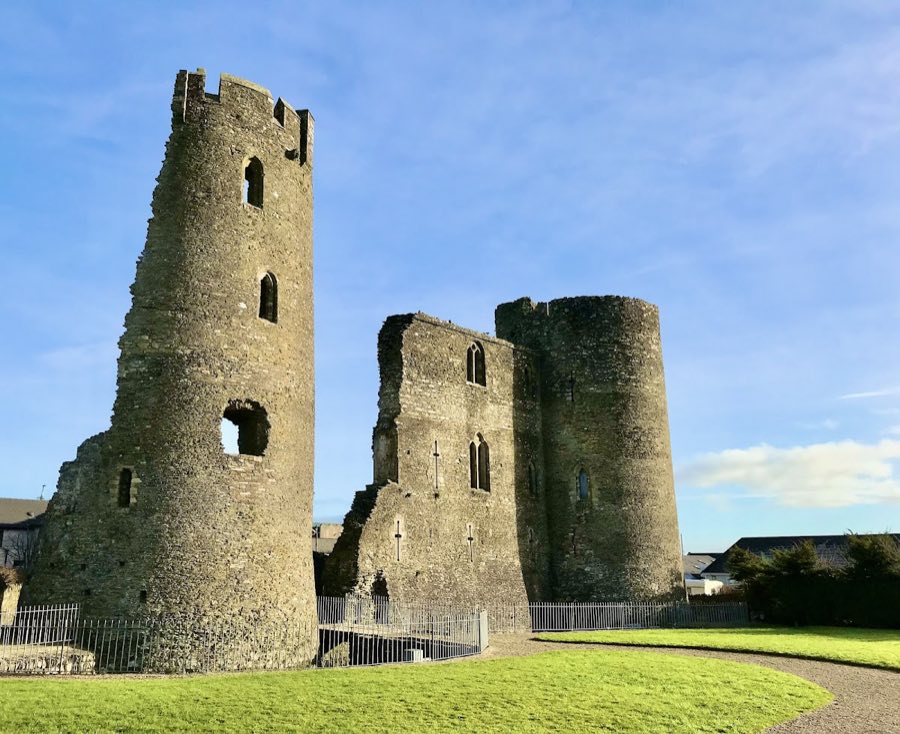
No. 11727
Ferns
Ireland
CastleRuin6th century
No. 66974
Tower house · Ireland
No. 66974 · 52.690 N, 6.649 W
Quick summary
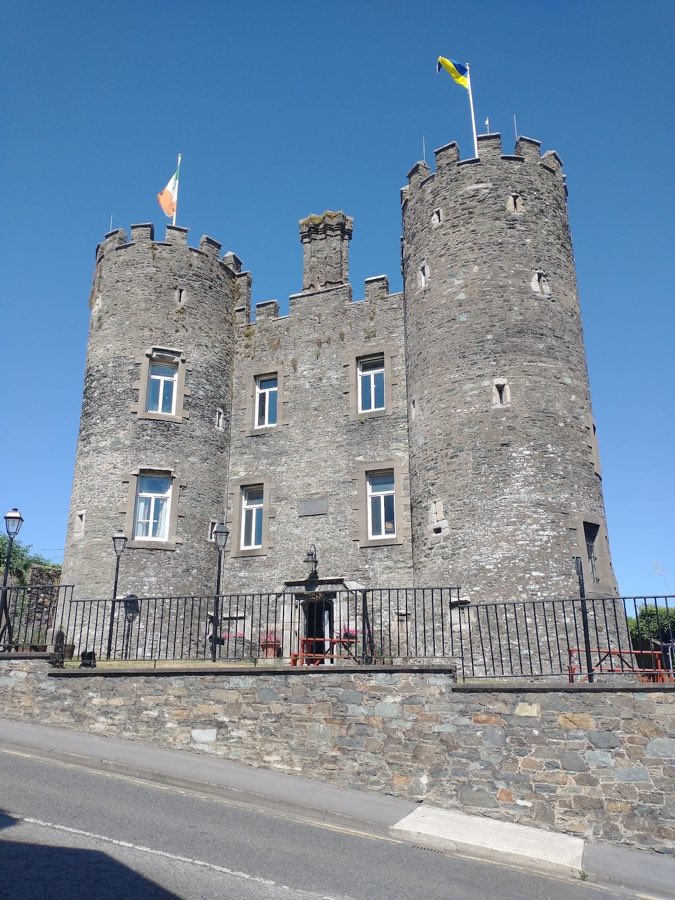
Huntington Castle, Clonegal is a tower house in Clonegal, Ireland with origins associated with the 15th century.
See all castles in IrelandHuntington Castle in Clonegal was built in the 15th century by the Irish Caviness clan as a tower house serving as the chieftain’s residence and a small garrison. The property later passed into the hands of Baron Esmonde and became associated with the Esmonde family.
In the early 1600s the castle served as a military support point during the English conquest and the Plantation of Ireland. During the 1641 rising it was taken by rebels who raised the flag of the Irish Confederation, and in 1650 Oliver Cromwell’s troops stormed and captured the building during their march to Kilkenny.
The Esmonde family laid out gardens at the site in the 17th century. In the 19th century a water-turbine installation supplied the castle with electrical power; one dated account gives 1888. The castle remains in private ownership. In the 20th century it was used as a filming location for Stanley Kubrick’s Barry Lyndon. Its cellar and dungeon have been used by the Fellowship of Isis for religious rites since 1976, and the Solas festival took place there in August 2008, founded by Olivia Robertson, her brother Lawrence Durdin-Robertson, and his wife Pamela Durdin-Robertson. Local tradition records numerous legends of druids’ ghosts around the castle, credited with fog, fire, bloody rain, causing death, human sacrifices, and with repeatedly saving the castle from siege.
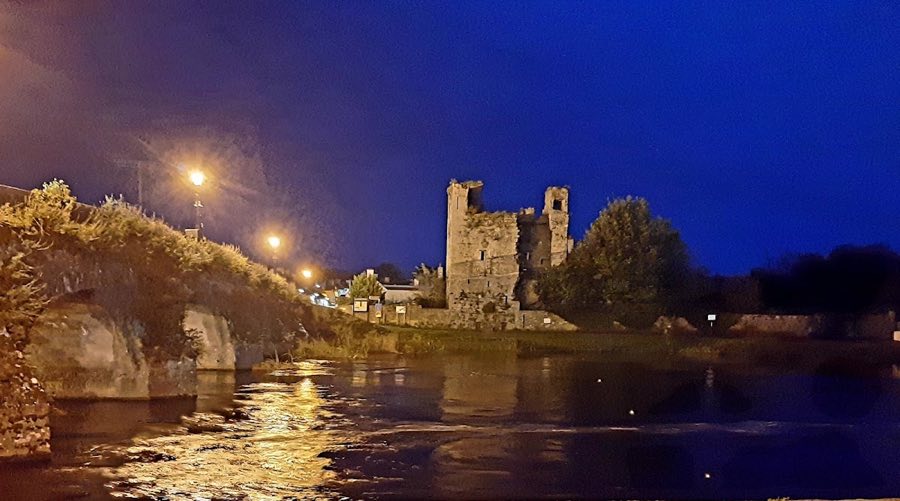
The surviving complex centers on the 15th-century tower house originally built to accommodate a small garrison; the masonry and plan reflect a fortified residence combined with surrounding designed grounds.
Beneath the castle a cellar or dungeon is a distinct feature and has been used by the Fellowship of Isis since 1976. A well is recorded within the site and is described in local accounts as a well that never dries.
The designed landscape laid out by the Esmondes in the 17th century survives in broad arrangement: a straight central avenue planted with linden trees forms an axial spine flanked by ornamental ponds or fishponds. Close to the castle are lawns and a formal parterre, with a Yew Walk and larger planted areas extending into a more natural garden beyond.
The estate’s water setting includes ponds beside the central alley and the River Derry along the lower boundary, where the river also marks the county boundary between Wexford and Carlow. Planting records list limes (lindens), yews, oaks, firs or spruces, pines and chestnuts among original trees, with later introductions producing large specimens of hickory, sessile oak and horse-chestnut. A 19th-century water-turbine house provided electrical power, with a dated account recording installation in 1888.
No. 11727
No. 77860
No. 37160
No. 38581
Comments
Comments for Huntington Castle, Clonegal will require a verified account before posting.
We'll send a verification link before your first comment is published.