No. 19872
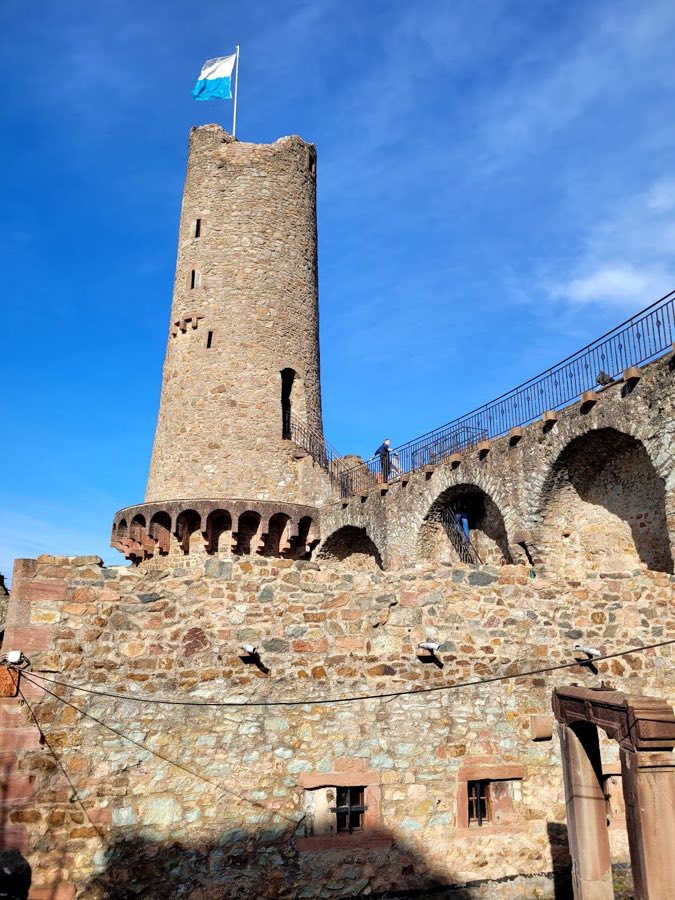
Burg Nieder-Modau
Germany
CastleRuin12th century
No. 68449
Palace · Germany
No. 68449 · 49.899 N, 8.698 E
For rent
Jagdschloss Kranichstein is marked for bookable castle accommodation. Nightly pricing, sleeps count, stay rules, and amenities are displayed only when public operator data is available.
Rental type: Hotel / bookable stay, Short-stay rental
Short-term availability: Bookable accommodation signal
For events
Jagdschloss Kranichstein is marked as a château or castle venue lead. Capacity, indoor/outdoor spaces, catering rules, and accommodation options are published only after public verification.
Event types: Weddings, Private events, Cultural gatherings, Filming and photography
Ceremony spaces: Ceremony setting to verify
Accommodation: Accommodation signal present
Quick summary
Jagdschloss Kranichstein is a palace in Germany with origins associated with the 16th century.
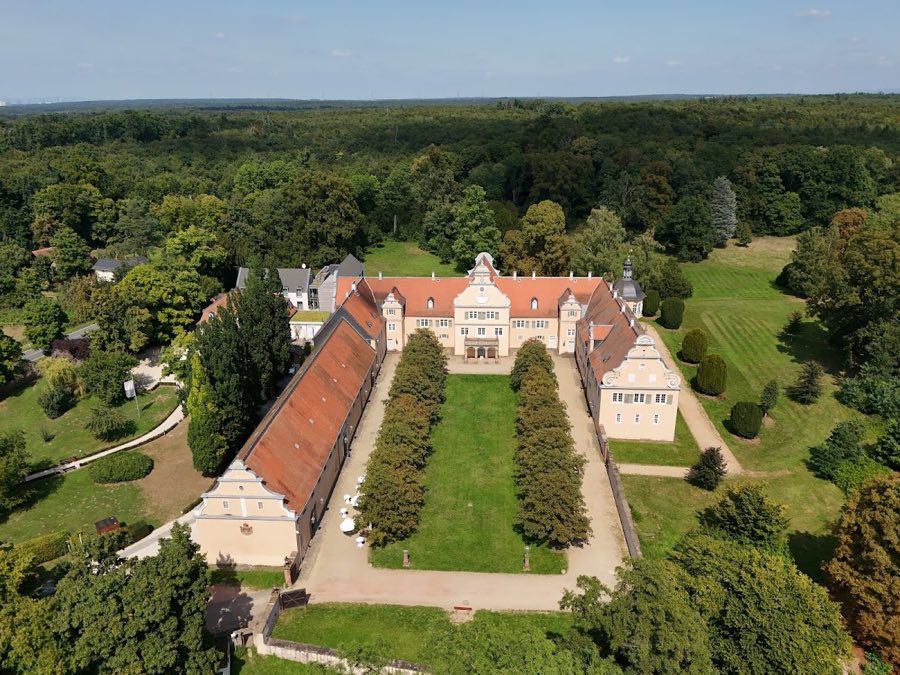
See all castles in GermanyJagdschloss Kranichstein stands in Darmstadt, Germany, and was built by the German principality of Hesse-Darmstadt.
Construction began in 1578 and concluded in 1580 when George I, Landgrave of Hesse-Darmstadt, established the site as a three-winged Renaissance hunting lodge; the master builder Jakob Kesselhuth is recorded by name. From that time the estate served as a hunting seat and as a summer residence for the ruling family for about three and a half centuries. The chapel within the palace was founded under Landgrave George I and became part of the complex’s early devotional fittings.
During the later seventeenth and eighteenth centuries successive rulers adapted the lodge to changing tastes. Ernst Ludwig and later Ludwig VIII staged parforce hunts and introduced Baroque fittings and representative rooms. In 1765 Ludwig VIII added a small Baroque hunting pavilion, the Dianaburg, located roughly 2.5 kilometres north of the main palace as an element of the hunting landscape around Kranichstein.
In June 1863 Louis IV and his wife Alice began using the estate as a residence; thereafter it functioned as a family summer residence, and Alice continued to use it until her death in 1878. Queen Victoria visited as a summer guest on several occasions, and Alice’s correspondence records daily life at Kranichstein. In 1917 Grand Duke Ernst Ludwig gathered hunting equipment and accessories at the site, and Kuno Graf von Hardenberg installed a hunting museum there the same year.
After the Second World War the estate hosted the first Darmstädter Ferienkurse in 1946. The Stiftung Hessischer Jägerhof acquired the property following the war and reopened the museum in 1952 with a focus on Baroque presentation. Between 1988 and 1996 the state of Hesse, the city of Darmstadt and the foundation carried out an extensive renovation that reinstated the Renaissance appearance of a ground-level interior floor reported as the first floor. From the late twentieth century parts of the complex were adapted for hotel use, with one wing operating as a four-star hotel, and the site was used for events and weddings, including a notable ceremony in 1999. In 2008 the Jagdzeughaus began housing the bioversum museum, addressing biodiversity and invasive species. The palace and its associated buildings and landscape elements are recorded as Hessian cultural monuments.
The ensemble is organized around a three-winged Renaissance palace built as a hunting lodge. The palace complex retains the palace proper together with an adjacent Kavaliersbau and a long equipment building known as the Jagdzeughaus, which runs for about 112 metres a few dozen metres to the south of the main house. Beside the Jagdzeughaus stands the Jagdzeugmeisterhaus. A former hunting house called Alexanderburg and the Hofgut to the west belong to the immediate group of estate buildings.
Inside the palace, the ground-level floor that was the subject of late twentieth-century restoration shows a reinstated Renaissance appearance. Upper-floor representative rooms preserve Baroque decoration, hunting paintings, tapestries and mounted trophies, including antlers fixed to carved wooden deer heads. The palace chapel, established under George I, survives with a decorative stucco ceiling and two wooden galleries that are decorated with paintings. The eastern wing contains the Marstall on its ground floor; recent conservation cleared numerous insertions from that space and it now serves as a hall for concerts and similar events.
The Jagdmuseum collection documents hunting practice and technology. The museum displays extensive weaponry, including firearms, airguns, crossbows and edged hunting weapons such as Hirschfänger and Saufedern. Several hunting guns on display were produced by the court gunsmiths Albrecht and Boßler. In 1917 Kuno Graf von Hardenberg installed the museum collection on the estate, and the foundation re-opened it in 1952 with a Baroque focus. In 2008 the Jagdzeughaus also received the bioversum museum, which presents material on biodiversity and invasive species within the long equipment building.
The landscape retains deliberate hunting infrastructure. The surrounding forest was cut with star-shaped hunting avenues and with hunting screens that structured the pursuit of game. The Backhausteich lies to the east of the former park along the Zeughausallee, and the Ruthsenbach stream links the estate with the Fasanerie and the Steinbrücker Teich. Overall, the complex of palace, Kavaliersbau, Jagdzeughaus, Jagdzeugmeisterhaus, Marstall, chapel, Hofgut, Dianaburg, Alexanderburg and the system of hunting lanes survives as a preserved group of buildings and landscape features recorded as Hessian cultural monuments.
No. 19872
No. 80735
No. 25631
No. 73431
Comments
Comments for Jagdschloss Kranichstein will require a verified account before posting.
We'll send a verification link before your first comment is published.