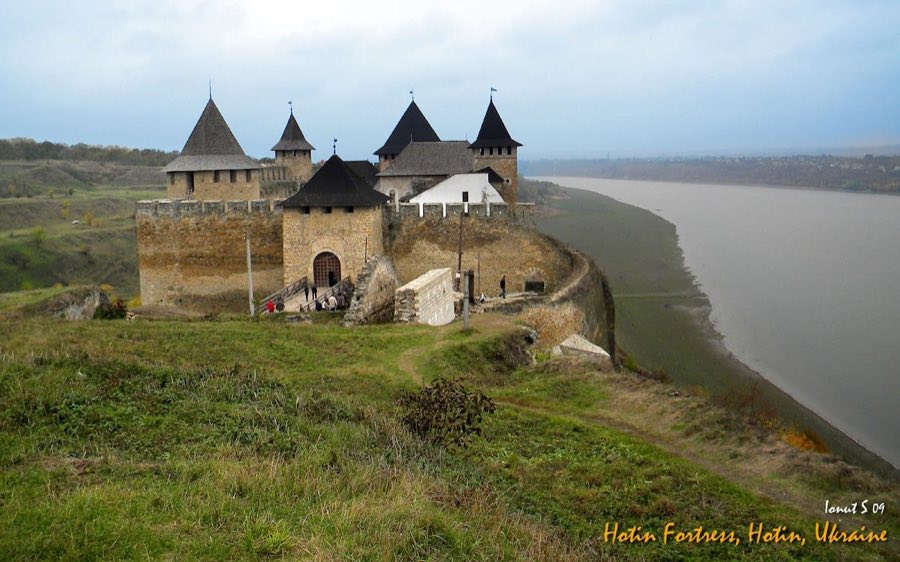
No. 34624
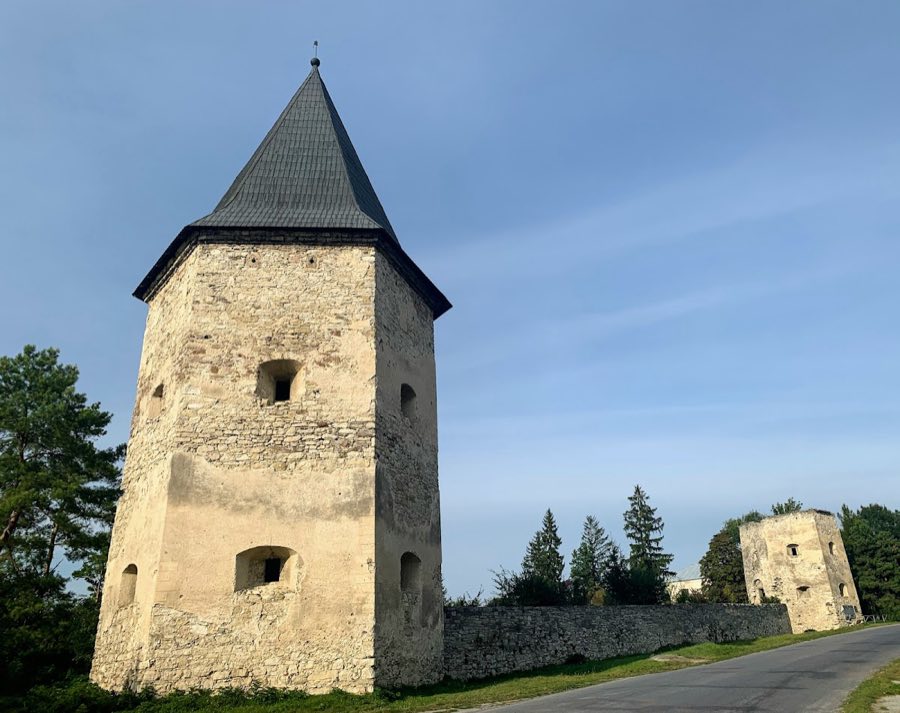
Khotyn Fortress
Ukraine
CastleRuin8th century
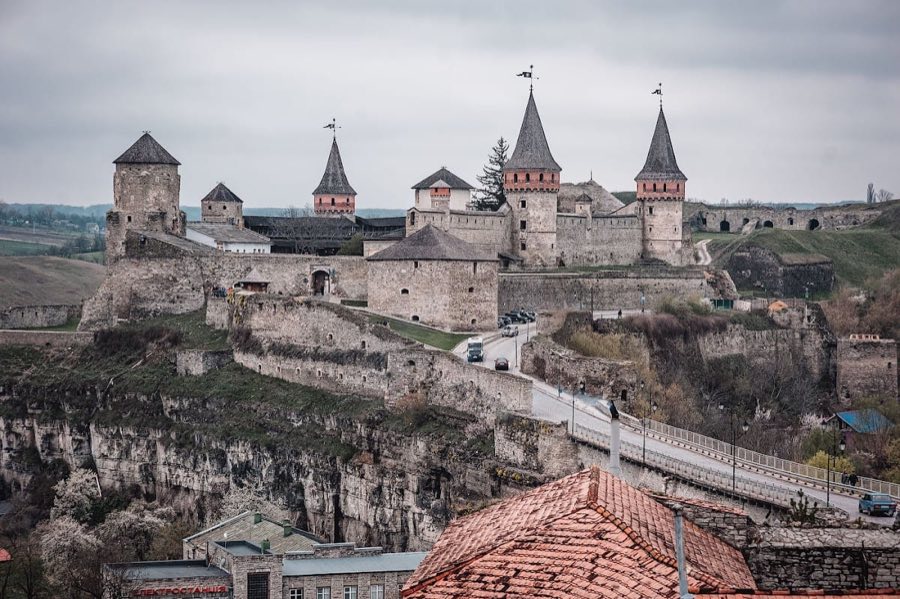
No. 96215
Castle · Ukraine
No. 96215 · 48.673 N, 26.563 E
Quick summary
Kamianets-Podilskyi Castle is a castle in Ukraine with origins associated with the 12th century.
See all castles in UkraineKamianets-Podilskyi Castle stands in the historic city of Kamianets-Podilskyi in Ukraine and was originally constructed by medieval European builders. It served as a cornerstone of defense in Eastern Europe from the Middle Ages onward.
The earliest written reference to the castle appears in 1374, when Prince Yurii Koriatovych of Lithuanian-Ruthenian origin issued a charter granting the city Magdeburg rights, explicitly stating the document was made “at the castle.” Archaeological research suggests the fortress predates this record by several centuries, with origins possibly reaching back to the late 11th or 12th century. Some contested theories even propose much earlier, possibly Dacian-Roman, roots for the site’s initial fortifications.
During the 14th and 15th centuries, Kamianets-Podilskyi Castle was the seat of the Podilskyi principality, playing a central role in regional administration. It later became the capital of the Podilskyi voivodeship from the 15th to the 18th centuries and eventually the seat of the Podilskyi governorate from 1793 until 1925. Throughout this time, the castle not only served as a military stronghold but also as an administrative center.
The castle endured numerous military conflicts, notably resisting more than fifty Tatar raids between the 15th and 17th centuries. It also withstood multiple Ottoman sieges, including significant attacks in 1621 and 1672. The siege of 1672 proved decisive, as Ottoman and allied forces eventually forced its surrender. According to historical accounts, the commander of the fortress, in an act of protest, detonated the powder magazine, resulting in his own death along with hundreds of defenders.
In the 17th century, the castle also witnessed turmoil during Cossack uprisings that swept through the region, highlighting its continued strategic importance in times of unrest. However, by the early 18th century, the fortress had lost its military value and was converted into a military prison. From that period into the early 20th century, it housed debtors, criminals, and political prisoners. Among those held was Ustim Karmaliuk, a Ukrainian folk hero known for his resistance against social injustices.
In the modern era, Kamianets-Podilskyi Castle was recognized for its historical importance and declared a national historical and architectural reserve in 1977. Also included among Ukraine’s renowned Seven Wonders, the castle has been nominated as a candidate for UNESCO World Heritage status since 1989. Preservation and archaeological efforts, particularly those started in the 1960s, continue to reveal new insights into its extensive history.
Kamianets-Podilskyi Castle occupies a limestone promontory encircled on three sides by the deep canyon of the Smotrych River, which serves as a natural defensive barrier. The entire complex covers around 4.5 hectares and consists of two main sections: the Old Castle and the New Castle. The Old Castle, dating primarily from the 11th century onward, is enclosed within an irregular quadrilateral plan stretching along the promontory. It features thick stone walls punctuated by eleven masonry towers, twelve in total historically, each serving specific defensive or functional roles.
The Old Castle’s walls are constructed from a combination of local limestone and imported bricks, reflecting rebuilding phases from the medieval period through the 16th century. Noteworthy among its towers is the Papal Tower, named for bearing a stone plaque adorned with the insignia of Pope Julius II, who financed repairs during his papacy between 1503 and 1513. This tower stored artillery, gunpowder, and treasury valuables, and included a mill within its structure. Another prominent structure is the Kovpak Tower, which housed local nobility quarters and was built atop earlier foundations dating back to the 14th century.
The Dzienna Tower, constructed in the late 16th century under starosta Mikołaj Brzeski, stands out as a tall tower with an artillery platform and a small Lutheran chapel inside. It also had a unique observation post on its roof known as the “orlyk.” Nearby, the Rozhanka Tower featured a basement prison chamber and specialized vaulting designed to vent dangerous gunpowder gases safely away.
The New Castle, built in the early 17th century by military engineer Teofil Szemberg, lies adjacent to the Old Castle and includes earthwork bastions and moats. This trapezoidal fortification covers roughly three hectares and was designed to enhance the fortress’s firepower with artillery casemates and reinforced earthworks.
Two main gates provided controlled access in the Old Castle: the Polna Gate, opening toward the fields, and the Skalska Gate, facing the route to Skala-Podilskyi. Another gate, named after King Stanisław II Augustus, was demolished in the late 19th century to ease traffic flow.
Connecting the fortress to the city is the Castle Bridge, a remarkable medieval engineering achievement. Spanning 88 meters long and rising significantly above the canyon, the bridge—once fortified by Ottoman troops during their occupation—features a large circular gate tower comparable in height to an eight-story building. This bridge allowed controlled passage to the castle through a narrow rocky ridge leading into the fortress.
Within the castle grounds, archaeological investigations have uncovered foundations of various functional buildings such as the starosta’s residence, granaries, stables, a bakery, kitchens, and quarters for servants and guards. The castle was home to a garrison of approximately 300 soldiers during the 16th century, supported by these service structures.
Several chapels and churches were incorporated into the fortress complex to meet religious needs. These include the Church of St. Stanislaus, established by the founding Koriatovych family; the Catholic Chapel of St. Michael situated in the Dzienna Tower; a small Lutheran chapel within the fortress; and an Eastern Orthodox church near the Kovpak Tower.
The fortress’s defensive design includes moats, earth ramparts, bastions, and artillery casemates. Its walls and towers were often faced with meticulously cut stone blocks and featured crenellations dating back to the earliest construction phases in the 12th century. Some towers contained embrasures—openings designed for firearms and cannon fire—reflecting advancements in military architecture from the 16th and 17th centuries. Despite damage over time, including partial collapse of the New Western Tower in 2011 due to storms, much of the castle’s fortifications remain visible. Remnants of powder magazines, subterranean passages known only to officials, and prison cells attest to the castle’s complex functions over centuries.
Kamianets-Podilskyi Castle stands today as a testament to the evolving military, administrative, and social history of the region, preserved within the National Historical-Architectural Reserve “Kamianets” and encompassed by the surrounding National Environmental Park “Podilski Tovtry.”
No. 34624
No. 59912
No. 23385
No. 25070
Comments
Comments for Kamianets-Podilskyi Castle will require a verified account before posting.
We'll send a verification link before your first comment is published.