No. 25070
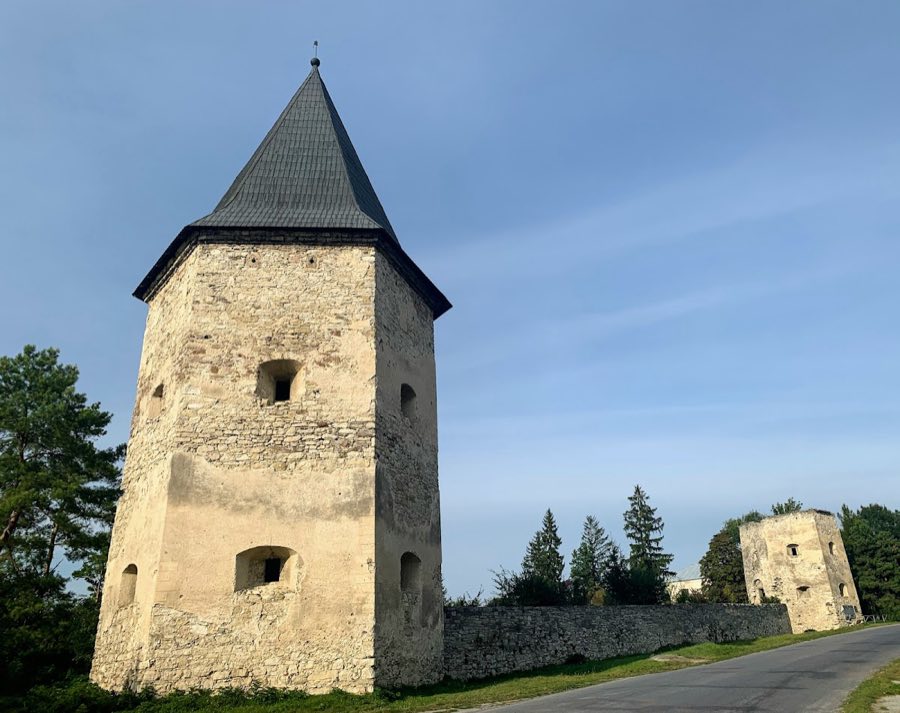
Kryvche Castle
Ukraine
CastleRuin16th century
No. 59912
Castle · Ukraine
No. 59912 · 48.610 N, 26.280 E
Quick summary
Kudryntsi Castle is a castle in Ukraine with origins associated with the 16th century.
See all castles in UkraineKudryntsi Castle, in the village of Kudryntsi municipality, Ukraine, was erected by members of the Herburt family, a house of Polish nobility.
Construction is dated in different accounts to either the 16th century, attributed to Mikołaj Herburt who died in 1602, or to the opening decades of the 17th century; the fortress was built of sandstone to guard the right bank of the Zbruch River. Its position near the Moldavian frontier and on the Tatar Voloshian road placed it on a frequent axis of raids during the 1500s and 1600s, shaping its defensive role.
In the summer of 1648 Cossack detachments under Maksym Kryvonos, joined by rebelling peasants, captured the site and expelled the crown garrison. The castle passed through violent hands later in the century. Ottoman forces seized the stronghold in 1672, and the fortress saw further Ottoman activity during the Polish–Turkish war of 1672–1676; another Ottoman occupation is recorded in 1694. Andrzej Potocki, serving as hetman, retook the castle after nearly eleven years of foreign control.
At the beginning of the 1700s the fortification was repaired and altered for residence by the Humeneckyi family. Repairs stabilized masonry and towers, and a six-room residential house was built against the eastern curtain wall. Subsequent owners reorganized the complex: the Koziebrodskis made parts of the building into a kind of family museum, arranging portraits and old furniture there, while later proprietors, named in one account as the Bartfelds, presided over further decline. The fortress began to fall into disrepair during the 19th century; by the 1920s only fragments of walls and a single tower were recorded, and the ruins survive to the present. Fragments of the castle’s former collection are housed in the Ternopil Regional Museum. The settlement name appears historically as Kudryńce or Kudrinets in different records.
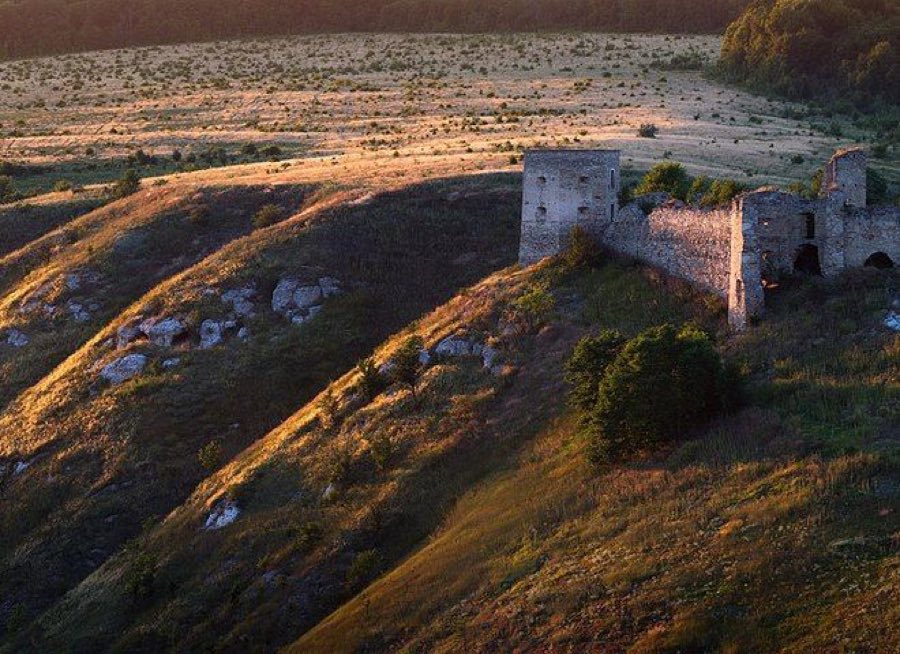
The plan of the site is an uneven four-sided enclosure built of sandstone, placed on a high plateau called Strilka above the Zbruch River. Internally the enclosure measures about 70 metres long by 25 metres wide, with wall thickness averaging roughly 1.5 metres. Three sides of the hill provided natural protection, the eastern escarpment in particular dropping steeply to the river; the north side faced the plateau and was defended in historic layouts by a ditch, an earthen rampart, and two towers, one of which served as the gate tower.
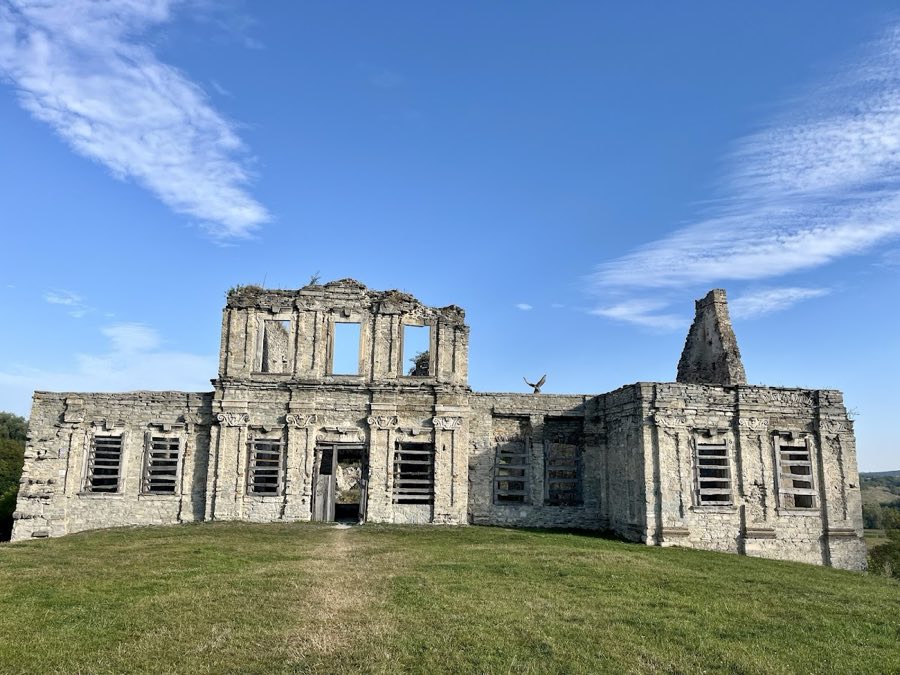
Surviving masonry includes the southern, western and northern curtain walls. A five-sided tower on the southern corner remains up to the height of three storeys, and a north‑west tower with six faces rises in three levels as well. Part of the gateway tower survives above the entrance. The towers show narrow rectangular firing openings and drilled sockets for the beams that once carried internal floors, visible in the exposed masonry.
An underground passage once began beneath the southern five-sided tower; its entrance and course are now filled with stones and earth. A secondary arched entrance pierced the southern wall, and a small arched aperture close to that wall has been identified as a wicket used for sudden sorties. A shallow hollow beside the hexagonal tower marks the former position of a well. Along the eastern curtain, the early 18th-century owners added a six-room residential building that was integrated with the wall line; this house represents the known conversion of the fortress into a dwelling. Today the site survives as fragmentary, picturesque ruins, and several movable items from the castle are preserved in the Ternopil Regional Museum.
No. 25070
No. 34624
No. 96215
No. 23385
Comments
Comments for Kudryntsi Castle will require a verified account before posting.
We'll send a verification link before your first comment is published.