No. 53482
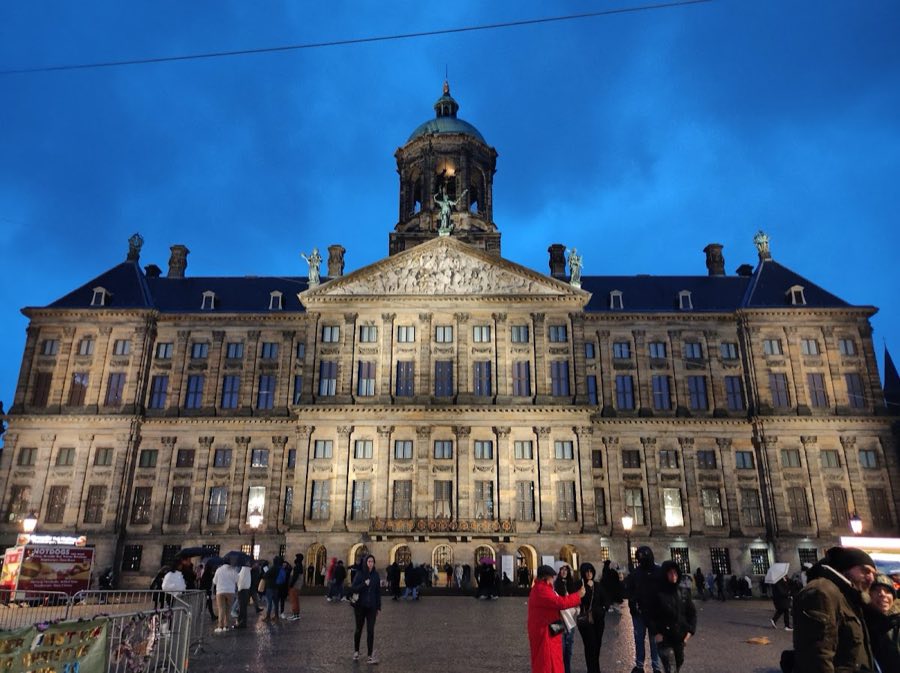
Royal Palace of Amsterdam
Netherlands
PalaceRestoredFor events17th century
No. 87444
Castle · Netherlands
No. 87444 · 52.772 N, 5.113 E
Quick summary
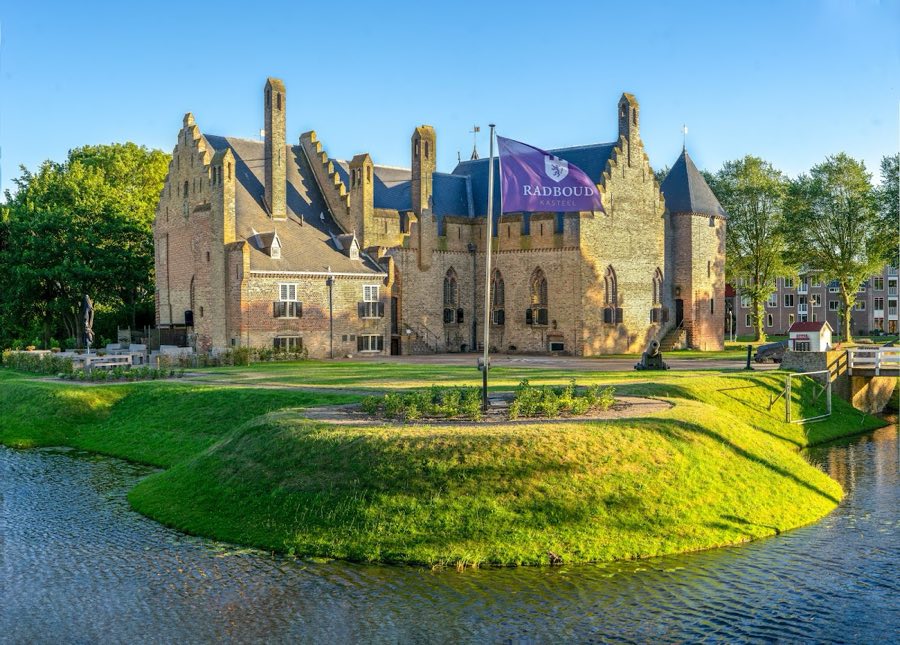
Kasteel Radboud is a castle in Netherlands with origins associated with the 13th century.
See all castles in NetherlandsKasteel Radboud in Medemblik, Netherlands, is a late thirteenth‑century water castle erected for Count Floris V of Holland, built as a medieval fortress of the County of Holland. Constructed in the period commonly called the Middle Ages and described as a coercion fortress, it formed part of a chain of strongholds intended to prevent incursions and to exert control over the West Frisian population. The date of origin is debated: an Italian account places construction around 1283 because the building stood during the St. Lucia flood of 13 December 1287, while French and Dutch accounts give the year 1288.
During the late thirteenth century the castle served a clear military and political purpose, sited beside the harbour to project authority and to hinder hostile landings. A legend recorded by Cornelius Aurelius in his Divisiekroniek of 1517 claimed the castle occupied the foundations of a fortress belonging to the Frisian king Radboud, a tradition that circulated in the early sixteenth century and linked the site to local Frisian memory. In 1517 the castle sheltered the townspeople of Medemblik during an attempted pirate attack, and that same year it endured a siege by Frisian rebel forces led by Pier Gerlofs Donia and Wijerd Jelckama.
The castle’s military value declined after the town built substantial walls in the 1570s; with the erection of these new defences the stronghold lost its role as a refuge and fell into disuse. From 1661 until 1734 the large hall in the south‑west wing was put to ecclesiastical use as a Protestant church, and the square tower in the west wing was rebuilt to serve as a belfry. In the nineteenth century significant removals altered the complex: the main gateway and three towers were taken down in 1850 and two additional towers were demolished in 1870, accelerating its ruination.
The ruins entered state ownership between 1889 and 1890 and underwent a major restoration campaign in the 1890s under the supervision of the prominent Dutch architect Pierre Cuypers. After that work the building housed a courthouse from 1897 until 1934. On 4 September 1939 Rembrandt’s painting The Night Watch was temporarily placed in the castle for safekeeping, before being moved to a dune bunker near Castricum in May 1940. A fire in an outbuilding in 1931 exposed the remains of an older tower in the northern part of the site, and the surrounding moat was reinstated in 1936. A further restoration in 1964 aimed to return aspects of the complex to its medieval appearance. The state retained ownership until 15 January 2016, when the property passed to the Organisation of National Monuments, and the site is listed as a rijksmonument under number 28386.
The castle occupies a waterfront position on the east side of Medemblik’s harbour and was laid out as a quadrangular stronghold surrounded by water, a typical plan for a fortified water castle. The original design featured circular towers at the corners and an enclosed courtyard, a disposition broadly comparable to contemporary coastal fortresses. Today the outline of that medieval footprint remains visible in the landscape around the surviving structures.
Two residential wings from the medieval complex survive, forming portions of the original quadrangle. The south‑west wing contains the large hall that was converted for worship between 1661 and 1734, a phase that altered the interior use of that space. The west wing retains a rebuilt square tower that was adapted to house bells and to mark time for the community. These elements stand in situ and show the building’s successive uses across centuries.
Among the towers, one round corner tower and two square towers remain standing; these are the principal vertical elements preserved from the medieval ensemble. Major 19th‑century dismantling removed the principal entrance and three towers in 1850, with two further towers taken down in 1870, so the present collection of towers represents a partial survival rather than the original full complement. A northerly tower, revealed after a 1931 fire, confirmed earlier phases of construction beneath later fabric.
Conservation work has shaped the castle’s present condition. The moat was re-established in 1936, restoring the waterbound setting that defined the site, and restoration campaigns in the 1890s and in 1964 sought to stabilise the ruins and to recover a medieval appearance. The archaeological contours of the vanished sections remain discernible around the standing wings and towers, so visitors can read both the preserved masonry and the pattern of the former quadrangle.
No. 53482
No. 95018
No. 59477
No. 37979
Comments
Comments for Kasteel Radboud will require a verified account before posting.
We'll send a verification link before your first comment is published.