No. 20040
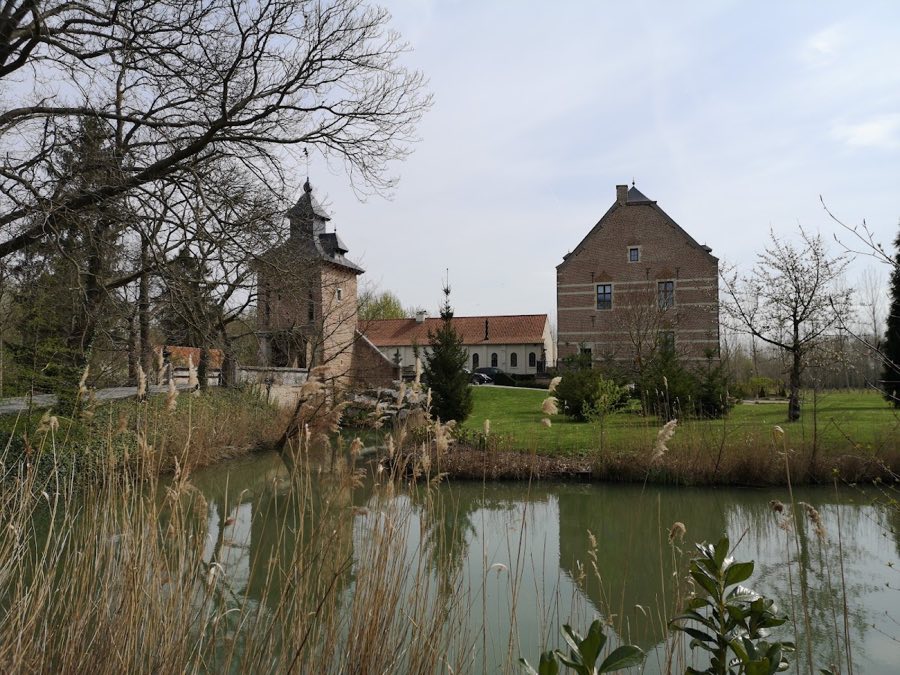
Kasteel van Binderveld
Belgium
CastleIntact12th century
No. 22266
Castle · Belgium
No. 22266 · 50.815 N, 5.240 E
For rent
Kasteel van Ordingen is marked for bookable castle accommodation. Nightly pricing, sleeps count, stay rules, and amenities are displayed only when public operator data is available.
Rental type: Hotel / bookable stay, Short-stay rental
Short-term availability: Bookable accommodation signal
Quick summary
Kasteel van Ordingen is a castle in Belgium with origins associated with the 11th century.
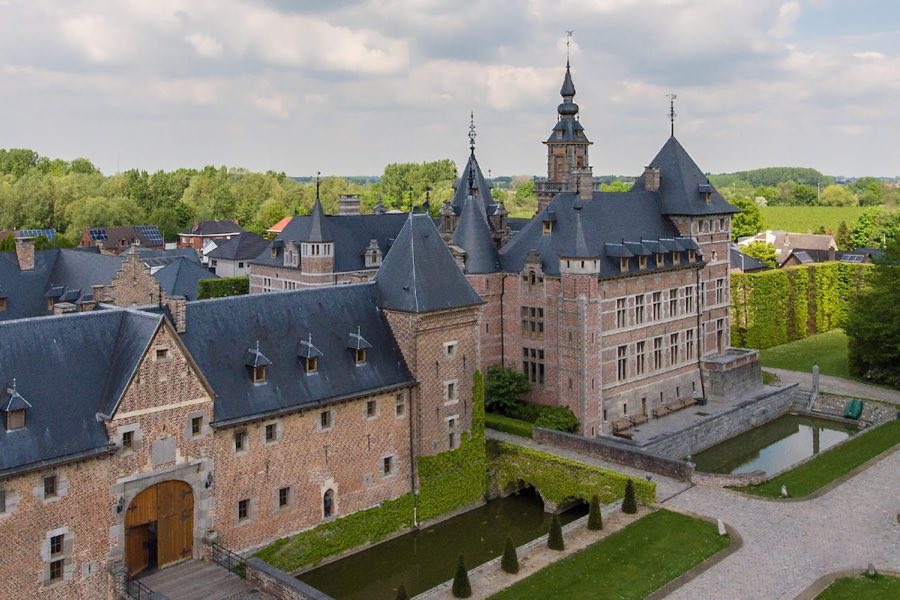
See all castles in BelgiumKasteel van Ordingen in Sint-Truiden, Belgium is a medieval castle first established by the lords of Ordingen in the 11th century, later taking on a Neo-Flemish Renaissance appearance in the early 19th century. Built by local feudal lords, the site began as a waterfront defensive stronghold and played a role as a border watchpost for the County of Loon, giving it local strategic importance over several centuries.
In the Middle Ages the estate functioned as a moated fortress under the family who controlled Ordingen from about 1040. That medieval fortification was completely destroyed in 1467 during the fighting known as the Battle of Brusthem. Within the century after this destruction the site was rebuilt in Renaissance style under the oversight of Willem III van Horion, replacing the ruined water castle with new residential and defensive elements appropriate to the period.
In 1611 the property passed into the hands of the Teutonic Order as part of the Grand Commandery of Alden Biesen. Edmond Huyn van Amstenrade, the land commander, took possession after expelling a distant relative who attempted to claim a right of pre-emption, and Ordingen thereafter served as a subordinate commandery of Alden Biesen. Over roughly two centuries the commandery was led by twenty-five commanders; during the 1700s many of these commanders were represented locally by stewards while Commander Hendrik van Hoensbroeck carried out a substantial restoration of the house.
The French Revolution brought a decisive change in ownership when Revolutionary authorities confiscated church and order properties and sold the estate as ecclesiastical goods, first to Marie Desart and later to Pierre de Libotton. In the decades that followed the castle entered private industrial hands; coal entrepreneur Charles Pitteurs-Hiégaeerts acquired the property in the early 1800s. On his death in 1863 his son Léon, who became a hereditary baron and served as mayor of Ordingen, inherited the house and undertook a late 19th-century remodelling in a Flemish Renaissance manner, recorded in different accounts as taking place in the 1870s. Léon assembled a notable art collection and passed the property to his unmarried son Antoine in 1902.
Military action in 1940 caused severe damage when an aerial bombardment struck the building; German forces then occupied the site and inflicted further interior damage during World War II. Antoine died in 1962. In 1964 Dr. Henri Beckers of Tongeren bought the estate and carried out repairs to the main gatehouse and the western corner tower, while parts of the surrounding grounds were divided for single-family housing. In 1997 the Bermas company, owned by Richard Sleurs, acquired the property and began a program of restoration and conversion to hotel use. By 2021 the principal castle block had been restored and operated as a hotel-restaurant, the former commander’s house was slated for use as a day-tourism centre, and the gatehouse had been converted into a private residence.
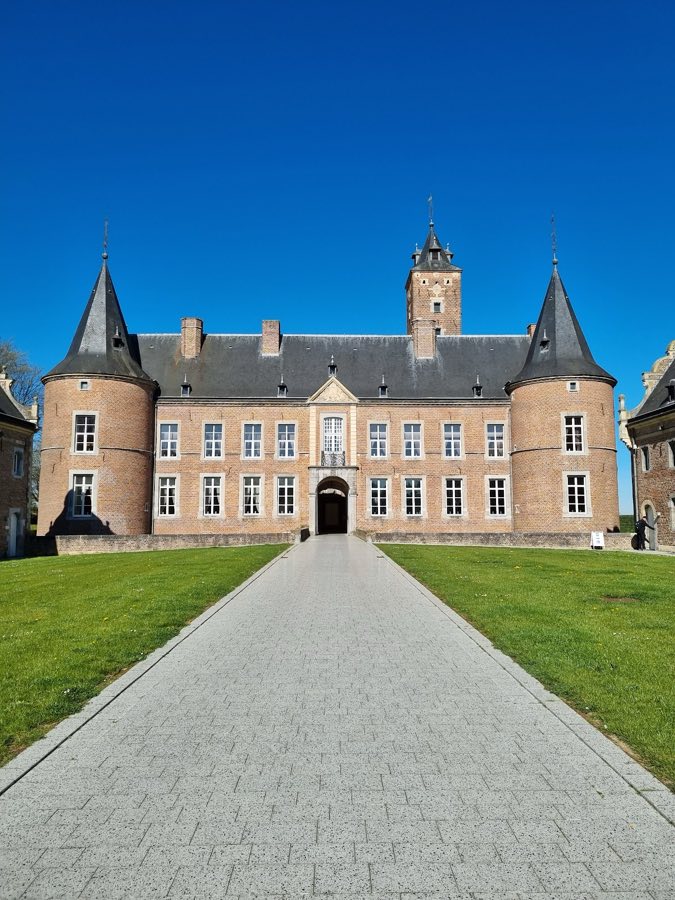
The site sits as a historic complex whose layout reflects a long sequence of rebuilding from a medieval moated stronghold to a residence in Renaissance and Neo-Flemish Renaissance forms. The assembled buildings include a main castle block with wings, an outer courtyard, an entrance gatehouse, an orangery, and a tall tower that together define a consolidated domestic compound rather than a purely military enclosure. The appearance visible today dates chiefly to 19th-century remodelling that gave the principal block its Neo-Flemish Renaissance look, while structural traces recall the property’s origin as a water fortress.
The outer courtyard, described in historic accounts as a neerhof (outer courtyard), contains the orangery and the gatehouse, and it stands beside a prominent tall tower. The gatehouse served as the principal entrance to the complex and later became a private residence after 20th-century conversion. The orangery functioned as a sheltered space for keeping tender plants, located on the southern façade near the gatehouse. These elements form the approach and service zone in front of the main house and remain recognizable within the restored compound.
The east wing survives as a restored range, and the eastern wing interior preserves rooms adapted through successive phases of use, reflecting changes made after the 15th-century destruction and during later restorations. The main block underwent a Renaissance rebuilding in the decades after 1467 and was extensively repaired again in the 18th century under Hendrik van Hoensbroeck, leaving a sequence of fabric and layouts from those periods incorporated into the later appearance.
A western corner tower was repaired under the ownership of Dr. Henri Beckers in the 1960s; this tower had earlier also served as a dovecote, providing nesting space for pigeons. The main gatehouse received restoration work at the same time. The complex sustained serious damage from the 1940 aerial attack and subsequent occupation, but late 20th- and early 21st-century restoration efforts returned the principal buildings to sound condition and converted the main castle block for hotel-restaurant use, while other parts of the compound were adapted for residential and visitor-focused functions.
No. 20040
No. 56104
No. 81301
No. 80627
Comments
Comments for Kasteel van Ordingen will require a verified account before posting.
We'll send a verification link before your first comment is published.