No. 91752
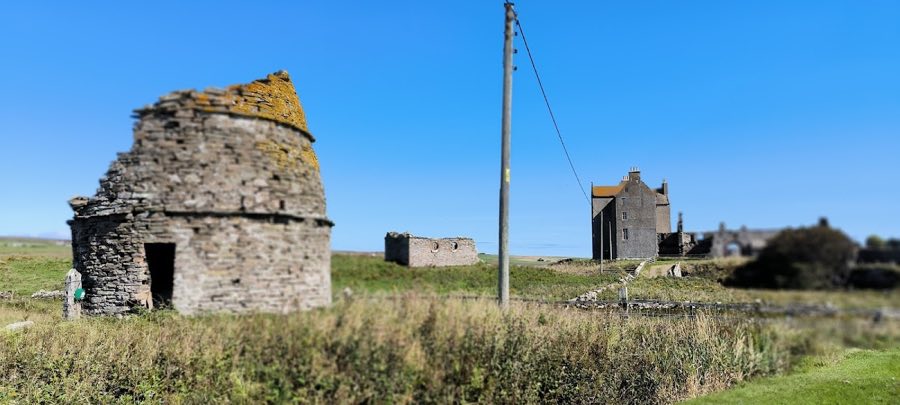
Freswick Castle
United Kingdom
Tower houseRuin17th century
No. 13672
Tower house · United Kingdom
No. 13672 · 58.538 N, 3.106 W
Quick summary
Keiss Castle is a tower house in United Kingdom with origins associated with the 17th century.
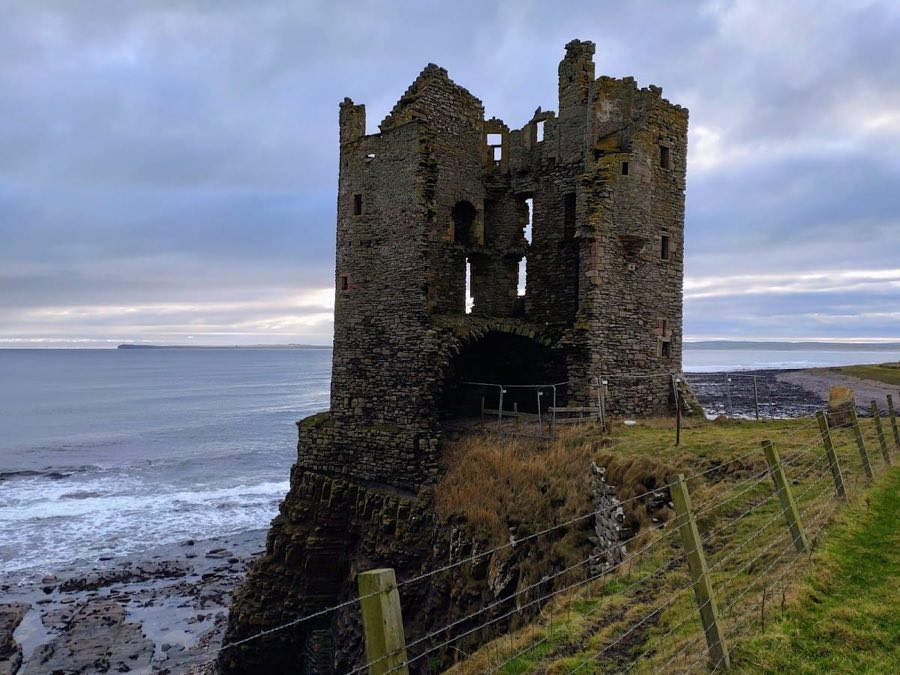
See all castles in United KingdomKeiss Castle stands near the village of Keiss in Caithness, Scotland. It was constructed by the Scottish civilization, most likely during the late 1500s or early 1600s under the direction of George Sinclair, the 5th Earl of Caithness. This castle was possibly built on the site of an earlier fortification, indicating a long history of strategic use in the area.
By the year 1623, the castle was firmly established, as it served as a reference point during King James VI’s campaign when he ordered Sir Robert Gordon to enter Caithness with armed forces. The castle remained significant through the 17th century, notably as the place where the 7th Earl of Caithness died in 1698. Within a few years, by 1700, the castle had fallen into a state of ruin. Nonetheless, repairs had been completed by 1726, alongside the construction of a nearby house intended for more convenient living.
The early 18th century brought new ownership when Sir William Sinclair, 2nd Baronet of Dunbeath, acquired the estate. The property became the Sinclair family’s principal residence by 1752. Just a few years later, around 1755, the original castle was replaced by a newly built home known as Keiss House. This marked a shift from the fortified tower to a more comfortable mansion style.
Financial strain led the Sinclair family to sell the estate in 1765 to another branch known as the Sinclairs of Ulbster. The subsequent years saw the house evolve architecturally. In 1860, prominent architect David Bryce extended and remodeled Keiss House in the Scottish Baronial style, a design characterized by decorative elements inspired by medieval castles. These renovations were commissioned by Colonel K. Macleay. Shortly after, in 1866, the property changed hands again, purchased by the Duke of Portland.
Today, the old castle is preserved as a scheduled monument, highlighting its historical importance. Its successor, the newer house and associated features like the walled garden and gate structures erected during the 1860 renovations, have earned recognition as Category B listed historic buildings.
Keiss Castle was designed as a Z-plan tower house, a layout featuring a central block with two towers placed at diagonally opposite corners, forming a distinctive shape. This style was popular in Scotland during the late 16th and early 17th centuries and combined defensive features with living space. The building rose to four main floors, topped by an attic, and included a vaulted basement, which would have been used for storage and protection.
The primary tower of the castle was notably slender in relation to its height, creating an imposing vertical profile along with its tall chimneystacks. The castle’s position was strategic, perched on a bare promontory cliff that overlooks Sinclair’s Bay, providing broad views over the surrounding coastline. This location offered natural defense as well as commanding visibility for monitoring the approach from sea or land.
The castle’s remnants survive on a cliff approximately 350 meters to the south-southeast of the village center of Keiss, standing as ruins amid the rugged landscape. Though partly ruined, the layout of the fortification remains clear, giving insight into its original form and construction.
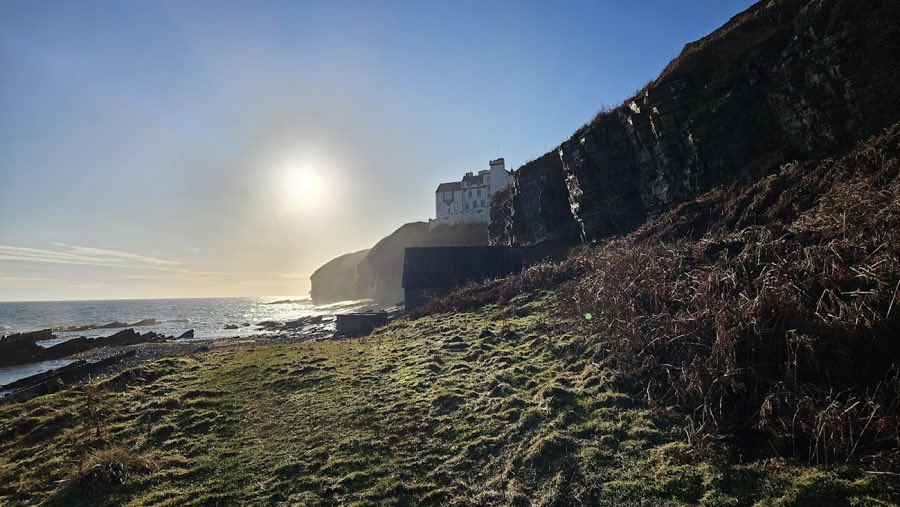
Close by lies the later Keiss House, which replaced the old tower around the mid-18th century. This mansion was remodeled in 1860 to reflect Scottish Baronial architecture, recognized for its romantic revival features drawing from medieval castle forms. Accompanying the house is a walled garden situated to its northeast, along with a gate lodge and decorative gate piers fitted with cast-iron carriage gates installed during the Victorian-era renovations. These elements contribute to the historic character of the estate and demonstrate its evolution from fortress to stately home.
In addition to the castle and house, the nearby Keiss Broch, an ancient stone tower of earlier origin, is part of the wider archaeological landscape, underscoring the long history of settlement and defense in the area surrounding Keiss.
No. 91752
No. 31692
No. 78845
No. 38318
Comments
Comments for Keiss Castle will require a verified account before posting.
We'll send a verification link before your first comment is published.