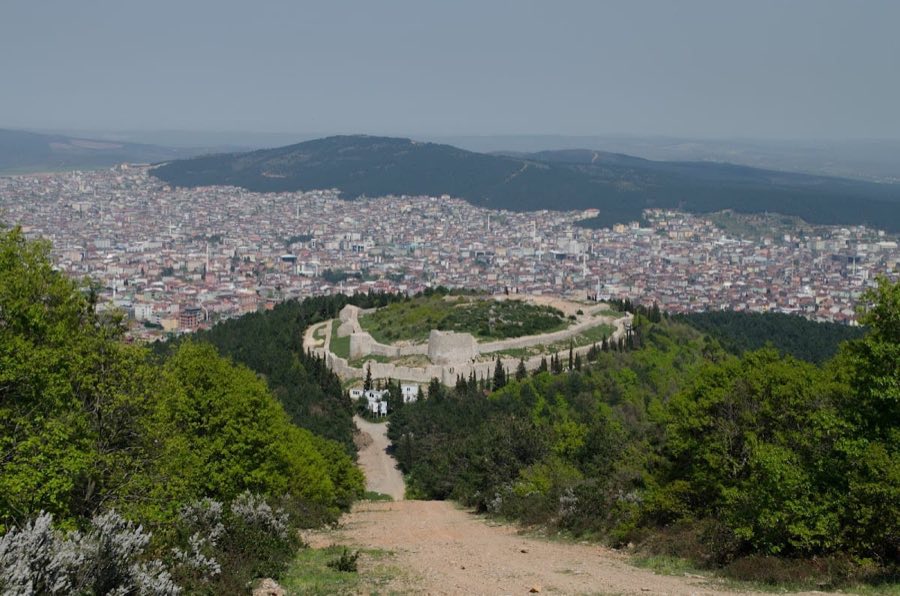
No. 33136
Aydos Castle
Turkey
CastleRuin12th century
No. 25566
No. 25566 · 40.199 N, 28.878 E
Quick summary
Kite Castle is a castle in Turkey with origins associated with the 14th century.
See all castles in TurkeyKite Castle, built by the Byzantines, stands in Ürünlü Mahallesi, Nilüfer municipality, Turkey.
During the Byzantine era the site was an important regional defense and administrative center known as Kitai. It served as a tekfurluk, a local lordship in the province of Bithynia, and controlled the supply route between Prusa (Bursa) and Apollonia (Gölyazı), making it a strategic point for movements and communications across the plain.
In the early 14th century the castle became a target in the widening conflict with the rising Ottoman principality. After the 1302 Koyunhisar battle the Ottomans imposed blockades on İznik and Bursa and directed operations against fortifications in the surrounding countryside, including Kite, as noted by Halil İnalcık. Following the 1303 Dimbos engagement the local tekfuru who had joined forces opposing the Ottomans withdrew into the stronghold; Osman Gazi’s troops besieged and rapidly took the castle, and the Aşıkpaşazade chronicle records that the Kite tekfuru was executed before the fortress.
The castle remained in use under Ottoman administration. A 1660 register of defensive fiefs lists Kite among the castles of the Hüdavendigar sanjak and records timar grants to its garrison, which indicates an active military presence in the mid-17th century. A 1732 imperial berth names an emekdar, Mustafa, among the castle’s officers, showing continued service by appointed personnel. Stones from the fortification were later removed and reused when the village hamam called Kite Hamam was constructed in the village square.
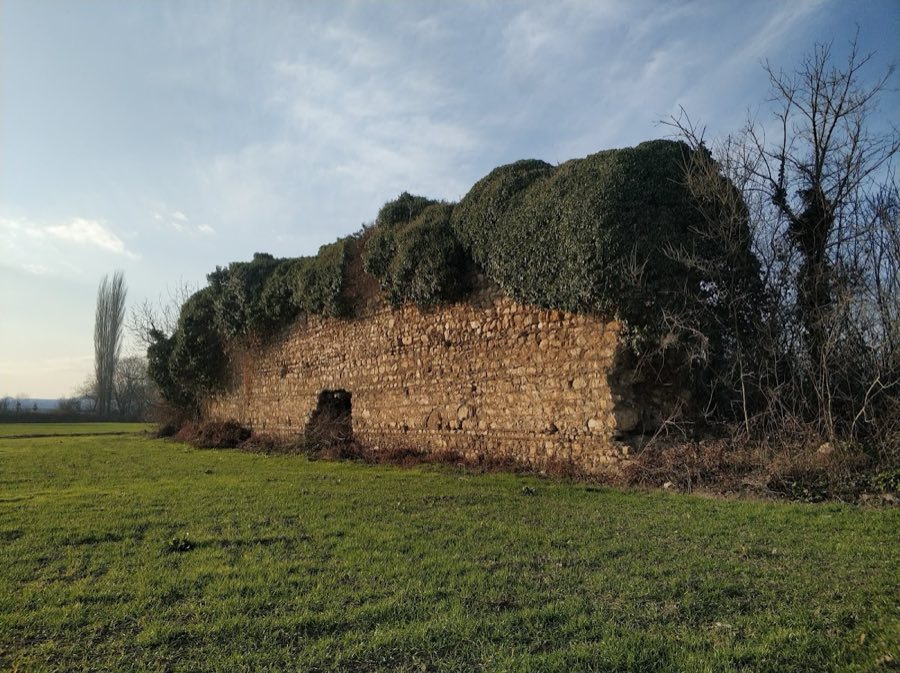
Kite Castle occupies a rectangular castrum plan sited on the plain rather than on a steep rise, and its layout reflects that setting. Because the fortification stood on flat ground rather than a hill, the enclosing walls were constructed to be relatively thick and tall by contemporary standards to provide adequate defense for a low-lying position.
The surviving masonry demonstrates the Byzantine almaşık technique, built with alternating horizontal bands of brick and rubble stone. This pattern is visible in the remaining wall sections and foundations that mark the castle footprint across parts of Ürünlü Mahallesi. The main fortress fabric is now largely ruined, but wall fragments and foundation lines remain in situ at several points within the village.
Materials taken from the castle’s walls were incorporated into later construction in the settlement. Local building stone from the fortification was used as spolia in the historic Kite Hamam on the village square, showing reuse of the castle fabric in community architecture. Today the hamam stands as a visible instance of that reuse while the castle itself survives only in fragmentary walls and buried foundations.
No. 33136
No. 57811
No. 98318

No. 76636
Comments
Comments for Kite Castle will require a verified account before posting.
We'll send a verification link before your first comment is published.