No. 58814
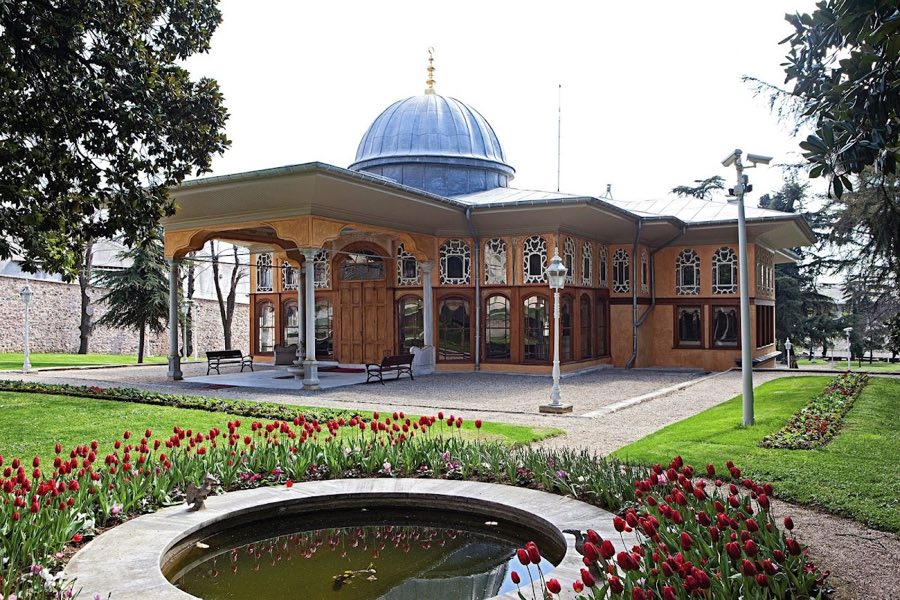
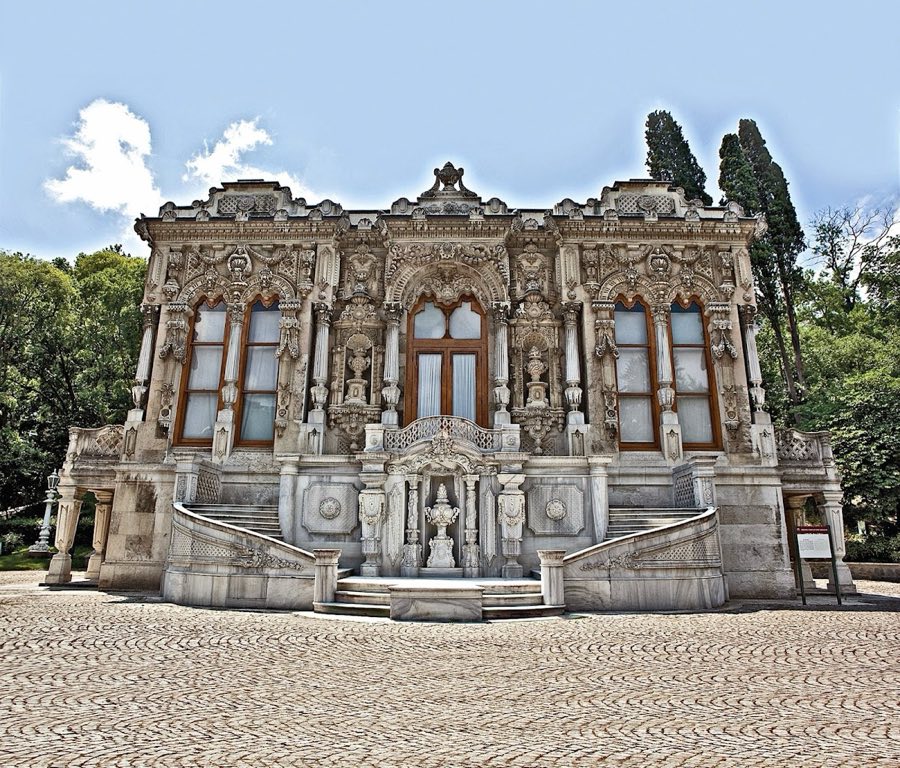
Aynalıkavak Palace
Turkey
PalaceRestoredFor events17th century
No. 76636
Palace · Turkey
No. 76636 · 41.031 N, 28.977 E
Quick summary
Palais de France, Istanbul is a palace in Istanbul, Turkey with origins associated with the 17th century.
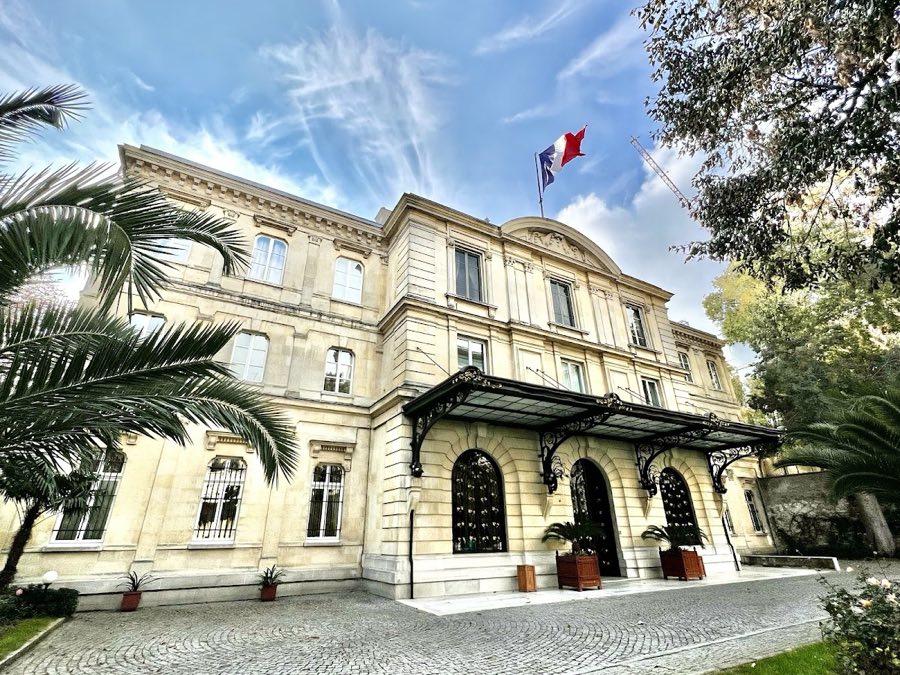
See all castles in TurkeyThe Palais de France in Istanbul, Turkey, is the French diplomatic complex in Beyoğlu built and used by French envoys; its principal surviving building dates to 1839–1847 and belongs to the nineteenth-century phase of the site. The compound served as the seat of French ambassadors to the Ottoman state from the early 1600s until the abolition of the Ottoman sultanate in 1922, and afterward became the residence of the French Consul‑General and of the ambassador when he or she was present in Istanbul. Its long occupation by French diplomatic, religious, educational and publishing activities made the palace a central point of Franco‑Ottoman contact for several centuries.
Origins and early modern period, 17th–18th centuries. A first property on this plot was obtained around the turn of the 17th century and successive embassy buildings were raised in the first decades of that century. The ground itself had earlier contained the observatory of the Ottoman astronomer Takiyüddin, a fact preserved in Turkish and Italian accounts. Capuchin friars began working at the precinct from 1626, and a Catholic church on the grounds was consecrated on 25 August 1673. The site also hosted a seminary founded in 1628 and, in later years, printed periodicals published from the embassy press beginning in 1795.
Fires, rebuilding and late‑eighteenth‑century transformation. The palace complex suffered repeated damage from large fires, including major conflagrations recorded in 1660 and 1665, substantial destruction after a blaze in 1767, and the great Beyoğlu fire of 1831 that entirely consumed the previous structure. Following the 1767 damage, a new building was commissioned and completed in 1777, a process slowed by the Ottoman–Russian War of 1768–1774; adjustments to the building’s alignment on the street were made during reconstruction in the 1770s. In the later decades of the eighteenth century the embassy press issued a series of periodicals (1795–1797) often described as the first newspapers produced in the Ottoman lands.
Disruption around 1800 and nineteenth‑century renewal. Diplomatic relations were interrupted after the Ottoman declaration of war on France on 11 September 1798, taken in response to French operations in the Ionian Islands and Egypt. French staff left the palace and the British ambassador occupied it from 1799. The 1802 peace treaty restored diplomatic ties and French representatives initially lodged elsewhere before reoccupying the Beyoğlu site by 1818, when the property received architectural improvements. The building that now dominates the compound was erected between 1839 and 1847 to a Parisian design; it remained the central diplomatic house through the late Ottoman era and was adapted in 1910, including moving the principal entrance to suit the age of the automobile.
Twentieth century to the present. After the Ottoman state ended and the French embassy relocated to Ankara in 1922, the Beyoğlu complex continued as the urban residence for French consular officials and for the ambassador’s visits. The church on the grounds was converted briefly into a mosque during the suspension of Franco‑Ottoman relations from 1914 to 1919, then returned to Christian worship in 1923 and underwent further renovation in the 2010s. Educational use on the site evolved across centuries: the original seminary closed during the French Revolution, reopened in the late nineteenth century, and a series of secular and specialised schools developed on the grounds, culminating in the Lycée Pierre Loti and in research institutes that trace their institutional roots to the early twentieth century. The French diplomatic presence also maintained a summer residence on the Tarabya shore, a late‑eighteenth‑century yalı donated to a French envoy in the early nineteenth century, whose principal mansion was later destroyed by fire and whose grounds now host part of the school campus inaugurated in 2003.
Overview and layout. The compound occupies a city‑block plot in Beyoğlu composed of a main nineteenth‑century palace set back within a garden, a church precinct, separate school and institute buildings to the west and south, and ancillary service structures. The principal palace visible today was built between 1839 and 1847 and is situated behind a planted forecourt and garden that links the ensemble to the surrounding streets. The grounds combine diplomatic, religious and educational facilities arranged around open green space.
The principal palace building, 1839–1847. This main building, erected in the mid‑nineteenth century to a Parisian design, survives and is reported in good condition. It underwent a substantial renovation in 1910 that included moving the main entrance from the principal avenue to a smaller side street to improve access by motorcar. The structure remains the dominant built feature within the compound and anchors the palace group facing the internal garden.
Garden ornamentation and statuary. The palace garden contains decorative elements added in the nineteenth and earlier eighteenth centuries. Two fountains in an Ottoman manner stand within the planted area, and several statues dating to the eighteenth century are placed around the green. A stone bust located on the grounds is identified locally as representing Claude Alexandre, Count of Bonneval. These elements form a landscaped setting that links the palace to earlier garden traditions in the city.
Church of Saint‑Louis‑des‑Français. The church consecrated on 25 August 1673 survives on the precinct after several reconstructions. It was rebuilt in timber around 1750, rebuilt in stone in 1788, and reconstructed again following the 1831 fire, reopening in 1846 and receiving a formal blessing on 1 May 1847. The building underwent restorations in 1923 and again in the 2010s. The church functioned at times as a parish, and its care passed between different religious orders over the centuries.
Institutional and educational buildings. A building erected in 1874 to train dragomans later became the home of a French archaeology institute in 1930, an institution that evolved into the Institut Français d’Études Anatoliennes in 1975. The compound also contains multiple school buildings associated with the secular French school established in 1942, which developed into the École Française d’Istanbul and was later renamed Lycée Pierre Loti. These school structures extend to the west and south of the main palace and form a connected cluster of educational facilities on the site.
Tarabya waterfront estate. The diplomatic property at Tarabya, donated to a French ambassador in the early nineteenth century for use as a summer residence, included a late‑eighteenth‑century yalı along the shore. The major mansion on that estate was destroyed by fire in either 1903 or 1913; a smaller building on the same grounds survived despite suffering fire damage in 1932. Part of the waterfront grounds now contains a campus of the Lycée Pierre Loti opened in 2003.
No. 58814
No. 98318
No. 57811
No. 84132
Comments
Comments for Palais de France, Istanbul will require a verified account before posting.
We'll send a verification link before your first comment is published.