
No. 85999
Blankenau Castle (Grodzisko, Kłodzko)
Kłodzko), Germany
CastleIntact19th century
No. 87541
Castle · Germany
No. 87541 · 51.019 N, 12.600 E
Quick summary
Kohren Castle is a castle in Germany with origins associated with the 12th century.
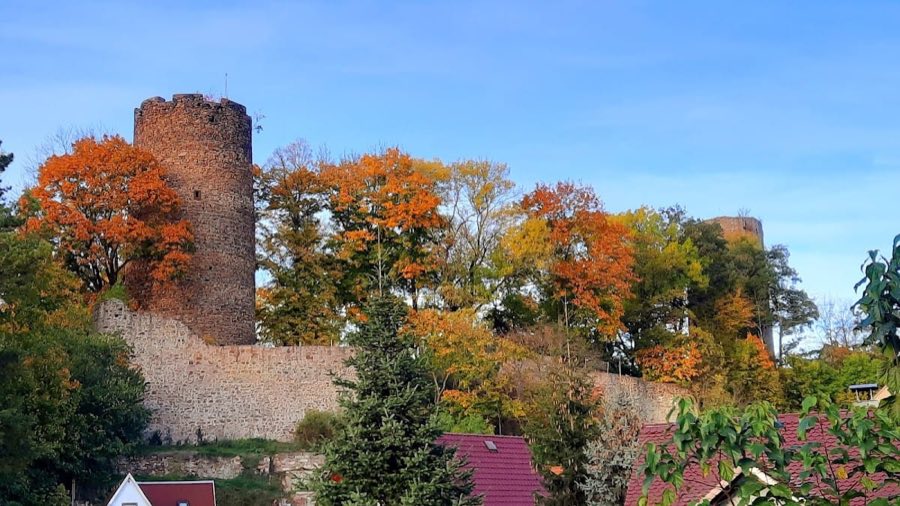
See all castles in GermanyKohren Castle stands on a hilltop in the municipality of Kohren-Sahlis in modern Germany. Its origins trace back to the early medieval period, emerging amidst the settlement of the Sorbs, a West Slavic people. The earliest indirect evidence of the site’s significance appears around the year 1010 in the chronicle of Bishop Thietmar of Merseburg, who noted his 1018 visit to Kohren. His reference to confirming the local population suggests the presence of a fortified center at that time, indicating the site’s early strategic or administrative role.
By the late 12th century, the castle had come under the control of the free noble family bearing its name. In 1190, this family held the fortress with imperial immediacy, meaning they answered directly to the empire rather than intermediary lords. This period coincided with the broader German expansion eastward into Slavic territories. Conflict marked the early 13th century when the Kohren family sided with Leipzig in its clash against Margrave Dietrich of Meissen in 1216. Following Leipzig’s defeat, Dietrich ordered the destruction of Kohren Castle in 1220. Despite this, the fortress was likely rebuilt by 1240, as surviving remnants date from reconstruction efforts during this time.
Around 1290, the castle underwent further enlargement, including the addition of a second bergfried—a type of defensive tower common in medieval German castles—though the reasons for this expansion remain uncertain. The independent line of the Kohren family ended in the early 14th century, with their last mention recorded in 1303. Subsequent ownership passed through several noble houses, including the Schönburgs, the Leisnigs, and the Vögte (advocates) of Plauen. In 1357, Friedrich von Schönburg transferred control of Kohren along with Geithain to the Lords of Reuß.
A notable historical episode links Kohren Castle to Kunz von Kaufungen, a knight who stayed at the site the night before his infamous 1455 abduction of the Wettin princes. After his capture and execution, the castle was reportedly slighted, meaning it was intentionally damaged to erase his association and memory. In the late 15th century, the castle passed to the Einsiedel family, who eventually moved their residence to Gnandstein. This relocation led to Kohren Castle’s abandonment as a noble dwelling, and by 1568, it was officially described as deserted and uninhabitable.
The early 17th century saw further decline when the Einsiedels sold the Kohren and Sahlis estates in 1602, and the castle’s stones were quarried for local church construction between 1604 and 1605. During the Thirty Years’ War (1618–1648), the fortress was briefly restored to serve defensive needs, although the extent of this restoration remains unclear. After the war, some houses were built on the site, but over time they too were deserted, with the last castle house demolished in 1900. Archaeological interest in the site led to excavations by a local castle association in 1928 and a later investigation by the Dresden State Museum of Prehistory in 1965. The nearby Wyhratal railway once ran close to the castle’s western side, but after its closure, the track was converted into a bike path.
Kohren Castle occupies a strategic hilltop known as the Burgberg, overlooking the town below. The castle was constructed primarily from stone, a common medieval building material that provided durability and defense. Present-day remains consist largely of two bergfried towers, which served as both strongholds and watchtowers during the castle’s active phases. These towers are notable for their elevated entrances, a defensive feature designed to make access difficult for attackers. The older western tower likely dates from the mid-13th century reconstruction after the early 13th century destruction, while a second bergfried was added roughly fifty years later during the castle’s late 13th-century expansion.
Portions of the surrounding curtain walls, which formed the defensive perimeter, are visible alongside the towers. These walls enclosed the interior spaces and protected the castle’s inhabitants from assault. Over the centuries, sections of the castle’s stone masonry were removed and repurposed, particularly in the early 1600s when materials were quarried to construct local churches. Despite the partial dismantling, the surviving ruins still create a distinctive silhouette in the town’s skyline, bearing silent witness to its medieval past.
No inscriptions or specific decorative elements have been documented on the site. The ruins stand mostly as fragmentary remains, preserved in situ where they have long dominated the landscape. Historical tradition recalls that after Kunz von Kaufungen’s execution in the mid-15th century, efforts were made to slight the castle as a form of symbolic punishment. Later adaptations during the Thirty Years’ War included a brief restoration of defensive measures, though details of these repairs have not been recorded.
While the castle no longer serves as a residence or military post, its stone structures and towers remain an important archaeological and cultural landmark. Excavations carried out in the 20th century have helped clarify the phases of construction and occupation, linking the existing ruins directly to the documented medieval history of the site. The proximity of the former Wyhratal railway, now a bike path, marks the castle’s ongoing connection to the evolving human landscape around it.
No. 85999
No. 72842
No. 91159
No. 99509
Comments
Comments for Kohren Castle will require a verified account before posting.
We'll send a verification link before your first comment is published.