No. 45835
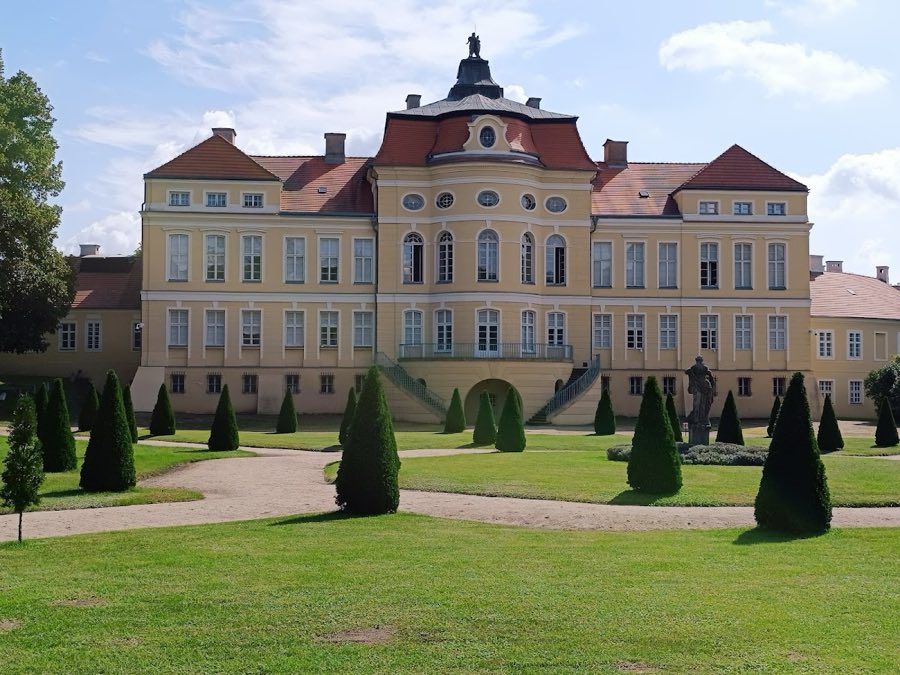
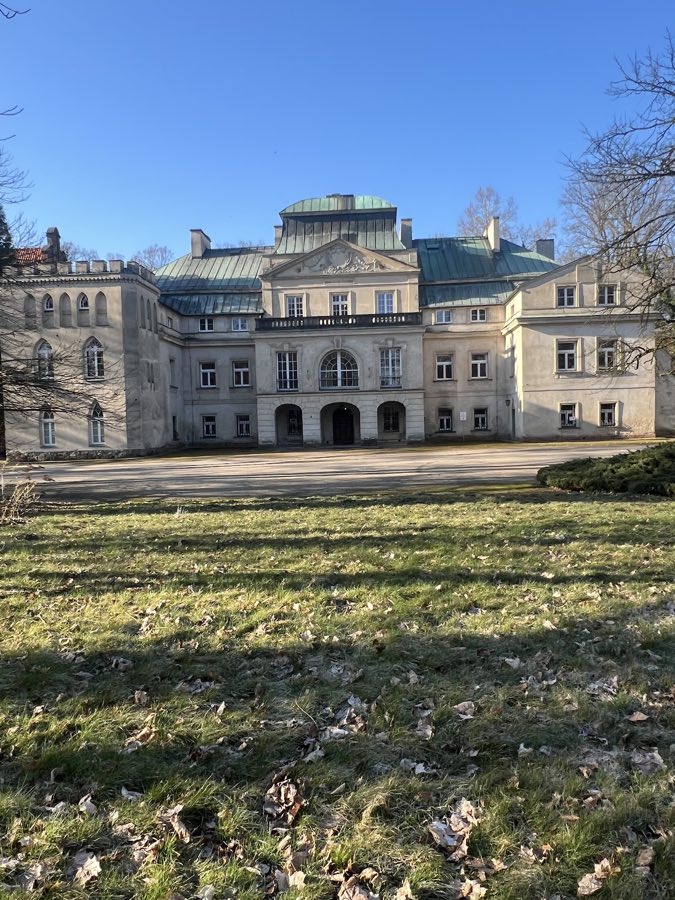
Raczyński Palace, Rogalin
Rogalin, Poland
PalaceIntact18th century
No. 57731
Castle · Poland
No. 57731 · 52.244 N, 17.091 E
Quick summary
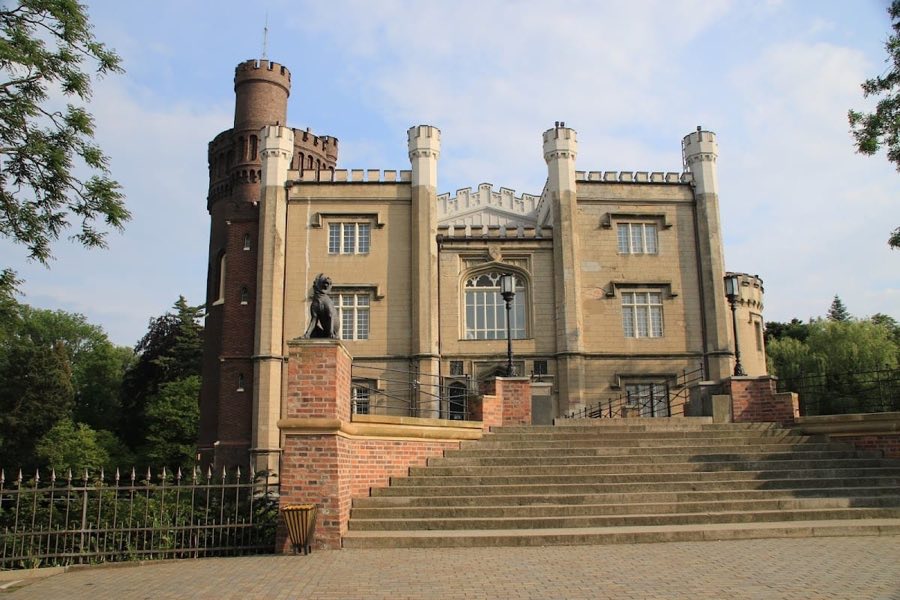
Kórnik Castle is a castle in Poland with origins associated with the 14th century.
See all castles in PolandKórnik Castle is located in the town of Kórnik in Poland. It was originally established by Polish builders during the medieval period as a fortified residence. The castle’s origins trace back to the 14th century, with the earliest documented construction contract dated 1426. Its initial function was that of a stone fortress built on a marshy island, surrounded by a moat. Access to the residence was controlled through a drawbridge and a lowered iron grille, emphasizing its defensive role. The fortress was first owned by the Górka family, prominent noble magnates of Greater Poland. During this time, the castle served as a secure noble home and a venue for important visitors, including Henry of Valois, who stopped there in 1574 on his way to being crowned King of Poland.
Ownership of the castle changed hands several times over the centuries. After the Górkas, the Czarnkowski family took possession, followed by Zygmunt Grudziński in 1610. From 1676, the castle entered the domain of the Działyński family, who would play a significant role in its development.
In the 18th century, Teofila Działyńska-Szołdrska-Potulicka transformed the castle from a medieval fortress into a Baroque palace. She also laid out a French-style garden around the residence and introduced nurseries and enclosures for exotic animals. These changes not only altered the castle’s appearance but also enhanced Kórnik’s cultural and economic standing.
During the 19th century, the castle fell into disrepair until Tytus Działyński inherited it in a ruined state. He embarked on an extensive restoration, remodeling the structure in the English Neo-Gothic style. This redesignwas done with the assistance of the renowned architect Karl Friedrich Schinkel. Tytus also founded the Kórnik Library in 1826, intending to preserve Polish historical manuscripts and works and to turn the castle into a national museum and library. Although his involvement in the November Uprising of 1830 led to Prussian authorities confiscating the property, Tytus regained ownership in 1839 and continued renovations until his death in 1861.
The castle’s heritage was further maintained by Tytus’s son, Jan Kanty Działyński, and later by his nephew, Władysław Zamoyski. In 1924, Władysław Zamoyski dedicated Kórnik Castle and its collections to the Polish nation. The castle was officially designated as a Polish historic monument in 2011.
Through these centuries, the castle has also become linked with local legend, notably the tale of the White Lady, said to be the ghost of Teofila Działyńska. Her portrait in a white dress remains displayed within the castle, preserving this symbolic connection.
Kórnik Castle presents as a large complex primarily reflecting the English Neo-Gothic style introduced in the 19th century. Its layout consists of a central stone fortress originally surrounded by a moat fed by the marshy environment, emphasizing its defensive origins from the 15th century. Some of the medieval stone walls and underground cellars from that period have been preserved within the structure.
The castle’s main entrance is located on the northern side and features a Tudor arch window, a characteristic English architectural form shaped like a flattened pointed arch. Above this window is the Ogończyk coat of arms, symbolizing the Działyński family. The entrance portal is further flanked by windows bearing the coats of arms of Tytus Działyński (Ogończyk) and his wife Gryzelda Zamoyska (Jelita), linking the family’s identity closely to the building’s façade.
Parts of the 16th-century expansion still survive, such as the enclosed inner courtyard roofed structure and towers positioned beside the northern gate. These additions show how the castle evolved from a purely defensive fortress into a more comfortable noble residence.
On the southern side, an Indian-style arch draws notable attention. This architectural detail was inspired by the exotic designs of the Royal Pavilion in Brighton and elements of the Taj Mahal in India, reflecting 19th-century romanticism and fascination with distant cultures. The eastern side features a brick tower built in the Neo-Gothic style during the 19th-century renovations, which contrasts with the rest of the castle’s stone and plaster surfaces.
An elaborate terrace is found on the western façade, overlooking Kórnik Lake and the adjacent game park, integrating the castle with its natural surroundings in a scenic manner. Historic outbuildings such as the coach house and service wings stand near the castle’s main approach, testifying to the estate’s functional components.
Inside, rooms showcase richly decorated interiors that speak both to the noble family’s history and their cultural interests. The Moorish Hall, originally serving as the library, is now a museum space. Its decoration suggests influences from Islamic art traditions. The Dining Room is adorned with a ceiling containing 71 coffered panels, each bearing a coat of arms of medieval Polish knights as recorded by the noted historian Jan Długosz, a significant connection to Poland’s heraldic heritage.
Additional chambers carry names reflecting the family’s members or particular uses, such as the Founders’ Room and the Hunting Trophy Corner. The castle’s interiors boast extensive collections that include paintings, busts, porcelain, historical manuscripts, coin collections, and military memorabilia drawn from both Polish and Eastern cultural contexts.
Surrounding the castle is a large park. Initially laid out as a formal French garden by Teofila Działyńska, it was later redesigned in the 19th century into a Romantic-style arboretum by Tytus and Jan Działyński. This arboretum contains hundreds of species of conifers and broadleaf trees, notably admired for its magnolias and rhododendrons. The park remains an area of scientific interest due to its botanical diversity and history.
No. 45835
No. 94018
No. 38021
No. 78819
Comments
Comments for Kórnik Castle will require a verified account before posting.
We'll send a verification link before your first comment is published.