No. 71569
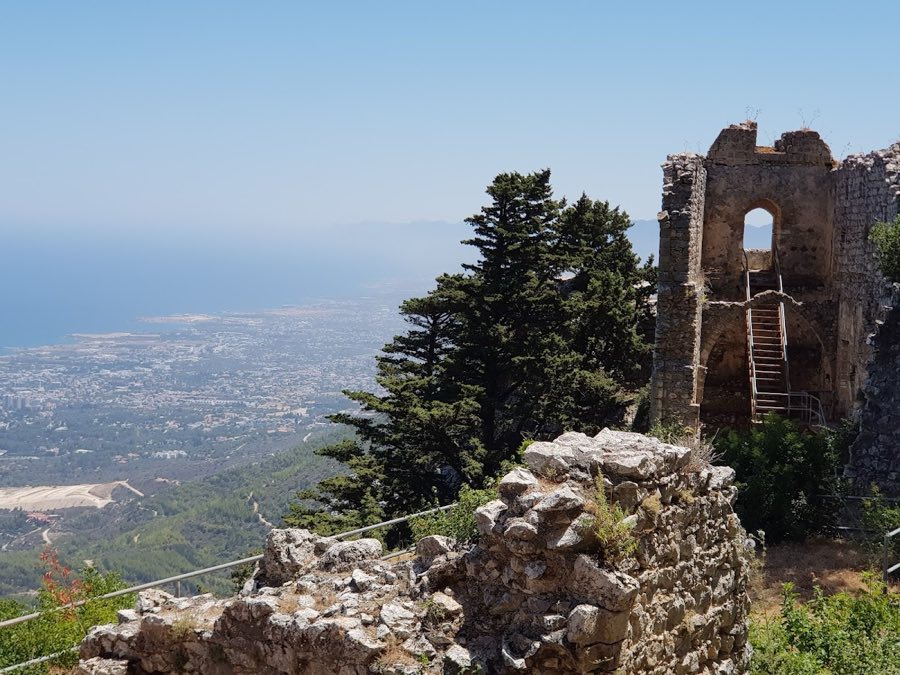
Saint Hilarion Castle, Cyprus
Cyprus, Cyprus
CastleRuin14th century
No. 76160
Castle · Cyprus
No. 76160 · 35.342 N, 33.322 E
Quick summary
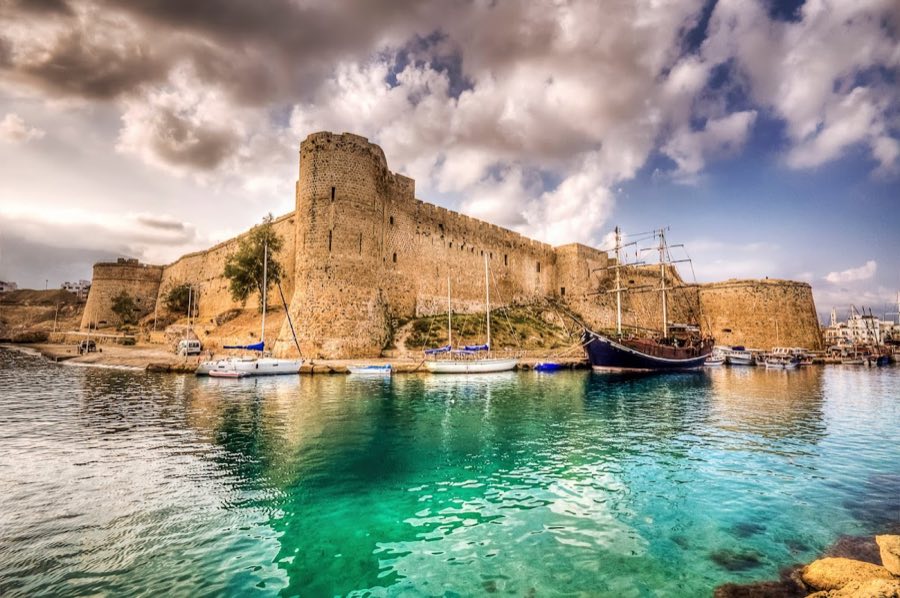
Kyrenia Castle is a castle in Cyprus with origins associated with the 12th century.
See all castles in CyprusKyrenia Castle in Kyrenia, Cyprus was originally established by the Byzantine state to protect the town from a seaborne Arab threat.
Byzantine builders first erected a fortification at the site in the seventh century. The first written reference to the fortress appears in 1191, when King Richard I of England captured it after defeating Isaac Komnenos. Richard then sold control of the island, first to the Knights Templar and shortly afterwards to Guy of Lusignan, beginning Lusignan rule of Cyprus from 1192 until 1489. During the early years of Lusignan authority, John of Ibelin carried out enlargements of the castle between 1208 and 1211.
The castle endured major assaults in the later medieval period. A Genoese attack in 1373 nearly destroyed the fortress, and a siege in the fifteenth century lasted almost four years. Venetian engineers rebuilt and expanded the structure in 1540, working over the existing Crusader fortification and giving the stronghold much of the form seen today. In 1570 Kyrenia surrendered to the Ottoman forces, and the castle contains the tomb of Admiral Sadik Pasha, who led the conquest that year.
Ottoman alterations were later removed under British administration. The British used the castle for police barracks, a training school, and as a prison for members of the Greek Cypriot EOKA organization. The Kyrenia Department of Antiquities took custodianship in 1950, control briefly reverted to British authorities during EOKA unrest, and the department resumed control in 1959. The castle opened to the public in 1960. From 1963 to 1967 the Cypriot National Guard used the site as a military headquarters. After the 1974 Turkish invasion, responsibility for preservation passed to the Girne Department of Antiquities and Museums, which also stores icons removed from local churches, some displayed in the castle’s Archangel Michael Church. Finds from a shipwreck discovered by Andreas Kariolou in 1965 were presented to archaeologists in 1967, and a field team carried out study of the wreck between 1969 and 1974; the recovered material is now exhibited within the castle.
The castle occupies the eastern end of Kyrenia’s old harbour and has a roughly four-sided plan. The landward approach was once protected by a water-filled moat that functioned as a small harbour before the fourteenth century. A bridge crosses the moat to a north-west entrance; visitors pass through a first gate into a vaulted passage that links the later Venetian wall with the older Lusignan gate complex.
From that vaulted corridor a side passage gives access to the Church of St. George, a cruciform building brought inside the fortification by the Venetian works. The church is attributed to the Byzantine period, generally dated to the eleventh or twelfth century, and its dome is carried on marble columns topped with Corinthian-style capitals that were taken from an earlier late Roman building. These reused capitals are visible in the chapel and testify to the recycling of older building material.
Domestic and service spaces open onto an inner courtyard, which is lined with guardrooms, stables and living quarters. Arched rooms to the north and east served royal guards and prison functions, while the royal apartments occupy the western side and are reached by a flight of steps. The southern side of the courtyard incorporates older fortifications and masonry of Byzantine origin. Ramps and stairways provide access to the upper defences on the curtain walls and to the artillery ramps added during the Venetian rebuilding; below ground are dungeons, storage chambers and former powder magazines.
Defensive work from the Lusignan and Venetian phases survives in the towers and wallface. The Lusignan programme introduced a new approach and added square and horseshoe-shaped towers with openings for missile weapons and cells used as dungeons. Venetian contractors later thickened the curtain walls, cut gun-ports for cannon at several levels and installed long ramped ways to move artillery onto the battlements. Some Ottoman-period changes were recorded and later removed during the British period.
One room off the central courtyard is the Shipwreck Museum, which preserves a Greek merchant hull dating to about the fourth century BCE. The vessel measures roughly fourteen metres and was built of Aleppo pine; it is sheathed in lead and was conserved within a controlled environment along with the amphorae and cargo recovered from the wreck. Additional documentation describes the hull as held with copper fastenings and treated with an outer covering of leather. The castle also contains the tomb of Admiral Sadik Pasha from the 1570 conquest, and many parts of the fabric show a sequence of Byzantine, Lusignan and Venetian building phases preserved in situ.
No. 71569
No. 55420
No. 40842
No. 31445
Comments
Comments for Kyrenia Castle will require a verified account before posting.
We'll send a verification link before your first comment is published.