No. 76160
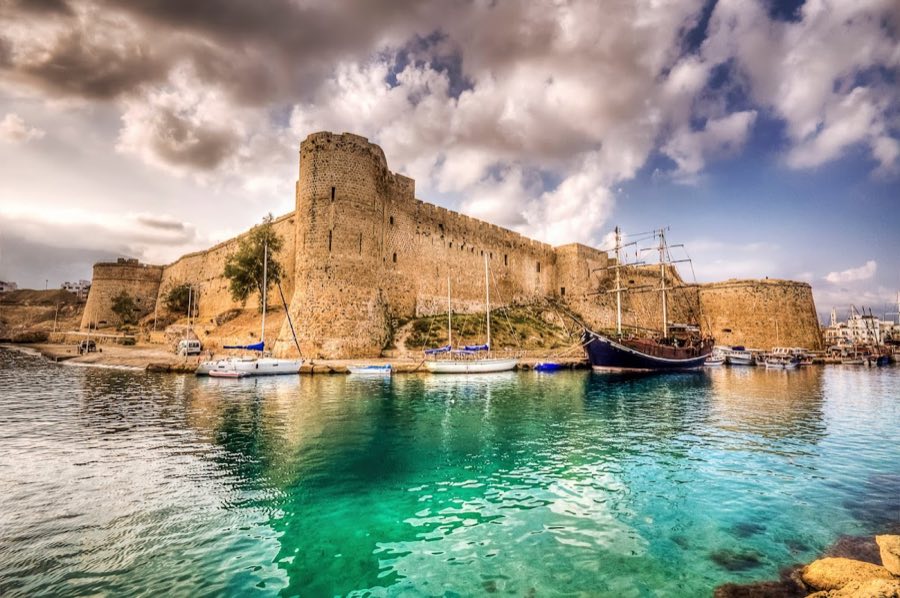
Kyrenia Castle
Cyprus
CastleRestored12th century
No. 55420
Castle · Cyprus
No. 55420 · 35.288 N, 33.410 E
Quick summary
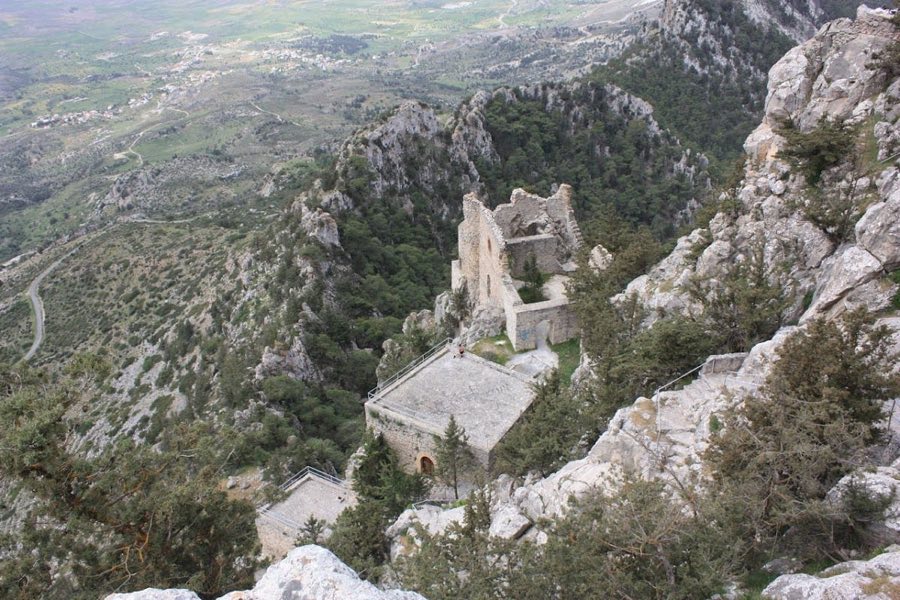
Buffavento Castle is a castle in Cyprus with origins associated with the 11th century.
See all castles in CyprusBuffavento Castle is situated in the municipality of Güngör in modern Cyprus. Its origins are most plausibly traced to Byzantine builders who constructed the fortress in response to the threat posed by the advancing Seljuk Turks during the late 11th century, although some theories extend its foundation date as early as 965 or into the early 1100s. This castle formed part of a line of fortifications including St. Hilarion to the west and Kantara to the east, designed to protect the mountain passages leading from the inland town of Kythrea to the northern coastline.
In 1191, the castle entered the narrative of the Crusades when Richard the Lionheart captured it during his campaign against Isaac Komnenos, the then ruler of Cyprus. Thereafter, Richard sold the fortress to the Knights Templar, marking its transition from Byzantine to Crusader hands. A popular story from the Lusignan period attributes the castle’s construction to a Cypriot noblewoman seeking sanctuary from the Knights Templar, giving rise to alternative names like Leonne or Queen’s Castle. Although rooted more in legend than documented fact, this tale highlights the castle’s enduring association with noble patronage and refuge.
During the early 13th century, Buffavento became a contested stronghold amid disputes involving the House of Ibelin and factions loyal to Frederick II, Holy Roman Emperor. It served as a prison during this turbulent era, notably incarcerating a Knights Templar leader, Anseau of Brie, in 1308 amidst the trials against the order. Under Venetian rule in the 14th century, the castle was gradually abandoned and experienced partial dismantling, reflecting a decline in its military importance. It remained a ruinous site throughout history, attracting such visitors as Ali Bey el Abbassi in the early 19th century, who recorded its presence during his travels.
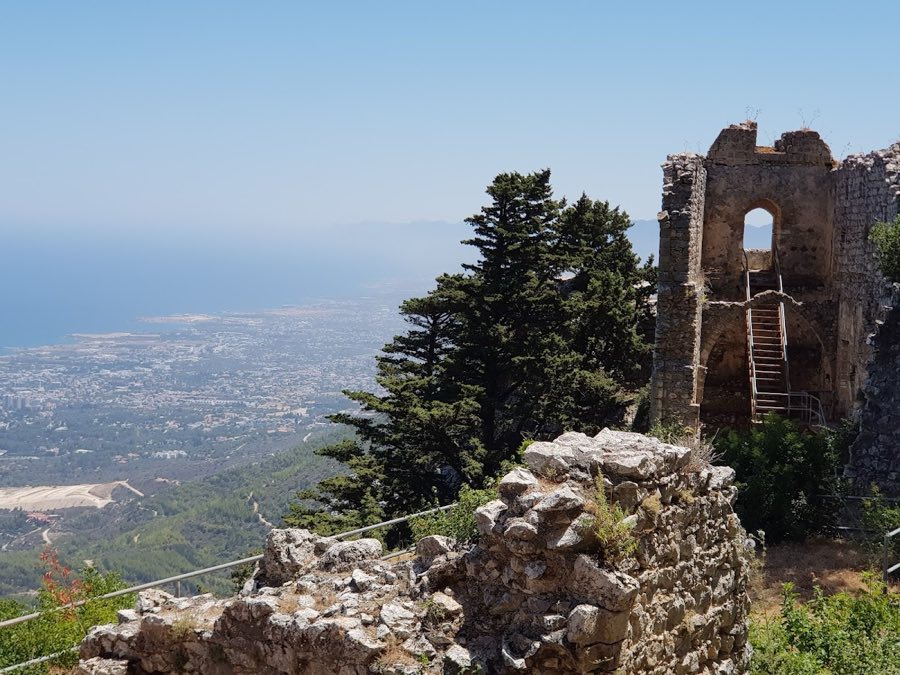
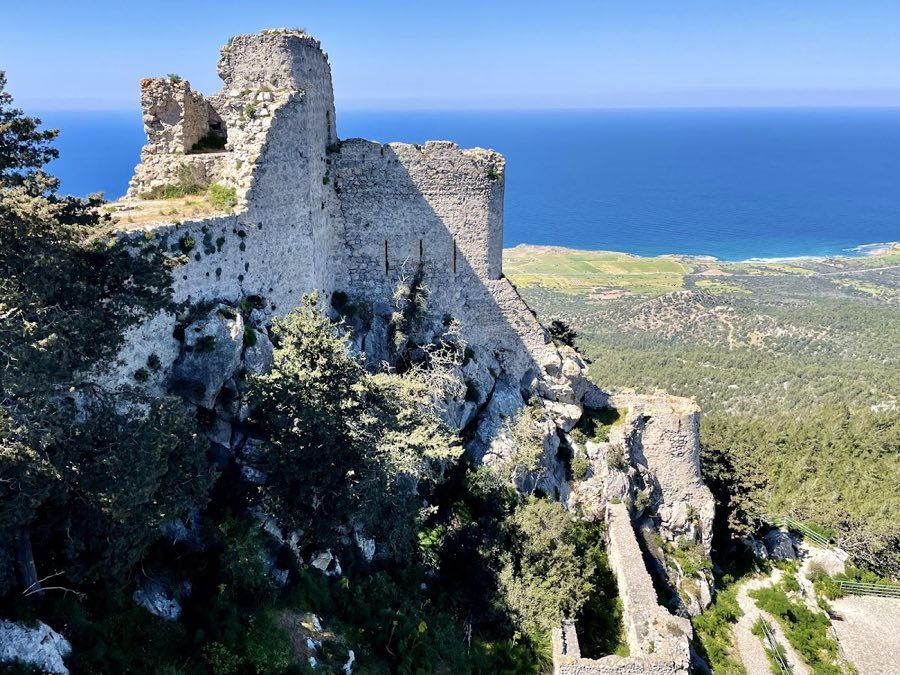
Buffavento Castle crowns a rocky peak approximately 960 meters above sea level, commanding steep cliffs that leave only the southern approach accessible, reached by roughly 600 steps. The fortress is divided into two main sections: the upper ward facing the sea and the lower ward facing the plain below. Originally, these two parts were connected by a lengthy staircase that was later destroyed, likely by Venetian occupants intent on disrupting internal access.
The construction of the castle blends dressed limestone brought from the island’s coastal quarries with stones extracted from the mountain itself. Unlike elaborate castles decorated for grandeur, Buffavento presents a functional and austere appearance without ornamental features. The main entrance is set within a two-storey rectangular tower marked by a pointed arch characteristic of Frankish architecture. Adjacent to this gatehouse, to the west, stand three barrel-vaulted buildings attributed to the Frankish period, while behind the entry tower lie three irregular chambers, with ruins of a fourth nearby, indicating modifications over time.
Branching off from the main stairway to the west is a large two-storey unvaulted Byzantine structure divided internally into three spacious rooms. This part of the castle reflects earlier architectural practices dating back to the Byzantine occupation. Near the upper ward, there is a rectangular cistern designed to collect and store rainwater, connected to four smaller compartments equipped with water pipes, showcasing an ingeniously integrated water management system essential for sustaining the garrison.
On the eastern side of the upper area stands a short tower with groin vaulting, a type of ceiling formed by the intersection of two barrel vaults at right angles, indicative of Frankish design and used as a guard post. This defensive tower is flanked by another cistern and a nearby building that is believed to have served as a chapel or small church, linking the site to its religious functions during medieval occupation. At the far western edge of the castle remains an isolated ruined tower, its purpose likely related to further surveillance or defense.
Facilities such as a large stable and water cistern are present within the castle’s bounds, although their design suggests they would have been difficult to use effectively during a siege. Rooms within the complex doubled for various needs, underscoring practical adaptations to the limited space atop the rocky summit. Today, many of the structures, particularly in the upper ward, survive only as fragile remnants, revealing the castle’s state of ruin after centuries of decline.
No. 76160
No. 71569
No. 40842
No. 76608
Comments
Comments for Buffavento Castle will require a verified account before posting.
We'll send a verification link before your first comment is published.