No. 80185
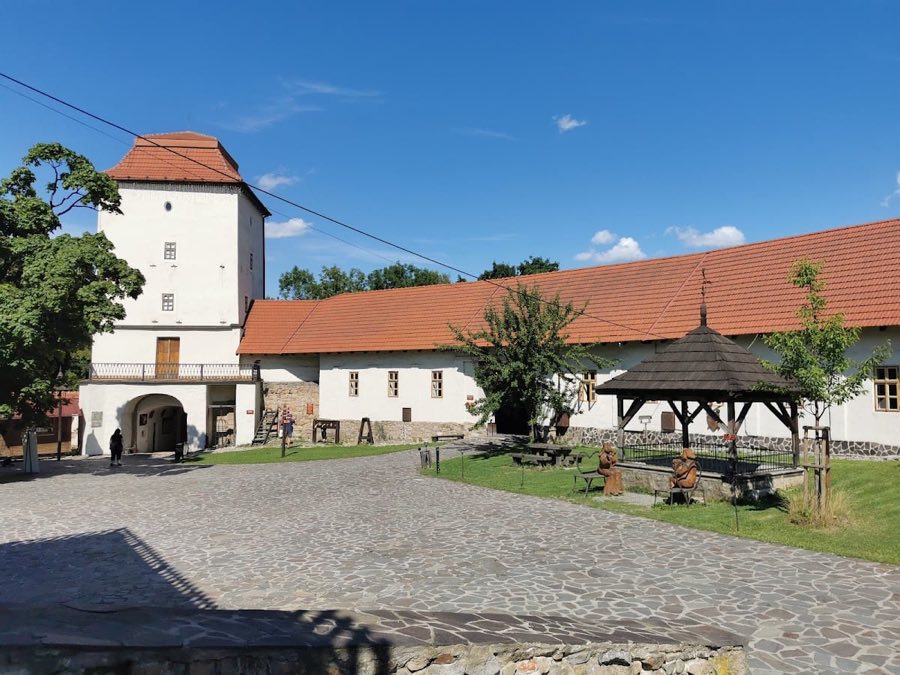
Silesian Ostrava Castle
Czechia
CastleRuinFor rent13th century
No. 45787
No. 45787 · 49.868 N, 18.273 E
Quick summary
Landek Castle is a castle in Czechia with origins associated with the 13th century.
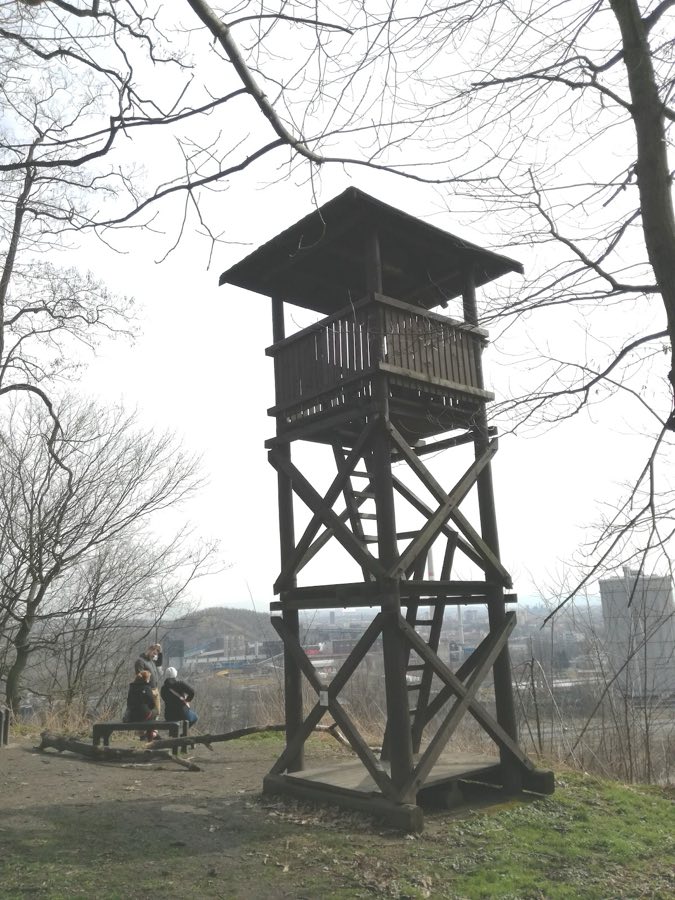
See all castles in CzechiaLandek Castle stands in Dubí-Slezská Ostrava, Czech Republic, on a site first occupied by a Slavic fortified settlement of the Golensizi around the turn of the eighth to ninth century.
A stone stronghold was raised on the hill in the mid-thirteenth century under the direction of the Moravian margrave Ottokar II Přemysl, who later became King of Bohemia. The fortress was established to watch the nearby frontier with the Piast duchy of Teschen and served as the residence of a castellan who held the castle and its associated lands as a fief. In 1269 Ottokar II transferred the surrounding Troppau land, including Landek, to his illegitimate son Nikolaus I. The castle appears in a formal border agreement dated 2 August 1297, recorded between Bishop Theoderich of Olomouc and Duke Mesko I of Teschen. The first individually named holder is Siegfrid von Baruth in 1303.
By 1318 the castle and its lordship belonged to the Duchy of Troppau, and Nikolaus II succeeded then as duke. Nikolaus II expanded his holdings by marriage in 1337, taking the title associated with Ratibor and thereafter styling his domain as the Duchy of Troppau–Ratibor. In 1359 he granted 4,000 marks on Landek and the nearby town of Leobschütz to his third wife, Jutta von Falkenberg. When the Duchy of Teschen came under direct rule of the Bohemian crown in 1348, Landek ceased to function as a border fortress.
Territorial rearrangements in 1377 assigned Landek together with Troppau and Leobschütz within the duchy, and in the wake of financial strain the site was pawned after 1381 to Duke Konrad II of Oels. During the Hungarian–Bohemian war of 1474 troops loyal to King Matthias Corvinus took and severely damaged the castle; following that action the manorial center was transferred to the castle at Hultschin. In 1492 King Ladislaus Jagiello pledged Landek, the Hultschin lordship, and the estate Petrzkowitz to Duke Kasimir II of Teschen.
At the start of the sixteenth century the ruined stronghold had become a shelter for bands of robbers. Duke Sigismund of Troppau led an assault to clear the site, ordered the execution of the captured brigands, and had the remaining walls pulled down. On 15 February 1506 Barbara, Duchess of Troppau and Ratibor, together with Georg of Schellenberg, renounced overlordship in favor of Johann, Nikolaus and Valentin of Ratibor. The derelict castle later passed into the hands of Bernhard von Zwole in 1517. Excavations undertaken in the 1820s and 1830s recovered weapons that were later displayed by Hubert Stücker von Weyershof in Schloss Schillersdorf. Up to the 1840s parts of the circular defensive wall and the double ramparts were still visible, but subsequent removal of masonry for local building work greatly reduced the remains.
The site occupies an elongated hill above the point where the Ostravice flows into the Oder, in the present Ostrava district of Koblov (historically Koblau). Archaeological evidence documents an early Slavic fortified enclosure at the top of the ridge and, overlaying that, the medieval stone castle erected in the thirteenth century. The plan was dominated by a surrounding defensive wall and outward earthworks that formed a continuous circuit around the summit, intended to protect the manorial compound and its defenders.
The defensive circuit included a masonry ring wall built when the castle was constructed in the mid-1200s. The wall was composed of dressed stone and mortar, serving as the principal hard barrier around the stronghold. By the nineteenth century fragments of this masonry were still standing; after the 1840s much of the stone was taken away and reused in nearby buildings, including a local manor and farm houses, so only partial wall remnants survive in place today.
Beyond the stone enclosure the hill was protected by a pair of earth ramparts placed one behind the other, together with accompanying ditches. These outer banks and their excavated channels date to the medieval period and functioned as layered obstacles to attackers. Nineteenth-century descriptions record the double ramparts and the collapsed ditches as conspicuous landscape features; at present the earthworks remain as decayed embankments that mark the former defensive lines.
Archaeological work carried out in the 1820s and 1830s produced metal weapons recovered from excavated contexts within the burgstall, demonstrating the site’s military use in the medieval centuries. Some of these finds were put on display in Schloss Schillersdorf. Today the castle area preserves only scattered wall fragments and the softened profiles of the former ramparts and ditches, which together convey the outline of the former fortification on the Landek hill.
No. 80185

No. 58453
No. 53690
No. 65095
Comments
Comments for Landek Castle will require a verified account before posting.
We'll send a verification link before your first comment is published.