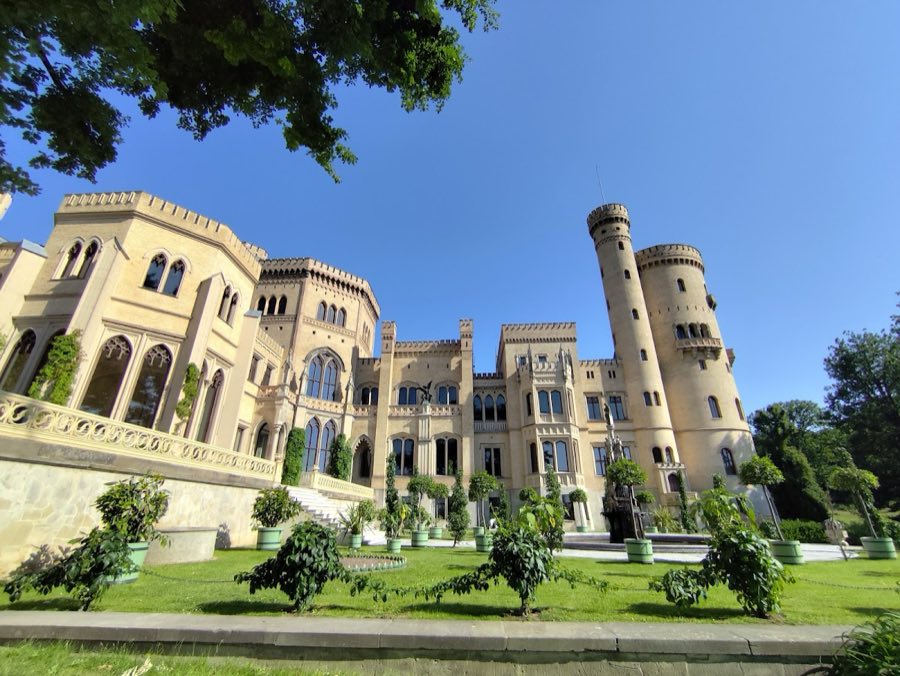
No. 51264
Babelsberg Palace
Germany
PalaceRestoredFor events19th century
No. 31696
Palace · Germany
No. 31696 · 52.410 N, 13.011 E
For events
Lindstedt Castle is marked as a château or castle venue lead. Capacity, indoor/outdoor spaces, catering rules, and accommodation options are published only after public verification.
Event types: Private events, Cultural gatherings, Filming and photography
Quick summary
Lindstedt Castle is a palace in Germany with origins associated with the 19th century.
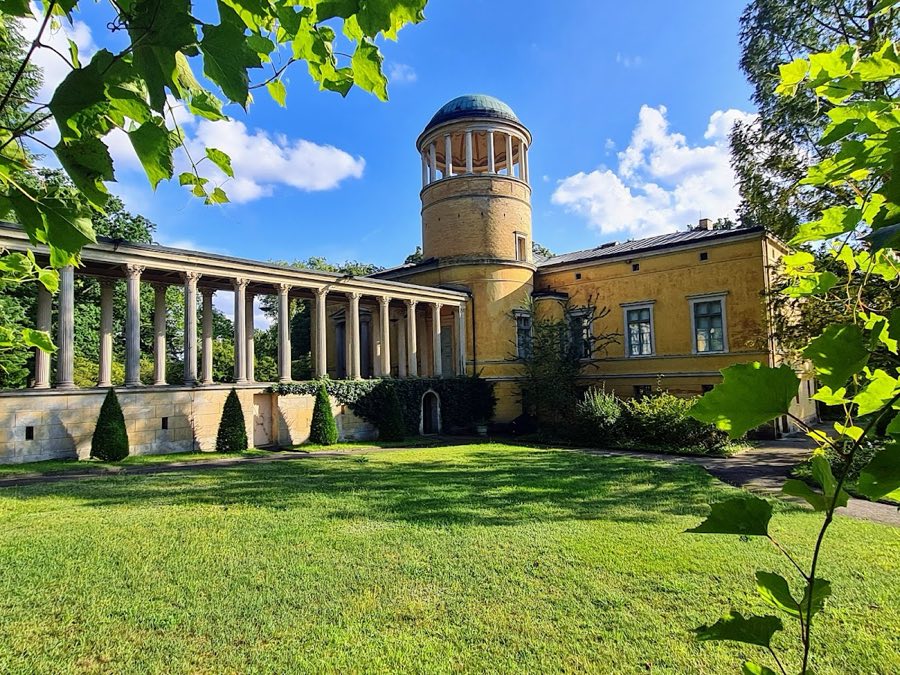
See all castles in GermanyLindstedt Castle in Potsdam, Germany, is a mid‑19th‑century palace erected for the Kingdom of Prussia in a late‑classical architectural idiom. Its construction and long redesign process link the site directly to the Prussian royal house, and the building later figured in state administration, public health responses, and institutional use, all of which have shaped its role in regional history.
From 1803 until 1828 the estate was privately held; German and Russian records name the von Bülow family for that interval, while a Hebrew record gives a different private‑owner formulation. The property entered the royal domain when King Friedrich Wilhelm III acquired it in 1828. His successor, Friedrich Wilhelm IV, envisaged an aged ruler’s residence at Lindstedt and personally engaged in its planning over many years, producing more than one hundred design drawings and working with leading Prussian architects of the period.
The palace was built for Friedrich Wilhelm IV and raised under his patronage between 1858 and 1861. Only a significantly reduced version of the originally proposed large antique‑style villa was completed. After Friedrich Wilhelm IV died, ownership passed to his widow as part of her inheritance; the king’s brother and successor, Wilhelm I, saw the work through to completion.
In the later 19th and early 20th centuries the estate was leased to various state officials. During the reign of Kaiser Wilhelm II the house was used as a quarantine facility during cholera and tuberculosis outbreaks, and at times imperial children received part of their education there. In 1918 Reich President Paul von Hindenburg granted Lindstedt Castle in hereditary lease (Erbpacht) to former Chief of the General Staff Erich von Falkenhayn. Falkenhayn died at Lindstedt in 1922; his family remained at the palace until 1944, and he was buried at the nearby Bornstedt cemetery.
From 1934 Wilhelm Groener and his family occupied the building; Groener died at Lindstedt on 3 May 1939 and was buried at Stahnsdorf Southwest Cemetery. Private residential use continued into the 1950s. In that decade the palace housed the Botanical Institute of the Potsdam Pedagogical Institute. Beginning in the 1980s the Potsdam Institute of Forensic Medicine used the site, followed by its successor, the Brandenburg State Institute for Forensic Medicine, which also established a nearby new building.
Since 1996 the Prussian Palaces and Gardens Foundation Berlin‑Brandenburg has managed the property. The group of parks and palaces in Potsdam and Berlin received UNESCO World Heritage status in 1990; Lindstedt Castle was added to the designated ensemble in a 1999 extension. The foundation has made the palace available for events and hire, and the building was used as the filmed entrance to a secret underground laboratory in the 2002 movie Resident Evil. In 2019 Georg Friedrich, Prince of Prussia, asserted a claim for a permanent, free, and land‑registerable right of residence in several royal properties, including Lindstedt Castle. German administrative plans indicate that from autumn 2025 the palace will return to the State Institute for Forensic Medicine for use as administrative headquarters and for teaching and seminar rooms after a renovation respecting its monument character.
The site forms a late‑classical ensemble set on a slight rise about 800 metres northwest of the Neues Palais. The built group dates principally to the mid‑19th century, specifically the construction campaign of 1858–1861, and combines a main house with a conspicuous tower, a temple‑style annex reached by a high external stair, and a covered columned walk that links the buildings to the Lindstedter Chaussee road. The arrangement creates deliberate sightlines between the house and the surrounding landscape.
The tower is finished with a belvedere, an upper platform sited to offer views across the park and toward the domes of the nearby Neues Palais ensemble. The annex takes the form of a temple front, approached on the outside by a tall stair, and was executed as part of the reduced version of the original design. The covered columned walk, or colonnade, gives a sheltered, columned approach from the road and reinforces a visual connection between building and avenue.
The surrounding garden follows a regular, formal design laid out by landscape planner Peter Joseph Lenné. The grounds were arranged to produce framed perspectives on the palace and to open views over the wider terrain. Remnants of estate ponds survive; these retained basins were once used for carp farming and remain as landscape features. The completed ensemble shows a mix of compositional elements that reflect the patron’s desire for Italianate classicism, although the executed project represents a pared‑down realization of the original, grander villa concept.
The palace survives in use and retains its 19th‑century character. Its principal architectural components — main building, tower with belvedere, temple annex, and connecting colonnade — remain in place, and the formal garden and carp ponds still shape the immediate setting. Management by the regional palaces foundation has maintained the site as an active historic property.
No. 51264
No. 45783
No. 52774
No. 61825
Comments
Comments for Lindstedt Castle will require a verified account before posting.
We'll send a verification link before your first comment is published.