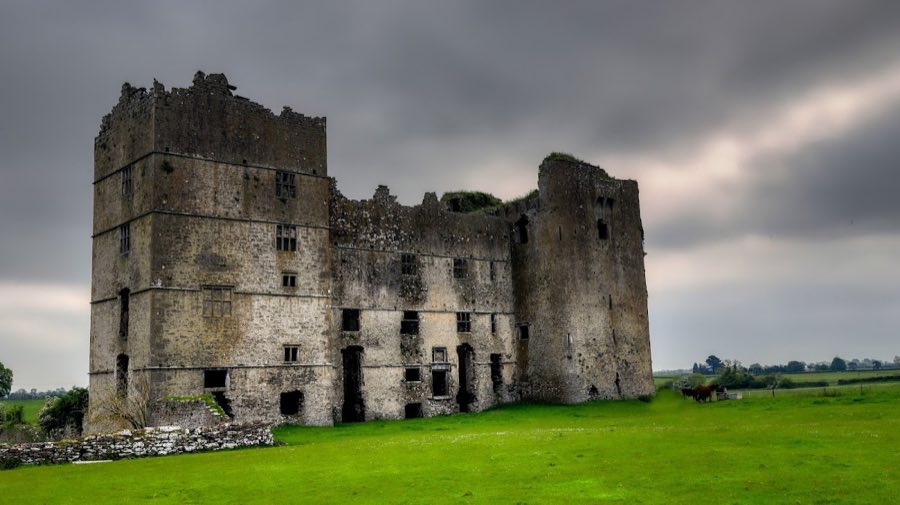
No. 48401
Loughmoe Castle
Ireland
CastleRuin17th century
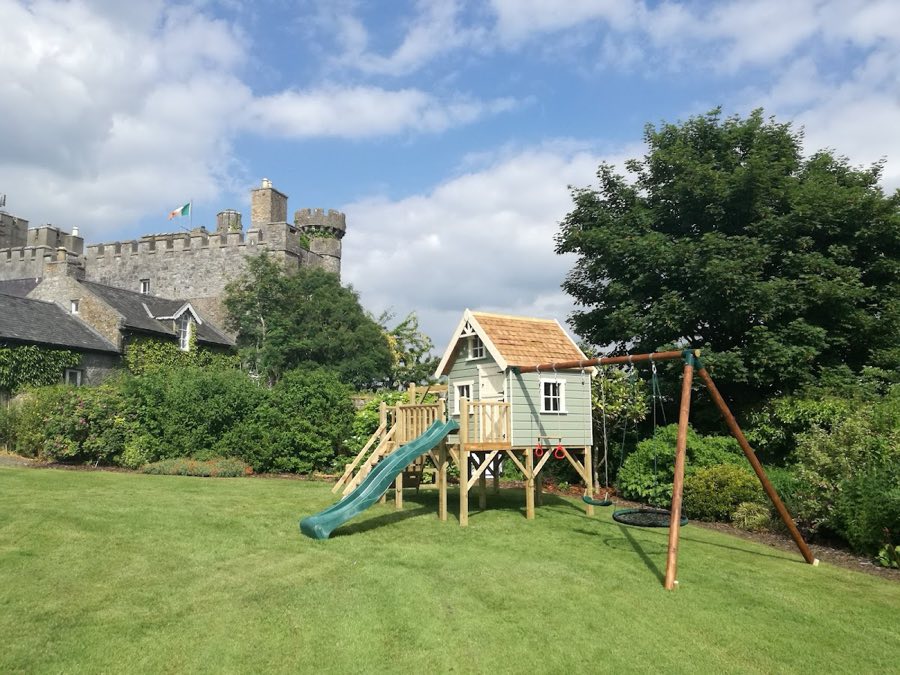
No. 16093
Castle · Ireland
No. 16093 · 52.752 N, 7.744 W
For sale
Lisheen Castle in Ireland is marked with a public sale signal. Asking price, tenure, land area, floor area, and room counts are shown only after public verification.
Status: Public sale signal
Price: Price on application or not publicly verified
Property type: Castle
Notable features: Hospitality use, Residential use, Public-access operations
Availability note: Submit an official public listing or register buying interest to complete the sale record.
For rent
Lisheen Castle is marked for bookable castle accommodation. Nightly pricing, sleeps count, stay rules, and amenities are displayed only when public operator data is available.
Rental type: Hotel / bookable stay, Short-stay rental
Short-term availability: Bookable accommodation signal
For events
Lisheen Castle is marked as a château or castle venue lead. Capacity, indoor/outdoor spaces, catering rules, and accommodation options are published only after public verification.
Event types: Weddings, Private events, Cultural gatherings, Filming and photography
Ceremony spaces: Ceremony setting to verify
Accommodation: Accommodation signal present
Quick summary
Lisheen Castle is a castle in Ireland with origins associated with the 18th century.
See all castles in IrelandLisheen Castle stands in Lisheen, Moyne, Ireland, and its buildings were created and modified by successive local landed families.
In the later 18th century the site contained a Georgian country house erected by George Grace. In 1770 John Lloyd acquired lands that included Lisheen and nearby townlands, and he divided those holdings among his five sons. Frederic Lloyd received the townlands that included the house built by Grace and established his family there toward the end of the century.
From the 1810s Frederic Lloyd undertook a progressive rebuilding for his son and heir, John Lloyd, transforming the earlier residence into the present castellated Tudor‑style country house. The house appears in early 19th‑century documentary records and by the 1830s was described as an imposing castellated residence; a report from 1841 noted that John Lloyd was then building a new castle.
After the death of John Lloyd’s wife in 1853, he emigrated to Canada. In 1856 Charles Henry Lloyd inherited Lisheen and its lands; on his death in 1887 the property passed to his eldest son, Charles Edward Lloyd. Charles Edward emigrated to Australia and the house was let to tenants. Around the late 1890s a broker let the residence to Henry Hamilton at an annual rent of £80, and household goods were dispersed for sale; the Hamilton family occupied the house roughly between 1896 and 1903. Under the Wyndham Land Act of 1903 most of the estate farms were sold to tenants while 57.2 hectares around the house were retained, and the house itself continued to be let.
In 1918 E. F. Lloyd placed the house on the market. On 5 February 1918 William Bray O’Brien purchased the Lisheen estate for £3,740. William Bray O’Brien’s wife was Kathleen Lloyd. Their daughter Camilla married John Francis O’Meara, who subsequently received Lisheen Castle as a wedding gift. On the night of 29 June 1921, during the Irish War of Independence, the house was set on fire by members of the Irish Republican Army. The sole resident at the time was the caretaker, Patrick Sweeney; attackers broke a salon window, introduced petrol into that room and set the interior alight. In October 1921 John Francis O’Meara received compensation of £15,000 for the loss.
Following the burning the house remained unoccupied for many decades. In 1960 the Land Commission took the estate and divided the lands, an action that removed the surrounding park. Around 1971 a visitor from Canada named Carol Lloyd found much of the building’s structure still standing, contrary to expectations of total collapse. In 1994 Joan and Michael Everard bought the ruined estate and began a program of repair in 1996. Restoration work concluded in December 1999, and the restored building was made available as holiday accommodation beginning 1 May 2000; one account describes the renewed house as operating as a luxury hotel.
The site consists of a three‑storey country house whose core dates to the late 18th century and was later remodelled in the early 19th century. The earlier residence took the form of an Irish Palladian, three‑storey country house erected in the Georgian period, and that house served as the basis for later works that gave the building a castle‑like appearance. In the early 1800s castellations and other Tudor‑style exterior treatments were added progressively while the house was being reworked for the Lloyd family, producing the battlemented silhouette now associated with the site.
One internally significant space is the salon, a principal reception room that figured in the 1921 attack when assailants broke a window to gain access, poured petrol into the room and ignited it. The salon is part of the restored fabric of the house following the late 20th‑century repairs; the overall building fabric that survived the 1921 fire was stabilised and returned to use during conservation work carried out between 1996 and 1999.
The house formerly stood within a designed park. The parkland that formed the immediate setting of the house was removed when the estate was divided after acquisition by the Land Commission in 1960, altering the historic landscape that once surrounded the dwelling.
The physical state of the principal building has changed through burning, long vacancy and renewal. After the 1921 conflagration the house stood empty for decades but retained much of its structure into the early 1970s. The late 1990s restoration repaired the surviving fabric and adapted the building for residential accommodation, bringing the main block back into a conserved and habitable condition.
No. 48401
No. 85412
No. 48613
No. 75008
Comments
Comments for Lisheen Castle will require a verified account before posting.
We'll send a verification link before your first comment is published.