No. 16093
Lisheen Castle
Ireland
CastleRuinFor sale18th century
No. 48401
No. 48401 · 52.755 N, 7.826 W
Quick summary
Loughmoe Castle is a castle in Ireland with origins associated with the 17th century.
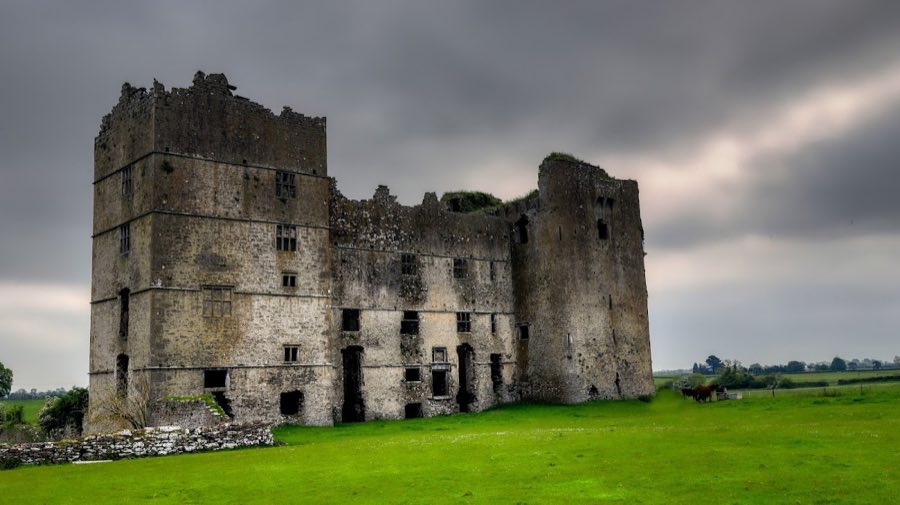
See all castles in IrelandLoughmoe Castle stands at Tinvoher, Ireland, and was established by the Anglo‑Normans associated with the Purcell family.
Genealogical notes trace members of the Purcell kin as far back as 1035, with 12th‑century landholdings in England and participation by a Hugh Purcell in the Anglo‑Norman invasion of Ireland in 1171. In 1204 the land around Loughmoe was granted to Sir Hugh Purcell as a dowry from Beatrix FitzWalter’s father, Theobald FitzWalter, and Sir Hugh is recorded as the first Baron of Loughmoe by later tradition. At a later date, in 1328, Richard Purcell received the title of Baron Luach Mag from the first Earl of Ormond; that title was not recognised by the English crown.
The surviving castle fabric records a complex construction history. The core that remains is a four‑storey tower or tower‑house, described as the oldest structural element; its earliest masonry has been assigned different dates, with some records placing the earliest work in the 1200s and others attributing the oldest surviving fabric to the 15th–16th centuries. The Purcell family carried out further building at Loughmoe in the 17th century, creating additions attached to the original tower.
Members of the family associated with the castle are recorded under many personal names, including Richard, Phillip, Geoffrey Rothe, Thomas, Peter, James, John, Patrick, Theobald and Nicholas Purcell. Local tradition preserves a story that a member of the family killed a giant boar and sow, won the king’s daughter and thus the castle lands; that legendary boar appears in the family heraldry as four boar heads. The Purcells occupied the castle until about 1760, after which the buildings fell into disrepair and the site became a ruin. The castle’s lands formed part of the barony of Eliogarty.
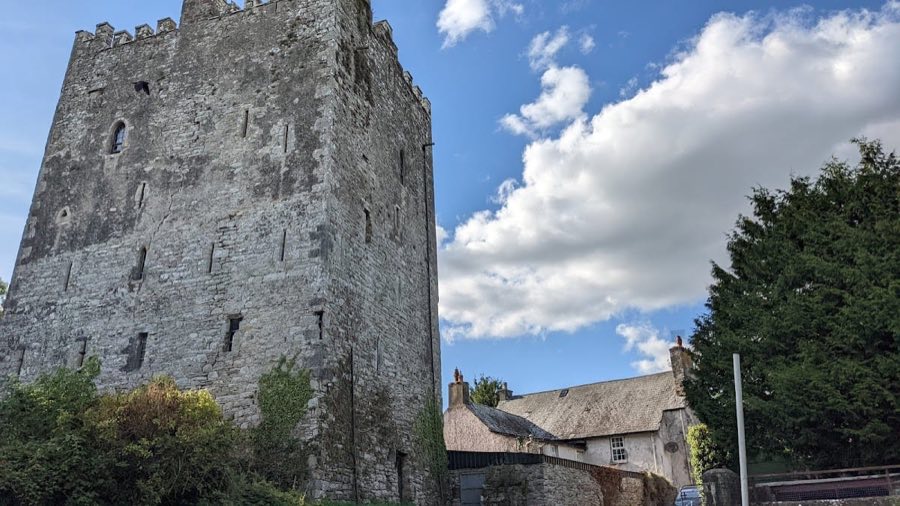
The site is a lowland tower‑house complex set on flat ground between the River Suir and the Cork–Dublin rail line, visible from the railway between Templemore and Thurles. The dominant surviving element is a four‑storey tower, identified as the structural core of the castle and representing the earliest standing phase of the building complex.
This four‑storey tower functioned as the main residential and defensive structure of the site; surviving documentation assigns its origins to medieval phases, with dates placed variously in the 13th century or in the 15th–16th centuries. The Purcell family added to the tower in the 1600s, and those 17th‑century extensions form part of the ruined complex seen today. The tower and later additions are described as ruinous following the family’s departure around 1760.
Contemporary accounts record that a mill was erected close to the castle at the time the site was established, forming an associated component of the original settlement. The mill is mentioned in the historical record without detailed description of its construction. The castle remains, including the four‑storey tower and the 17th‑century additions, survive in a fragmentary and ruined condition. Local tradition about the family’s boar legend is reflected in the Purcell coat of arms, which displays four boar heads and is linked in local commentary to the site’s history.
No. 16093
No. 48613
No. 85412
No. 75008
Comments
Comments for Loughmoe Castle will require a verified account before posting.
We'll send a verification link before your first comment is published.