No. 70282
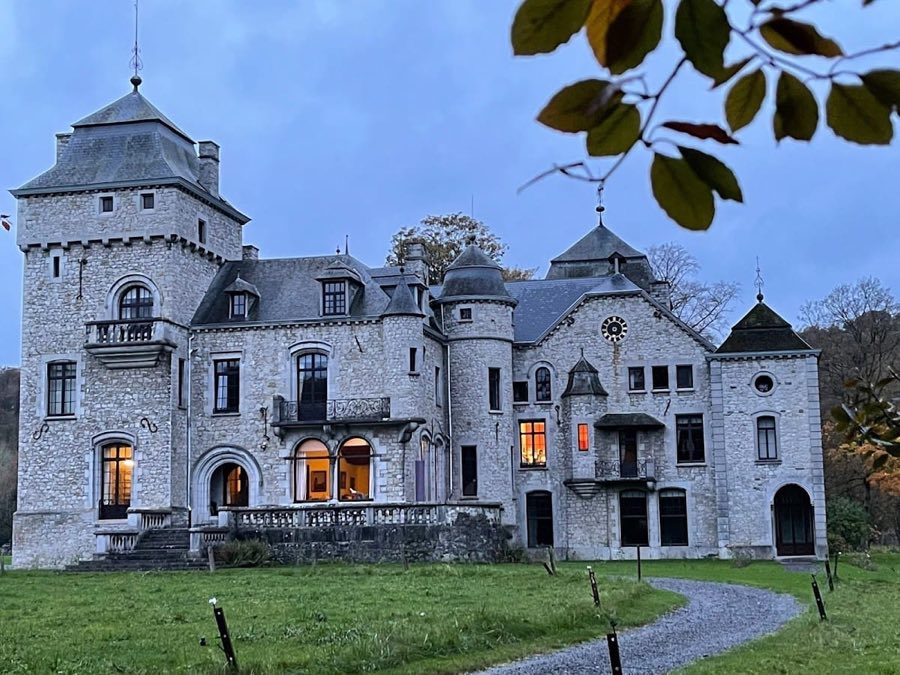
Lassus Castle
Belgium
PalaceIntact14th century
No. 33658
Castle · Belgium
No. 33658 · 50.397 N, 5.532 E
Quick summary
Logne Castle is a castle in Belgium with origins associated with the 9th century.
See all castles in BelgiumLogne Castle in Ferrières, Belgium, is a medieval fortress erected by the abbey-principality of Stavelot and first recorded in the ninth century; it began as a refuge for monks during the late Carolingian era and later developed into a fortified stronghold reshaped for the early modern age. First mentioned as “Lomna” in 862, the site appears again as a castrum around 883–885, establishing its early role in the monastic principality’s network of defenses and local administration.
During the first half of the twelfth century the abbey strengthened the place and turned it into a county within the principality of Stavelot-Malmedy. Under Abbot Wibald the castle received substantial defenses and the surrounding settlement was founded at the hill foot to supply the garrison. A prominent north-west tower-keep was erected at this time to house the local lord, Nicolas de Logne. A contemporary text of 1105 already refers to the site as the “castle of Logne.”
In the thirteenth and fourteenth centuries the fortress remained strategically important and was twice occupied by the counts of Luxembourg, who took control without lawful title because they judged the abbey’s vassals failed to defend it adequately. The fifteenth century brought financial strain for the abbey. In 1427 Abbot Jean Godeschalc of Gueuzaine mortgaged the castle and lands to the La Marck family, Évrard de la Marck receiving the property in exchange for 4,000 Rhine florins, and the place thereafter passed into La Marck hands.
Political and military turbulence followed. In 1478 Guillaume de la Marck, known as “Guillaume à la barbe,” used Logne in operations against the bishop of Liège and Burgundian interests with French backing. Imperial forces under Maximilian seized the castle in 1480; Guillaume retook it in 1482 and named Jeannot le Bâtard as captain. Guillaume was captured and executed at Maastricht in 1485. At the close of the fifteenth century the defenses were adapted to face artillery, with a new outer defensive enclosure added on the slope below the main fortress; further modernization continued into the early sixteenth century.
By 1514 Guillaume de Jametz, son of Robert II de la Marck, held the castle. Tensions between France and the Holy Roman Emperor escalated when Robert II entered service with King Francis I on 12 February 1521. In retaliation, imperial forces under Henry of Nassau-Breda placed twenty cannons on nearby heights and bombarded the castle from 20 April to 1 May 1521. The garrison was devastated; survivors either killed themselves or surrendered and were executed. Charles V ordered the fortress dismantled and forbade any reconstruction. On 2 May the hill and remains were returned to the monks of Stavelot.
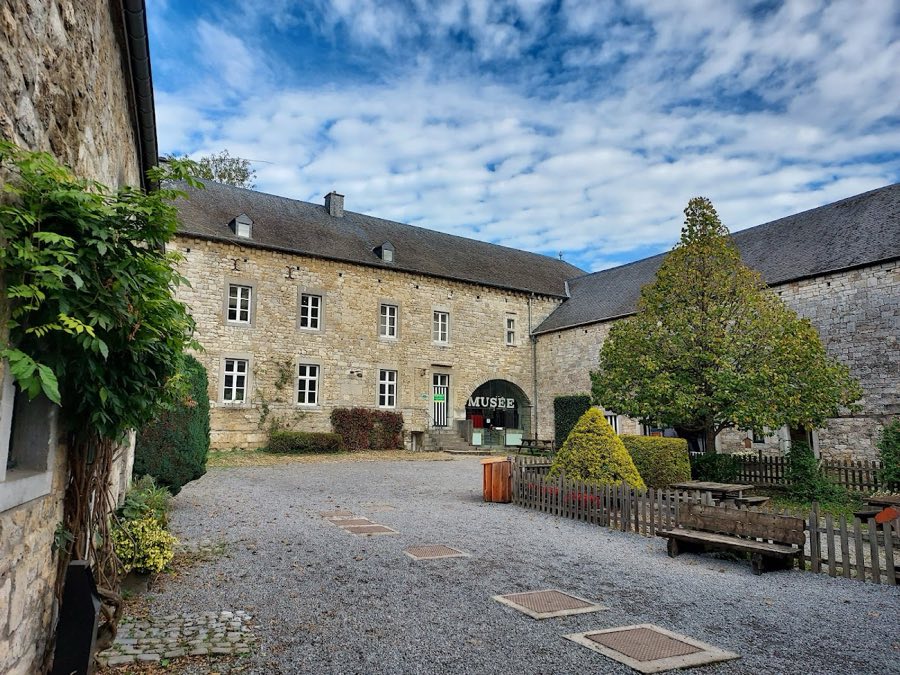
After the destruction of 1521 villagers rebuilt their homes using stones taken from the ruined castle; many structural blocks were carried down to the valley during the reconstruction of local settlements. The former abbatial farm La Bouverie at Vieuxville survives as an example of sixteenth-century rural building connected to the castle estate. The ruined site lay largely abandoned until modest restorations and archaeological clearing began around 1898 under Auguste Dupont and a local association called the Friends of Logne. The province of Liège acquired the property in 1968, and from 1984 its care and management were entrusted to an association responsible for the Lembrée valley domains. Between 1990 and 2003 the deep well at the site was excavated and examined; material recovered during that work, including domestic vessels and weapons, is displayed in the museum at the Château-Fort de Logne located at the La Bouverie farm.
The castle crowns a narrow rocky spur rising roughly sixty metres above the junction of the Ourthe and its tributary the Lembrée at Vieuxville. The position follows the natural crest of an anticline and shaped the layout, with the main defensive works aligned along the ridge and later defenses built down the slope to meet changing military needs. The remains stand as fragmentary masonry on the hilltop and lower terraces, protected today as listed Walloon heritage.
A prominent north-west tower-keep survives in vestige and served as the residential strongpoint for the locality’s lord. Constructed in the period when the abbey founded the village at the castle’s base, this tower functioned as both dwelling and last refuge for defenders. Its fabric was later quarried for village rebuilding after the fortress was dismantled, so the tower now exists only in part.
Below the principal enclosure a late fifteenth-century outer defensive wall was added on the slope to resist artillery; that downslope enceinte altered the castle’s silhouette and represents the site’s adaptation to gunpowder warfare. Early sixteenth-century work further transformed the defenses before the demolition ordered in 1521. Much of the stonework from these walls was removed in the decades after the dismantling and reused in nearby houses and farms, changing the appearance and leaving only fragments in place.
A nearly fifty-six metre deep well, about two and a half metres across, was cleared in the 1990s and early 2000s after being filled for centuries. Excavation revealed a thick concrete-like layer within the shaft and produced hundreds of domestic objects, fragments of glass and pottery, a number of weapons, and mechanical elements including a large hoisting wheel used for lifting water. Many of these finds are shown in the on-site museum at La Bouverie. The overall condition of the castle is that of ruins, with archaeological features and recovered material providing the primary evidence for its phases of use, destruction, and later reuse.
No. 70282
No. 53040
No. 57140
No. 13812
Comments
Comments for Logne Castle will require a verified account before posting.
We'll send a verification link before your first comment is published.