No. 34380
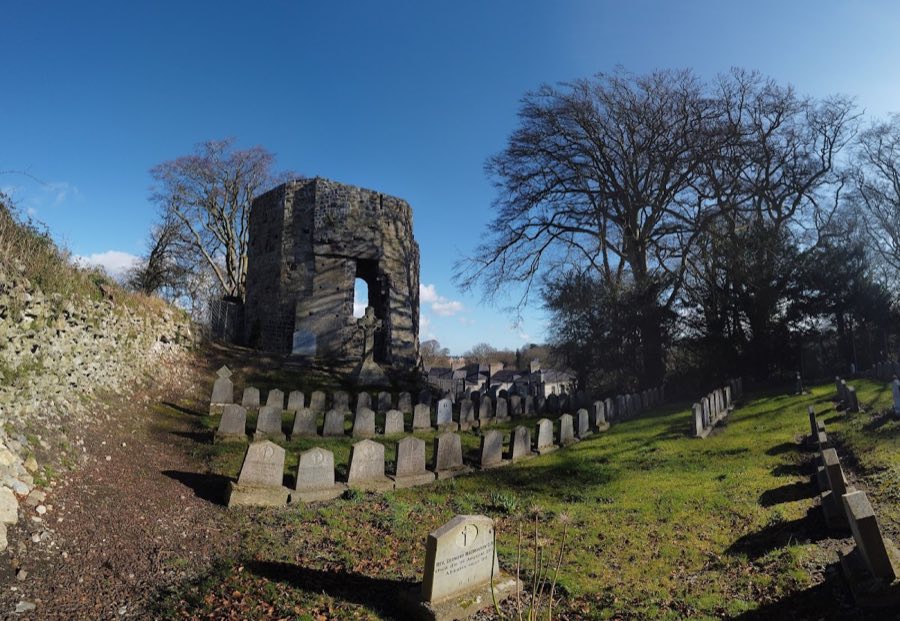
Castleknock Castle
Ireland
CastleRuin8th century
No. 89100
Manor house · Ireland
No. 89100 · 53.379 N, 6.417 W
For events
Luttrellstown Castle is marked as a château or castle venue lead. Capacity, indoor/outdoor spaces, catering rules, and accommodation options are published only after public verification.
Event types: Weddings, Private events, Cultural gatherings, Filming and photography
Ceremony spaces: Ceremony setting to verify
Quick summary
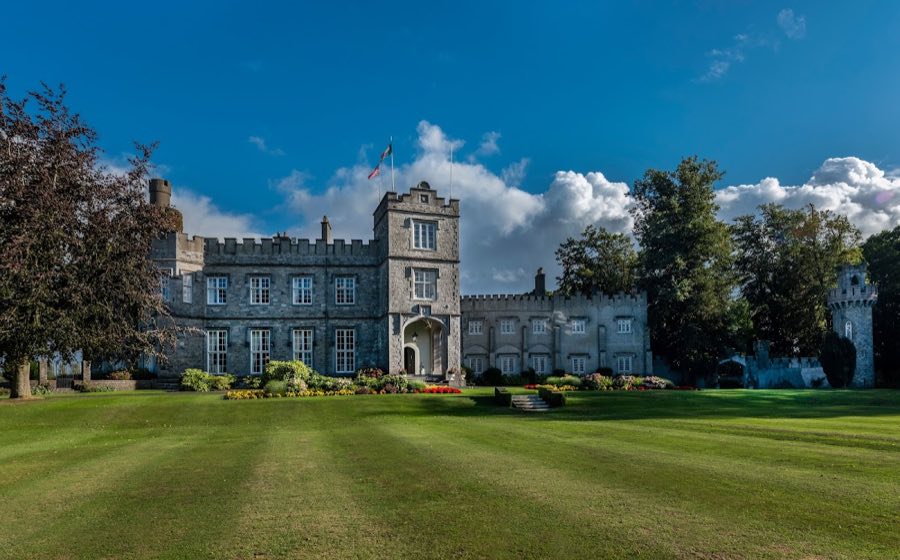
Luttrellstown Castle is a manor house in Ireland with origins associated with the 13th century.
See all castles in IrelandLuttrellstown Castle stands at Kellystown, Castleknock, Ireland, and was established by members of the Luttrell family under the English crown.
The land that became the estate was granted about 1210 to Sir Geoffrey de Luterel by King John; Sir Geoffrey served the king on missions to Ireland between 1204 and 1216. The demesne originally covered the whole townland known as Woodlands in the civil parish of Clonsilla.
Work on the present castellated house began in the early fifteenth century, around 1420, under Sir Geoffrey Luttrell, the fifth Lord Luttrell, who was born about 1385. The property remained in Luttrell hands for many generations. Members of the family held important offices: Robert Luttrell served as treasurer of St Patrick’s Cathedral and as Lord Chancellor of Ireland from 1235 to 1245; Sir Thomas Luttrell was Chief Justice of the Irish Common Pleas from 1534 to 1554.
In the late seventeenth and early eighteenth centuries the family figures included Colonel Henry Luttrell, born circa 1655, who received forfeited estates after the Siege of Limerick and was assassinated in October 1717. Later Luttrells attained peerages, among them Colonel Simon Luttrell, created first Earl of Carhampton, and Henry Lawes Luttrell, second Earl of Carhampton (1743–1821). Henry Lawes Luttrell is recorded as having sold Luttrellstown Castle in 1800. In 1811 the property was bought by the publisher Luke White, who renamed the estate Woodlands. The estate then passed to White’s descendants, who became the Barons Annaly, and a later Lord Annaly restored the building’s name as Luttrell Castle.
Queen Victoria visited the house in 1844 and again in 1900; during the 1900 visit she drank tea beside a waterfall, an event commemorated by Lord Annaly with an obelisk made from six blocks of granite quarried in the Dublin mountains. In 1915 a Lord Annaly sold the house to a Major Hamilton; he died in 1918 and left the property to his widow. In 1927 Ernest Guinness purchased the estate as a wedding gift for his daughter Aileen Guinness, after which the castle hosted hunt balls and large social events. The house contents were dispersed at a sale held by Christie’s of London in September 1983. The estate itself was sold that year to the Swiss consortium Primwest. In 2006 the property changed hands to JP McManus, John Magnier and Aidan Brooks, and in 2007 more than €20 million was invested in major upgrades, including substantial improvements to the golf facilities.
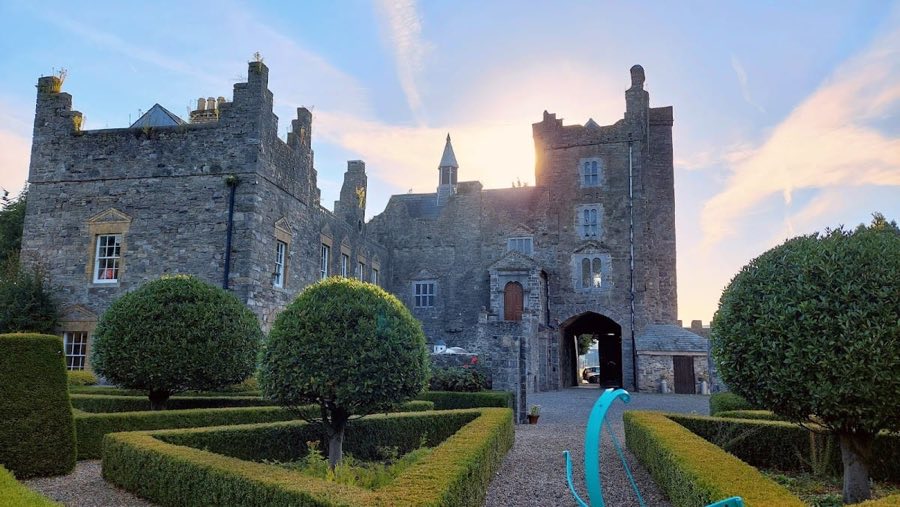
The site comprises a castellated house dating to about 1420 set within a historic demesne. The original estate covered the townland called Woodlands and the surviving grounds total approximately 560 acres. The main house presents as a medieval-derived, castle-like residence sited within extensive parkland rather than as a purely defensive fortress.
Water management forms a distinctive element of the landscape. Within the demesne several waters have been dammed to create a linked series of artificial ponds, and a stream that rises near the townland named Pass-If-You-Can is channelled through the estate. That stream enters an aqueduct at Westmanstown, passes beneath the Royal Canal and then reaches the north-west corner of the grounds. It leaves the demesne at the south-east corner beside a gate lodge at the Strawberry Beds, goes under the road and falls into the River Liffey about 25 metres later. A waterfall beside these waterworks became the site of Queen Victoria’s 1900 tea.
A commemorative monument of local stone stands near the waterfall. The obelisk consists of six granite blocks brought from the Dublin mountains and was erected to mark Queen Victoria’s visit in 1900. The obelisk remains as a visible, worked-stone feature within the landscape.
The estate has later twentieth- and twenty-first-century additions related to leisure use. A championship golf course designed by Steel and Mackenzie occupies part of the grounds, and refurbishment work completed in 2007 included construction or improvement of an alpine-style clubhouse. The castle and the surviving 560-acre demesne now form a five-star resort together with the golf facilities, and the principal landscape features described above remain in situ.
No. 34380
No. 77655
No. 10634
No. 75333
Comments
Comments for Luttrellstown Castle will require a verified account before posting.
We'll send a verification link before your first comment is published.