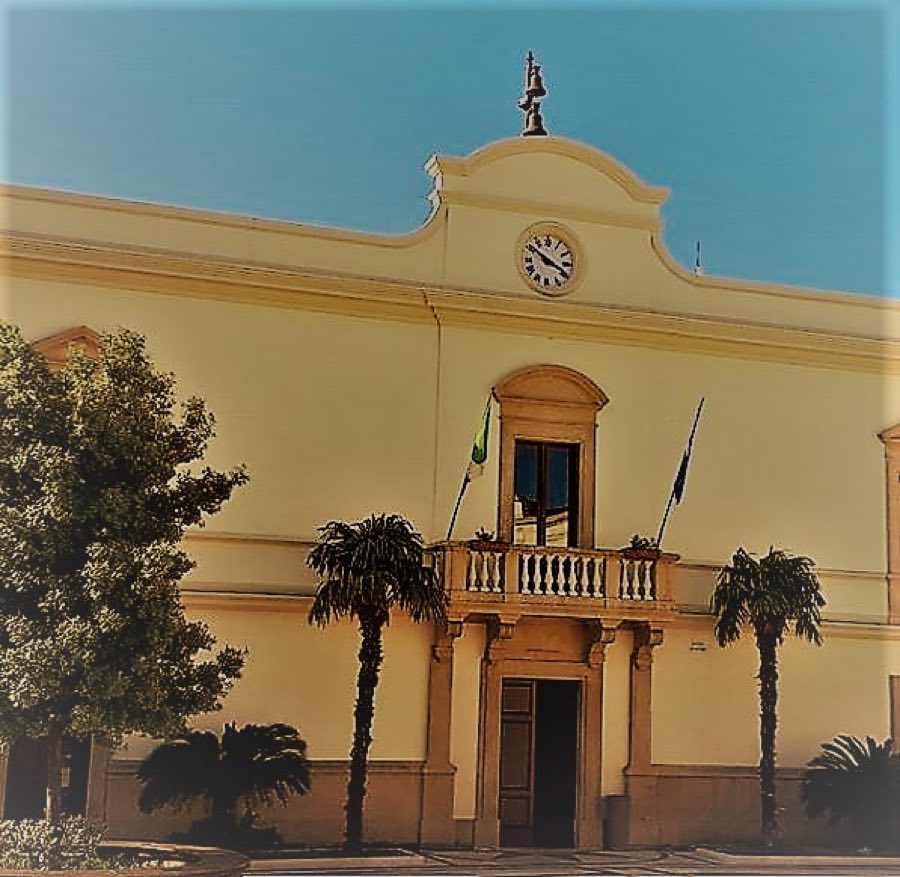
No. 41982
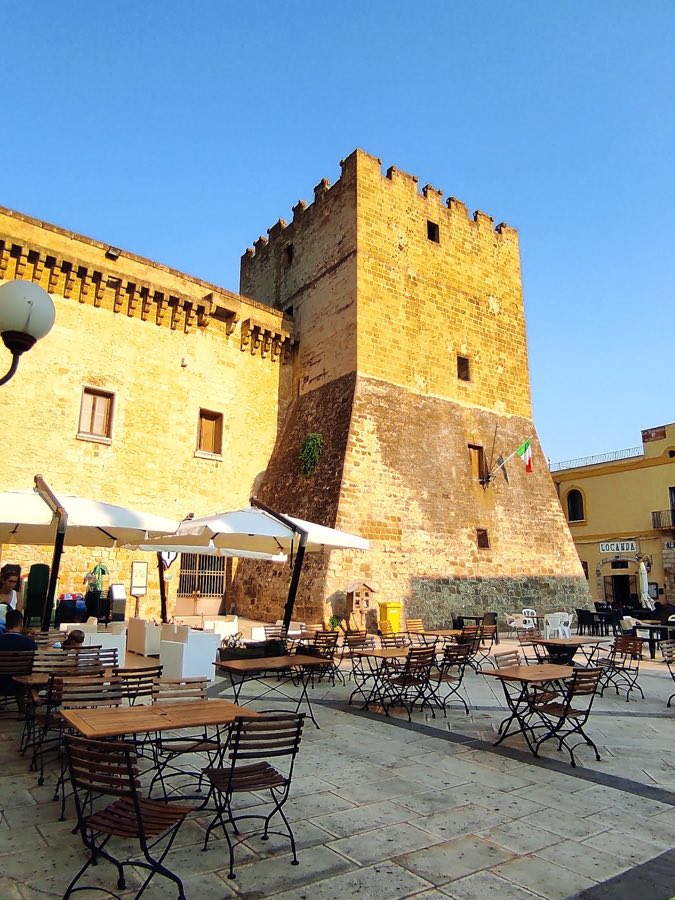
Castle of Villa Castelli
Italy
CastleRestored14th century
No. 24067
Castle · Italy
No. 24067 · 40.894 N, 17.116 E
For events
Marchione Castle is marked as a château or castle venue lead. Capacity, indoor/outdoor spaces, catering rules, and accommodation options are published only after public verification.
Event types: Private events, Cultural gatherings, Filming and photography
Quick summary
Marchione Castle is a castle in Italy with origins associated with the 15th century.
See all castles in ItalyMarchione Castle, situated near the town of Conversano in Italy, was constructed during the late 15th century, likely by local nobility of the region. Its creation coincided with improvements made to the main fortress of Conversano, reflecting the strategic and recreational interests of the ruling family in the area.
Originally, the castle functioned as a fortified hunting lodge and seasonal retreat for the Counts of Conversano, belonging to the Acquaviva d’Aragona lineage. The name “Marchione” may stem from the Italian word “macchione,” meaning “large forest,” in reference to the extensive oak and Mediterranean scrub that once covered the surrounding 1260 hectares. This woodland provided an ideal hunting ground, and the lodge served as a resting place and storage area for hunting equipment.
In the early 1600s, Count Giangirolamo II, known locally as “il Guercio delle Puglie,” undertook significant alterations to the building. He added an upper floor and reduced the height of the four corner towers, adapting the structure to his family’s summer needs alongside his wife, Isabella Filomarino. This phase marked a shift from a purely functional hunting base toward a more comfortable noble residence tailored to seasonal occupancy.
By around 1730, the castle underwent a further transformation under Count Giulio Antonio III, who engaged architect Vincenzo Ruffo, a disciple of the renowned Luigi Vanvitelli, to convert the former lodge into a stately home reflecting contemporary tastes. This period saw the castle evolve from a seasonal retreat into a fully-fledged noble residence, aligning with 18th-century architectural and cultural trends.
Following political changes in the early 19th century, when the County of Conversano was integrated into the Kingdom of Naples in 1806, the surrounding forest was cleared to make way for agricultural development. The estate was subsequently leased to local peasant families, indicating a decline in its aristocratic function.
The castle experienced neglect during the early 20th century until efforts to restore it began around 1920 under Princess Giulia Acquaviva d’Aragona. Restoration work continued with her son Fabio Tomacelli Filomarino, the final heir of the Acquaviva d’Aragona family. Since its declaration as a national monument in 1976, Marchione Castle has served as a venue for cultural events and ceremonies.
Local folklore speaks of a hidden underground passage linking the castle to the main fortress in Conversano, supposedly constructed during Giangirolamo II’s lifetime and used by his successors. However, no documentary or archaeological evidence has confirmed the existence of this tunnel.
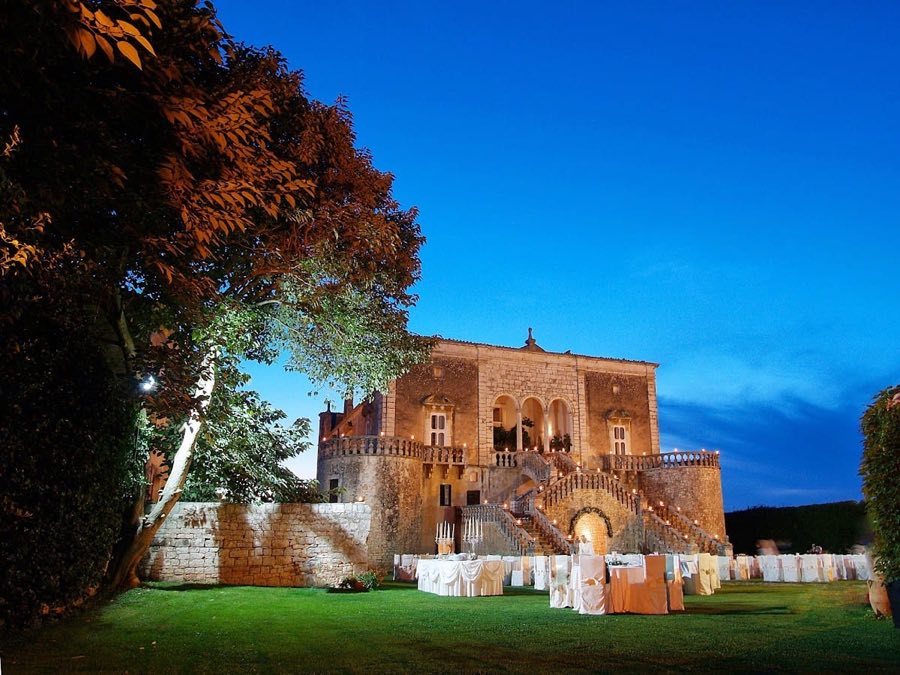
Marchione Castle presents a rectangular layout characterized by sturdy fortifications including four truncated corner towers topped with decorative balustrades. The building rises over three levels: a ground floor with a robust medieval ambiance, a raised main floor, and an upper story. The main façade is carefully balanced with three vertical sections and features window loggias at the edges that lead to circular terraces crowning the corner towers.
Access to the residence is granted via an elegant double staircase which ascends to a loggia—a covered exterior gallery—with a central series of three arched openings. From this vantage point, visitors can reach the balustraded terraces that offer views over the estate. A neoclassical entrance vestibule contains sculptures placed within semicircular lunettes, adding artistic refinement to the transitional space between exterior and interior.
Inside, the ground floor displays its medieval roots with a grand hall richly decorated with painted designs, the coats of arms of the noble family, and hunting motifs underscoring the site’s original purpose. The upper floors reflect late Baroque remodeling. These levels are furnished with period pieces, ornamental ceramics, and distinguished oval portraits depicting eleven members of the Counts of Conversano, including Giulio Antonio I and his son Andrea Matteo.
Among the most notable art pieces are oil portraits presumed to represent Giangirolamo II and his wife Isabella Filomarino. The portrait of Isabella, believed to originate from a 17th-century Neapolitan artist trained under Paolo Finoglio, stands out as a significant example of regional artistic influence.
The main hall’s ceiling is a striking wooden structure, embellished with the Acquaviva d’Aragona family emblem in its center. Additionally, it features an 18th-century painted genealogical tree charting the family’s lineage, emphasizing their long-standing heritage.
Surrounding the estate is a boundary wall, punctuated by an 18th-century entrance gate adorned with statues of lions and bearing the family crest. Just beyond this enclosure stands a dovecote tower dating back to the 16th century, which historically would have served to breed pigeons or doves, an activity linked to noble estates.
Within the courtyard adjacent to the perimeter wall is a small chapel housing a Baroque painting of the Virgin and Child, attributed to the Neapolitan school. This work underlines the religious devotion maintained within the estate and the artistic connections to the broader cultural environment of southern Italy.
No. 41982
No. 15954
No. 31274
No. 23267
Comments
Comments for Marchione Castle will require a verified account before posting.
We'll send a verification link before your first comment is published.