No. 93660
Dalkey Castle
Ireland
CastleRestoredFor events14th century
No. 53944
Castle · Ireland
No. 53944 · 53.289 N, 6.151 W
Quick summary
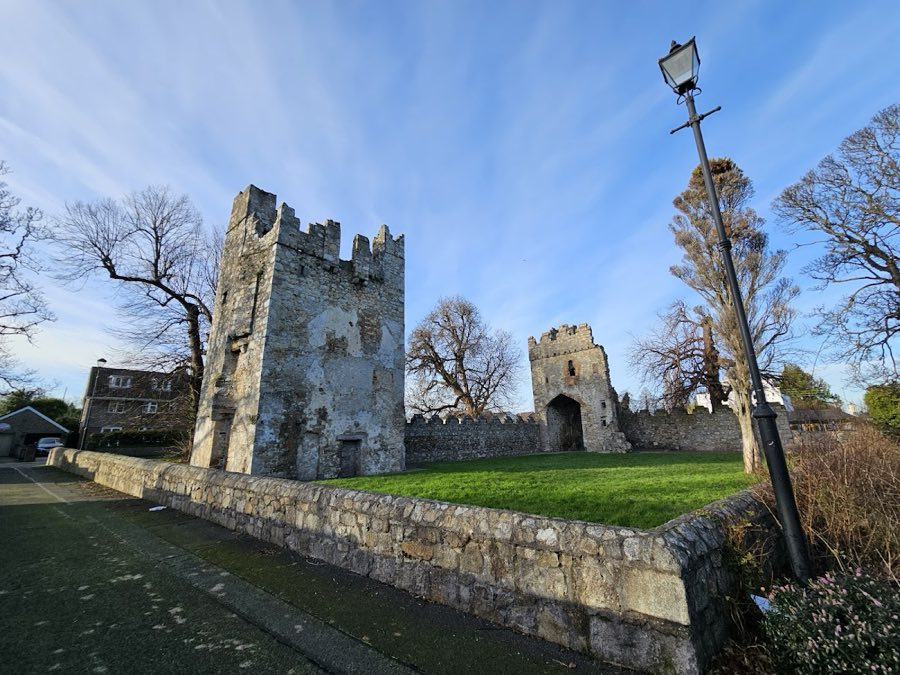
Monkstown Castle is a castle in Ireland with origins associated with the 8th century.
See all castles in IrelandMonkstown Castle stands in Monkstown, Dublin, Ireland, and its first fortification was established by Cistercian monks.
Monastic activity on this coast reaches back to the early medieval period. The Martyrology of Tallaght records that Saint Mohonna founded a monastery on an island among the skerries, which Viking raiders attacked and plundered in 798. Survivors moved and founded a new monastic settlement at Carrickbrennan, about six kilometres south of Dublin, under the protection of the local chieftain clan MacGillamocholmog. At Carrickbrennan the community built a church dedicated to Saint Mohonna, cultivated lands granted by their protectors, and fished in Ballock harbour.
Following the Norman conquest in the late twelfth century, the monastery and its lands passed into the possession of the Cistercian community of St Mary’s Abbey, Dublin. The estate lay on the frontier of the Pale and bordered territories controlled by the Irish clans O’Tul and O’Birn, who carried out repeated raids into the Pale. A fortified residence associated with the Cistercians was established beside a substantial agricultural holding in the thirteenth or fourteenth century, possibly on the site of the earlier fortified monastery.
Major rebuilding and strengthening took place in 1450, and the surviving structure is attributed to that mid‑fifteenth‑century work. In 1539, during the suppression of Catholic houses under Henry VIII, the castle passed to Sir John Travers, master of the royal writs; he died in 1562 and was buried at Carrickbrennan. The property later passed by marriage to James Eustace, 3rd Viscount Baltinglass, and in 1580 the castle was occupied by rebels during an uprising. Subsequent ownership moved through Henry Wallop, Vice‑Treasurer of Ireland, returned to Lady Mary Baltinglass, then passed by marriage into the Chivers family and on to Walter Chivers.
During the British Isles civil war the castle was confiscated in 1653 by forces acting for Oliver Cromwell because its owners had supported the Royalist cause. Cromwell granted the property to General Edmund Ladlow. After the Restoration in 1660, Walter Chivers regained possession and lived at the castle until his death on 20 December 1678; he was buried two days later at Mountown. The estate was later purchased by Michael Boyle, Archbishop of Armagh and Lord Chancellor of Ireland. His son, Murrough Boyle, 1st Viscount Blessington, carried out extensions and embellishments in the seventeenth century, and during that period the house and lands were regarded as among the more accomplished aristocratic residences in Ireland thanks to those works.
A maritime disaster recorded near the site occurred on 18 November 1807, when a storm wrecked two sailing vessels, the Prince of Wales and the Rochdale, close to the shoreline by Monkstown Castle. About four hundred people died and many bodies were washed ashore and interred near the castle.
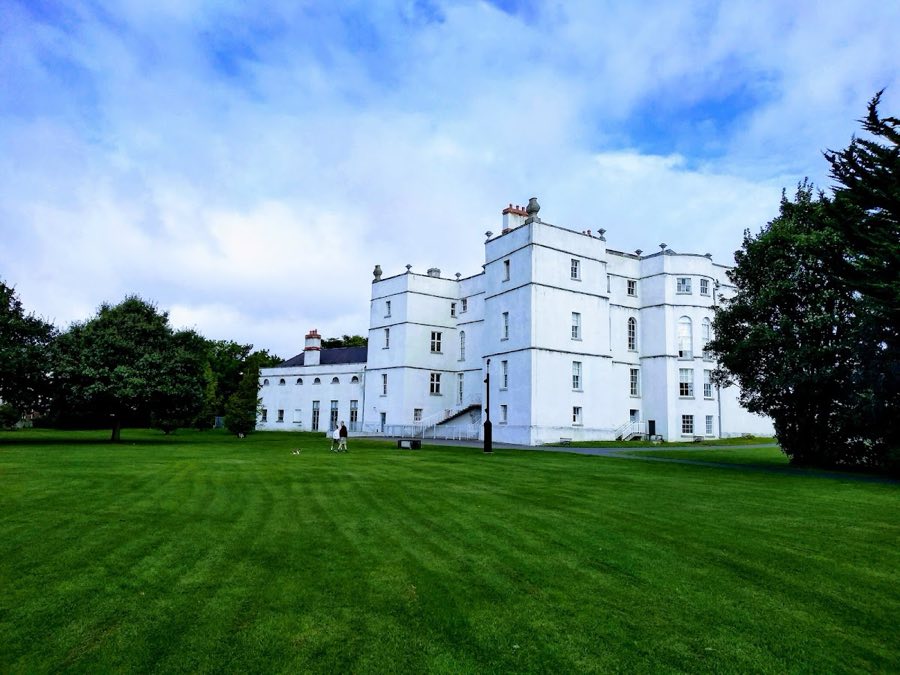
The site survives as a ruinary complex whose principal fabric dates to the substantial mid‑fifteenth‑century rebuilding. The remains present the impression of a manorial stronghold adapted for residence and defence, with traces of living quarters associated with garrison use and the partial ruin of a major tower. Archaeological descriptions identify remnants of accommodation for a garrison that belonged to the fortified house, attributable to the post‑1450 phase of work, the period to which the standing fabric is commonly ascribed. These fragments survive in a ruinous state.
A three‑storey tower once occupied a corner position linked to a great hall; that tower and the hall are recorded as part of the principal medieval arrangement. The tower stood at the angle of the hall complex and its ruined remains today mark the castle’s former plan, though the structure is fragmentary. Later alterations and enlargement during the seventeenth century under Murrough Boyle are documented as having modified and embellished the house, indicating phases of reuse and conversion from a monastic holding into an aristocratic residence.
The castle occupies a coastal landscape shaped by rivers, a lake with an island, cliffs and local quarries. The earlier monastic site lay on an island among the skerries and the later monastery moved to Carrickbrennan about six kilometres to the south; medieval occupants fished in Ballock harbour and cultivated lands tied to the estate. Local memory preserves the association with Saint Mohonna and the Viking attack of 798, and nineteenth‑century records note the burials near the castle of victims from the 1807 shipwrecks. Today the structural remains are fragmentary and stand as visible ruins beside the coastal features that shaped the site’s history.
No. 93660
No. 68264
No. 78785
No. 68387
Comments
Comments for Monkstown Castle will require a verified account before posting.
We'll send a verification link before your first comment is published.