No. 61735
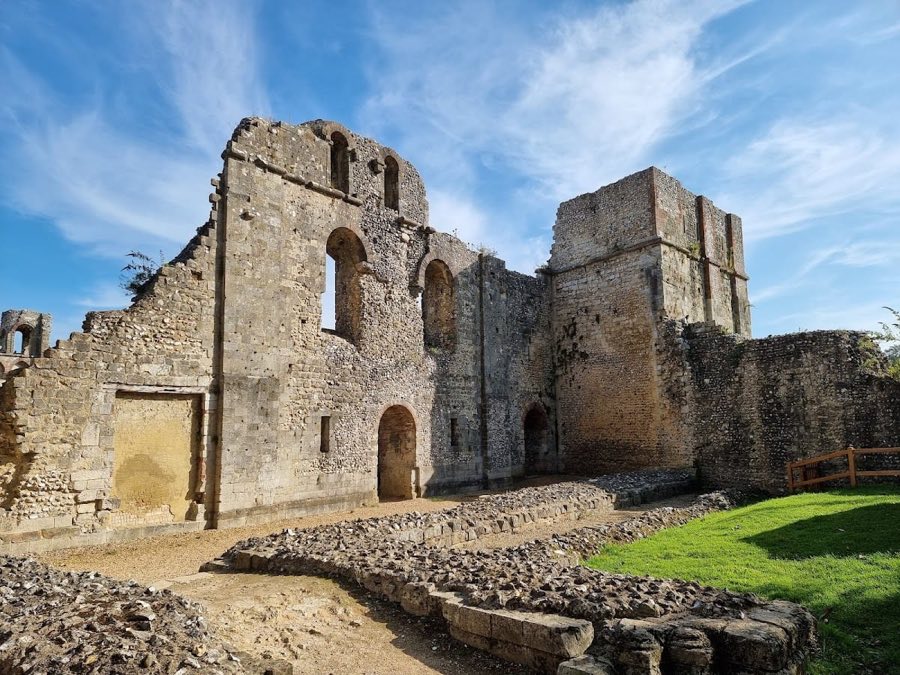
Wolvesey Castle
United Kingdom
CastleRuinFor events12th century
No. 33796
Castle · United Kingdom
No. 33796 · 51.062 N, 1.320 W
Quick summary
Winchester Castle is a castle in United Kingdom with origins associated with the 12th century.
See all castles in United KingdomWinchester Castle is situated in Winchester, England, on a site originally occupied by a Roman fort. The Romans constructed this fort around AD 70 to defend the settlement known as Venta Belgarum. Centuries later, following the Norman Conquest, William the Conqueror established the first Norman castle here in 1067, marking it as one of the earliest Norman fortifications in England and a center for royal governance for over one hundred years.
During the 12th century, the castle became a focal point of civil conflict known as The Anarchy. In 1141, forces loyal to Empress Matilda were besieged within the castle by King Stephen’s army in an event called the Rout of Winchester. Later, King Henry II reinforced the site by building a stone keep designed to secure the royal treasury and the Domesday Book, a key record of landholding in England.
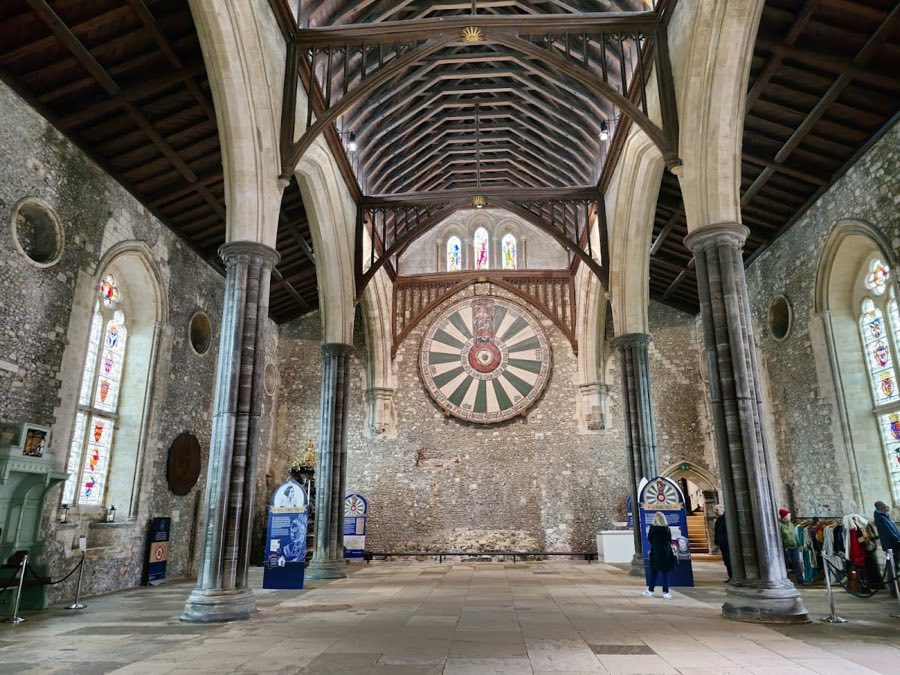
The castle saw significant expansion in the early 13th century under King Henry III, who was born there. Between 1222 and 1235, he commissioned the construction of the Great Hall, which became the castle’s hallmark. Subsequent monarchs also contributed, with Edward II extending the castle further to suit royal needs. Over time, Winchester Castle moved away from being a royal residence; after Elizabeth I’s accession in 1558, stewardship passed to the city authorities. The castle then served various civic functions including as a prison, where religious detainees such as the nun Elizabeth Sander were held, and as a courtroom hosting numerous notable trials, such as that of Sir Walter Raleigh for treason in 1603.
During the English Civil War (1642–1651), Winchester Castle was held by Royalist forces until 1646, when it was seized by the Parliamentarians. In 1649, Oliver Cromwell ordered its demolition. Later, plans to build a royal palace on the site were drawn up by Charles II and architect Christopher Wren but were abandoned by James II before construction began.
The Great Hall continued to serve judicial purposes well into the modern era. It was the venue for the Bloody Assizes in 1685 following the Monmouth Rebellion, where individuals like Alice Lisle were condemned. Throughout the following centuries, the hall remained the site for Winchester Assizes and other legal proceedings, including high-profile cases such as the 1954 trial related to homosexual indecency and the 1973 trials of Provisional IRA members. The Great Hall ceased functioning as a criminal court in 1974, following the opening of new law courts nearby. Since 1986, a medieval-style garden named Queen Eleanor’s Garden was established behind the hall, and as of 2024, the Great Hall operates as a museum under the care of Hampshire Cultural Trust.
The layout of Winchester Castle reflects its long history, combining Roman military earthworks with later Norman and medieval stone construction. The site sits atop a large Roman earth rampart, measuring about 800 feet (approximately 240 meters) in length and 200 feet (around 61 meters) in width. Originally constructed around AD 70, this earthwork formed the defensive base for a Roman fort that protected Venta Belgarum. It remains a prominent feature of the castle’s setting.
From the Norman period, a round tower still stands as a visible fragment of the castle’s original 11th-century fortifications. This tower includes sally ports, which are small, securely gated openings allowing defenders to make sorties during a siege. Its survival offers a rare glimpse into the military architecture introduced by William the Conqueror soon after his arrival in England.
The Great Hall, erected between 1222 and 1235 under Henry III’s direction, is the castle’s most notable architectural element. Its design follows the “double cube” principle, with dimensions of 110 feet in length by 55 feet in width and height (about 33.5 by 16.8 meters). The hall is constructed mainly of flint, accented with stone detailing. Originally, the walls were lower and the roof contained dormer windows, but these were replaced over time by tall, two-light windows featuring early plate tracery — a simple form of stone window decoration characteristic of the period. Recognized for its historic value, the Great Hall is a Grade I listed building.
On the ruins of the Jews’ Tower, which is part of the castle complex, an inscription in Hebrew dating to 1287 is preserved. This was written by Asher, son of Licoricia of Winchester, providing direct evidence of the Jewish community’s presence in medieval Winchester.
Inside the Great Hall, several medieval objects connect to England’s legendary past. Among these is the Winchester Round Table, originally created in the 13th century and later repainted during the reign of Henry VIII. The table bears the names of King Arthur’s knights, with a central portrait of Arthur himself depicted in a likeness resembling the young Henry VIII. Alongside it, the Winchester Panels are displayed; these are a set of illuminated pictorial works thought to represent twenty-five knights from the Arthurian circle and to illustrate the medieval concept of the “Wheel of Life.”
Behind the Great Hall, the grounds include Queen Eleanor’s Garden, established in 1986. It is designed to evoke a medieval garden style appropriate to the castle’s historical context.
Positioned near the Westgate, part of Winchester’s surviving city walls, the castle and its remaining structures provide a layered record that spans Roman military origins, Norman conquest, medieval royal administration, and later judicial use.
No. 61735

No. 95442
No. 40435
No. 45334
Comments
Comments for Winchester Castle will require a verified account before posting.
We'll send a verification link before your first comment is published.