No. 40815
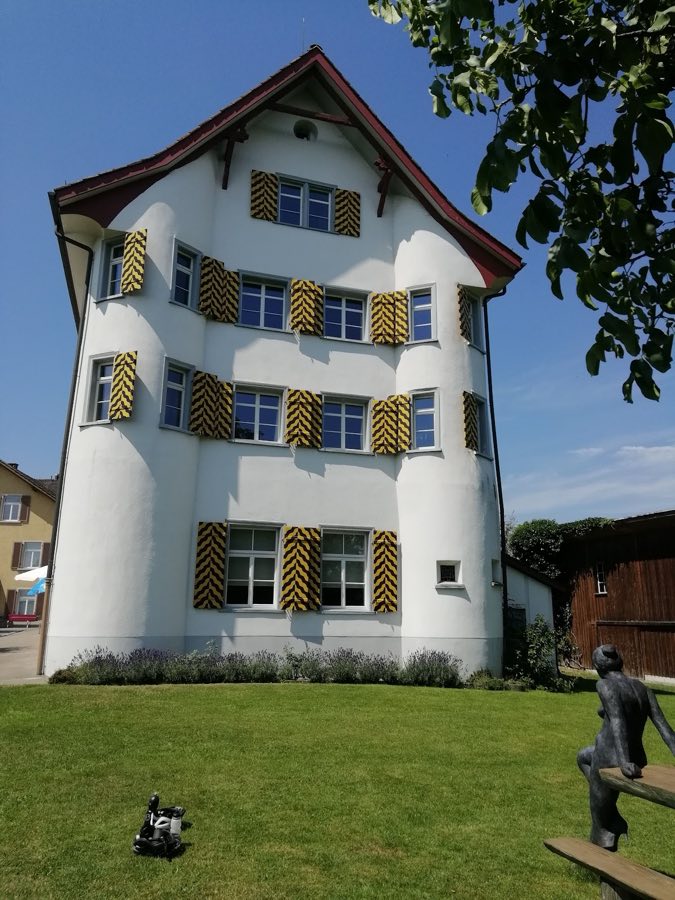
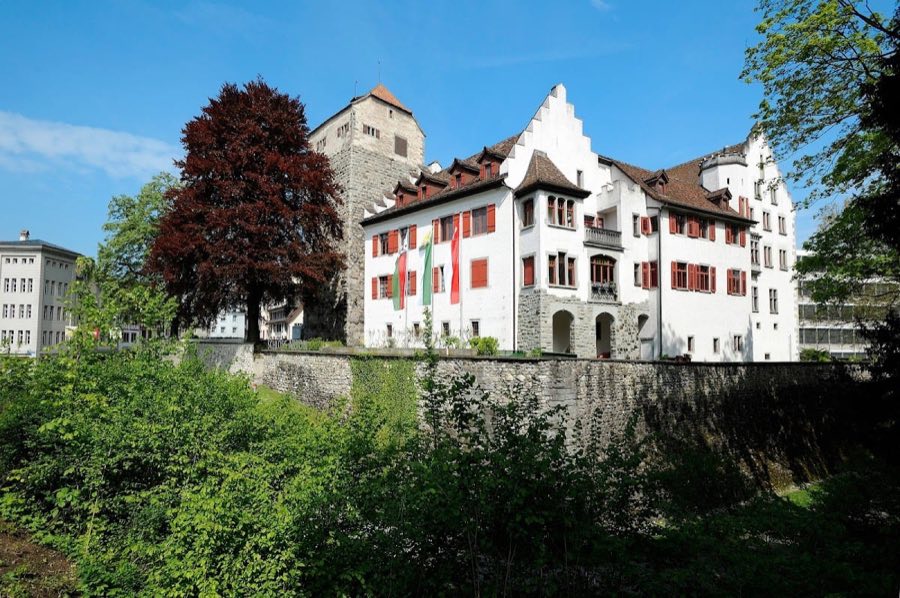
Dottenwil Castle
Switzerland
CastleRestoredFor rent16th century
No. 79802
Castle · Switzerland
No. 79802 · 47.490 N, 9.322 E
Quick summary
Old Ramschwag Castle, Häggenschwil is a castle in Häggenschwil, Switzerland with origins associated with the 6th century.
See all castles in SwitzerlandOld Ramschwag castle ruin, Häggenschwil, Switzerland, was erected in the medieval period by local lords who held their position in service to the Abbey of St. Gallen.
The origin of the site’s name has been debated. One proposal links the first element to a word for raven combined with a term for standing water, and notes that the castle was also once called Rabenstein. A second suggestion derives the name from an old word for wild garlic. A third reads the name as the estate of a man called Rambert, Bertram, or Wolfram, the personal name itself containing the raven element. Construction dates proposed for the fortress vary: its simple stone-cutting style has been read as consistent with building soon after 1200, while other estimates place initial work between the tenth and twelfth centuries. An individual named Ulrich de Rammiswag appears in a document from Konstanz in 1176, and the castle enters the written record in 1370 when Rudolf von Rosenberg‑Zuckenriet acquired it by marriage.
Throughout the later medieval era the castle’s owners acted as vassals of the abbots of St. Gallen. Rudolf von Rosenberg‑Zuckenriet, who became a citizen of St. Gallen in 1398, maintained a stance of neutrality that preserved his holdings. Relatives named Heinrich Walter and Eberhard von Ramschwag were recorded as taking action on the abbey’s side during armed conflicts. In 1427 Rudolf sold the property to Ulrich and Burkard von Helmsdorf; the Helmsdorf family retained possession until about 1490. Toward the end of the fifteenth century the site suffered landslides that made parts of it dangerous to live in. The castle was then transferred to a farmer, Hans Rudolf Koller, who removed and sold movable materials, notably timber from upper floors.
In the early twentieth century the ruin was rescued from further decay. In 1930 an architect named Müller and a builder named Thaler, both associated with the Swiss castle preservation association, purchased the site and carried out conservation work with the association’s support. Excavation carried out in connection with repairs revealed previously unknown foundations for living and working buildings and produced finds such as stone balls, arrowheads, metal fittings, oven tiles, pottery fragments, and animal bones. The conservation work continued through 1932. Funding for the 1930s effort amounted to nearly 20,000 Swiss francs; recorded contributors included a local Burgfonds, three private donors, and the federal government, and a plaque placed on the restored gate records that the ruin was saved with help from federal, cantonal, association, and private sources and placed under national protection.
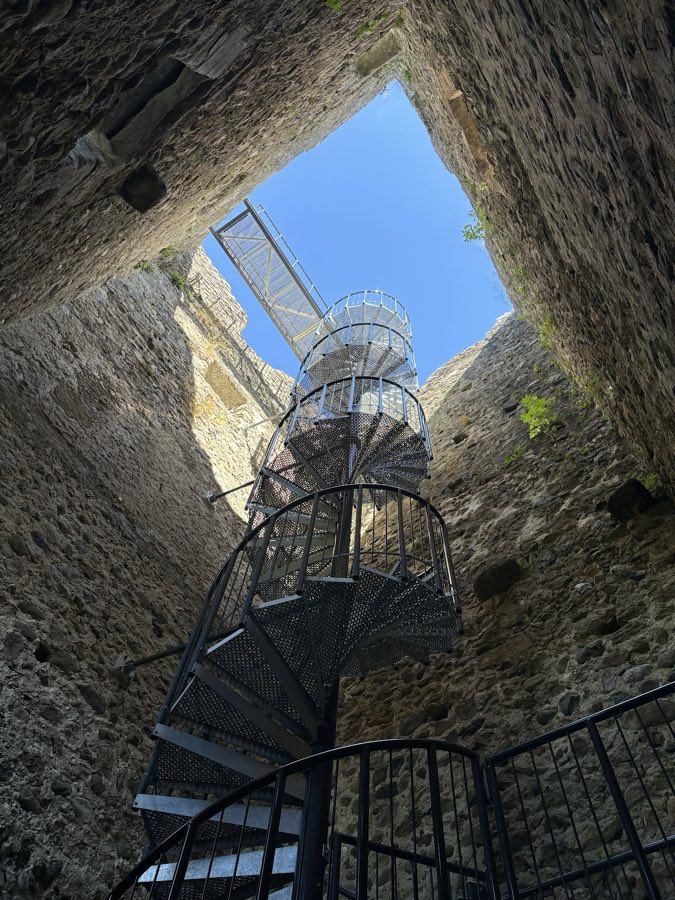
The Thaler family kept ownership until selling the ruin and surrounding forest to the municipality of Häggenschwil on 26 March 2013 for 35,000 Swiss francs. A falling stone in 2022 prompted an extensive program of repairs carried out from mid‑March to mid‑November. One account lists the cost at 665,000 Swiss francs, with contributions from the federal government and the Canton of St. Gallen, public donations including crowdfunding, and the municipality; another report places the cost at about 600,000 francs and records the use of roughly 60,000 kilograms of mortar lifted by 210 helicopter flights and some 5,000 hours of labour. After these works the ruins have been described as among the best preserved between Lake Constance and Wil. In spring 2024 a spiral staircase and an attached viewing platform were installed in the main tower at a cost of about 150,000 francs, supported largely by donations, and an information panel with a reconstruction drawing was mounted by the cantonal archaeology authority.
The castle crowns a plateau above the Sitter River and occupies a naturally strong defensive position. A steep rock face protects the site to the southeast, a deep ravine lies to the north, and a man-made neck ditch cuts across the east side between ravine and rock. The main approach once crossed an eastern moat by a drawbridge. Two additional defensive ditches are recorded as having existed historically. A gate on the tower side opens into the former courtyard; traces of the drawbridge abutments survive on the far side of the moat.
Walls were built from stones taken from the Sitter River and finished with a mortar technique in which the joints were lined so that the faces of the stones remained visible. The main defensive tower, the bergfried, has a high entrance in its north wall reached through a tall portal set in a round sandstone arch at roughly eight meters above ground level. At the same elevation there was a formerly coupled round-arched window set with sandstone reveals, and lower on the tower face are air vents closed with horizontal sandstone slabs.
The courtyard was surrounded on all sides by a ring wall, portions of which have fallen into the river. On the eastern side a defensive shield wall rises to about ten meters in height. Foundations and the basal walls of domestic and economic buildings lie within the enclosed area; these structural remains were exposed during the repair excavations of the early 1930s. During those works excavators recovered stone balls, arrowheads, metal fittings, oven tiles, pottery sherds and animal bones, which demonstrate the site’s use for habitation and daily activity in the medieval period.
Overall the site survives as a ruin with localized collapse where the ring wall meets the river, while the bergfried still preserves its architectural openings and some carved sandstone elements. Timber elements once forming upper floors and roofs were removed in the late fifteenth century. Conservation and repair interventions in the 1930s and in 2022, together with the 2024 installation of a spiral stair and viewing platform in the tower and the mounting of an archaeological information panel, form the most recent episodes in the ruin’s long sequence of use and care.
No. 40815
No. 96895
No. 52664
No. 90761
Comments
Comments for Old Ramschwag Castle, Häggenschwil will require a verified account before posting.
We'll send a verification link before your first comment is published.