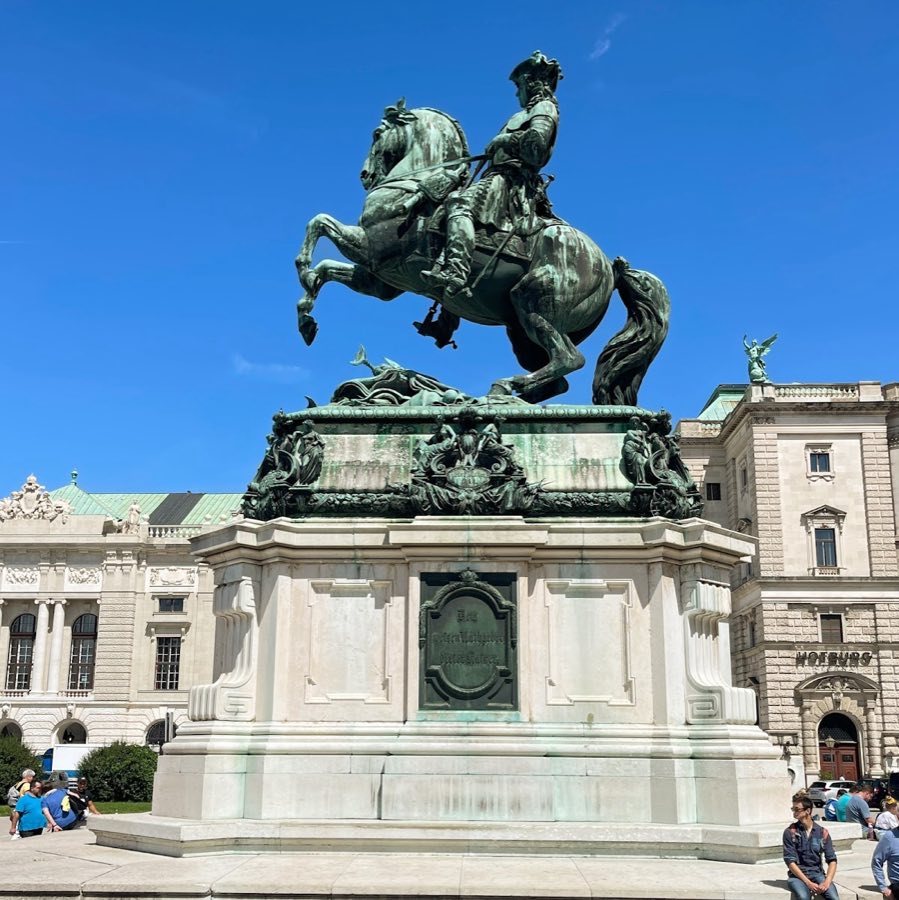
No. 47032
Winter Palace of Prince Eugene
Austria
PalaceRestoredFor events18th century
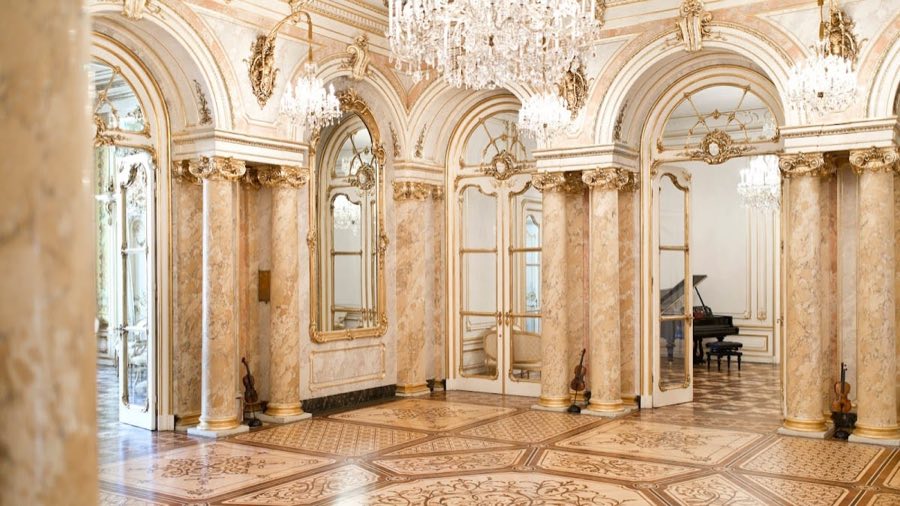
No. 21626
Palace · Austria
No. 21626 · 48.206 N, 16.377 E
For rent
Palais Coburg is marked for bookable castle accommodation. Nightly pricing, sleeps count, stay rules, and amenities are displayed only when public operator data is available.
Rental type: Hotel / bookable stay, Short-stay rental
Short-term availability: Bookable accommodation signal
Quick summary
Palais Coburg is a palace in Austria with origins associated with the 16th century.
See all castles in AustriaPalais Coburg is situated in Vienna, Austria, on a site that once formed part of the city\’s historic fortifications. The palace stands atop the Braunbastei, a bastion constructed in the mid-16th century as part of Vienna’s defensive walls.
The palace’s origins date back to the early 19th century when the land was owned by the Coburg family through the marriage of Ferdinand Georg August of Saxe-Coburg-Saalfeld-Koháry to Maria Antonia Gabriela von Koháry. In 1839, Viennese architect Karl Schleps designed the building, but after his death in 1840, construction was completed by master builder Adolf Korompay over the following five years. The palace was finished in 1845 but remained unoccupied until 1848. The following year, August of Saxe-Coburg and Gotha and his wife Clementine d’Orléans took up residence.
Throughout the 19th century, the palace served both as a noble residence and a rental property. While parts of the building were converted into apartments, the first floor was reserved for representative rooms adorned with the insignia of the French royal family and the House of Saxe-Coburg and Gotha. In 1864, a sculpted crown was added atop the central section of the façade, enhancing its stately appearance.
During World War II, Palais Coburg suffered damage from bombing in 1945. Following the war, Russian occupation forces were stationed there until 1955. Subsequently, the Austrian Federal Railways rented two floors of the building, a tenancy that lasted until 1997. The last private resident from the Coburg-Koháry lineage was Sarah Aurelia Halasz, who lived in the palace until her death in 1994, although she had sold the property in 1978. After financial difficulties led to bankruptcy, the palace passed to the Länderbank before being acquired by Viennese entrepreneur Peter Pühringer in 1997.
Between 2000 and 2003, the palace underwent extensive restoration to address significant deterioration. Today, it functions as a luxury hotel and office space. Notably, Palais Coburg hosted important international negotiations on Iran’s nuclear program, culminating in a landmark agreement on July 14, 2015, after three weeks of talks involving Iran, the European Union, the five permanent members of the UN Security Council, and Germany.
Palais Coburg occupies a site originally part of Vienna’s Braunbastei, a bastion built in 1555 as a segment of the city’s fortifications. The palace itself is a late neoclassical urban residence completed in 1845, constructed atop this historic defensive structure. Its design features a central façade distinguished by freestanding columns, which led to the building’s popular nickname, “Spargelburg,” or “asparagus castle.”
The palace’s stairways, including the grand main staircase, are crafted from Kaiserstein, a white, very hard limestone quarried in Kaisersteinbruch. This durable stone was also used for key load-bearing architectural elements, underscoring the building’s solid construction.
On the façade’s central risalit, a figurative crown sculpture was added in 1864, marking a decorative enhancement that reflects the building’s noble associations. Inside, the first upper floor contains representative rooms decorated with the insignia of both the French royal family and the House of Saxe-Coburg and Gotha, highlighting the palace’s aristocratic heritage.
Although the building sustained bomb damage during the final months of World War II, it was carefully restored in the early 21st century. Today, the palace retains its historic character while serving modern functions, including a luxury hotel with 33 suites and two restaurants, one of which has been awarded two Michelin stars.
No. 47032
No. 62395
No. 80446
No. 40528
Comments
Comments for Palais Coburg will require a verified account before posting.
We'll send a verification link before your first comment is published.