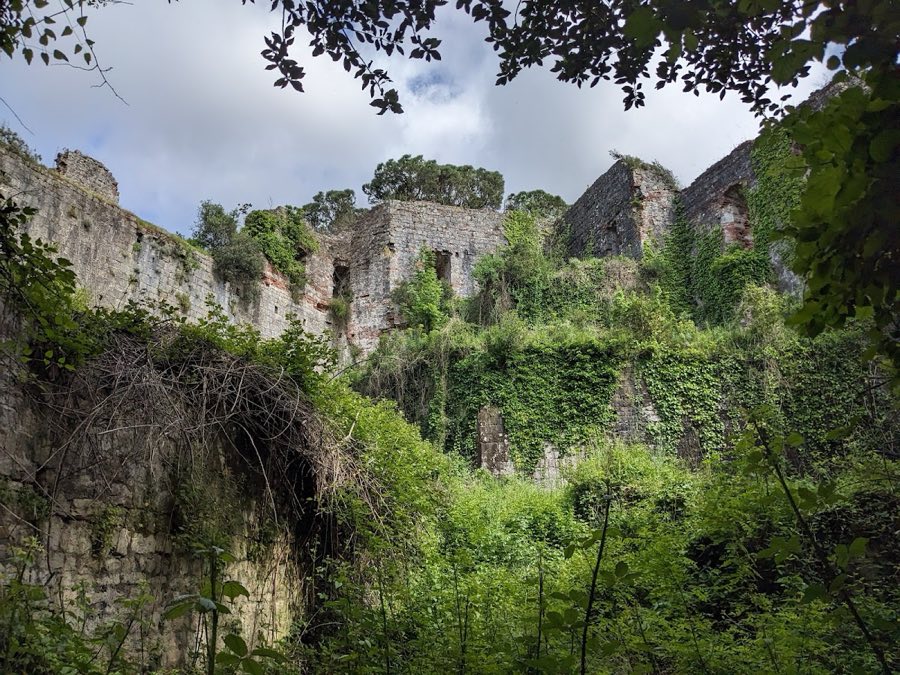
No. 10412
Rocca di Ripafratta
Italy
CastleRuin10th century
No. 61295
Palace · Italy
No. 61295 · 43.994 N, 10.232 E
For events
Palazzo di Seravezza is marked as a château or castle venue lead. Capacity, indoor/outdoor spaces, catering rules, and accommodation options are published only after public verification.
Event types: Private events, Cultural gatherings, Filming and photography
Quick summary
Palazzo di Seravezza is a palace in Italy with origins associated with the 16th century.
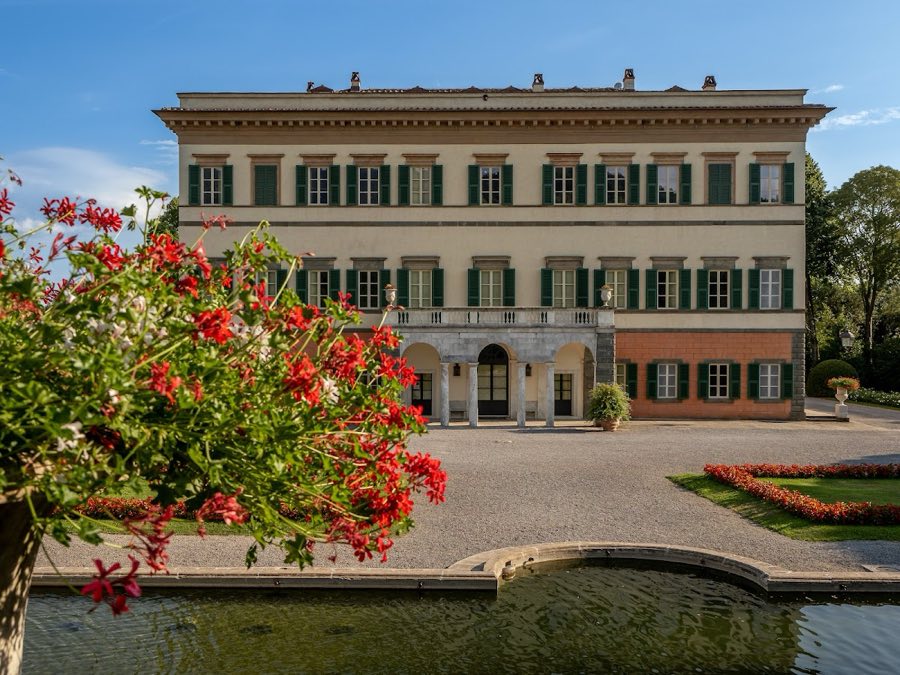
See all castles in ItalyPalazzo di Seravezza in Seravezza, Italy is a 16th-century villa-palace erected for Cosimo I de’ Medici during the Renaissance. Constructed between 1560 and 1564, the building combined residential comforts for the Medici court with a deliberately robust form intended to assert control over the Versilia borderlands. Its location and program made it important both as a political outpost and as a seasonal retreat for members of the ducal household.
Work on the palace began under Cosimo I as part of a program to secure Florence’s influence in a territory long contested by Pisa, Lucca and Genoa. From the start the design allowed the building to serve a defensive role if needed, while also accommodating hunting grounds, a formal garden, a kitchen garden, a chapel, and stables. The setting near the Serra and Vezza rivers provided cooling summer air, and courtiers habitually spent the warm months there. Long stays by figures such as Bianca Cappello and Christina of Lorraine after her widowhood are recorded among its uses as a court residence.
Beginning in the 1560s the palace also became a centre for watching and encouraging local mineral and stone works. After lead veins were found and, from 1563, the prized mottled marble known locally as misto or fior di pesco, quarrying and mining operations were reactivated and followed closely from this house. The complex therefore linked ducal leisure and residence with direct oversight of nearby economic resources.
When the Medici line ended in the 18th century the property passed to the Habsburg-Lorraine dynasty. Grand Duke Pietro Leopoldo assigned part of the buildings to serve as storage and offices for a new foundry and ironworks established beside the Vezza stream around 1786. That industrial activity ceased in 1835, and the palace subsequently returned to use by the grand-ducal family as a residence.
In 1864 the Italian state placed the palace in municipal hands and the town of Seravezza first used it as a prison, then restored it and occupied it as the town hall until 1966. From the late 20th century the complex has housed cultural and public services: the municipal library Sirio Giannini was moved to the ground floor in 1984 with a collection of about 30,000 volumes, the Museum of Work and Popular Traditions of historic Versilia opened to the public in 1996, and the historical archive was later accommodated in the same area. The former Medici stables were restored in 2006 for exhibitions and events. On 23 June 2013 the palace was inscribed by UNESCO as part of the serial World Heritage Site “The Medici Villas and Gardens in Tuscany.”
The palace stands on the lower slopes of the Alpi Apuane where the Serra and Vezza rivers meet. The building presents a compact, fortress-like massing that reflects its original dual role as a noble residence and a defensible outpost. The façade now used as the public front is actually the rear of the original complex and gives direct access to the former stables. The original main entrance has been closed and occupies the space now used by the children’s library; above that sealed doorway a Latin inscription honours Francesco I de’ Medici.
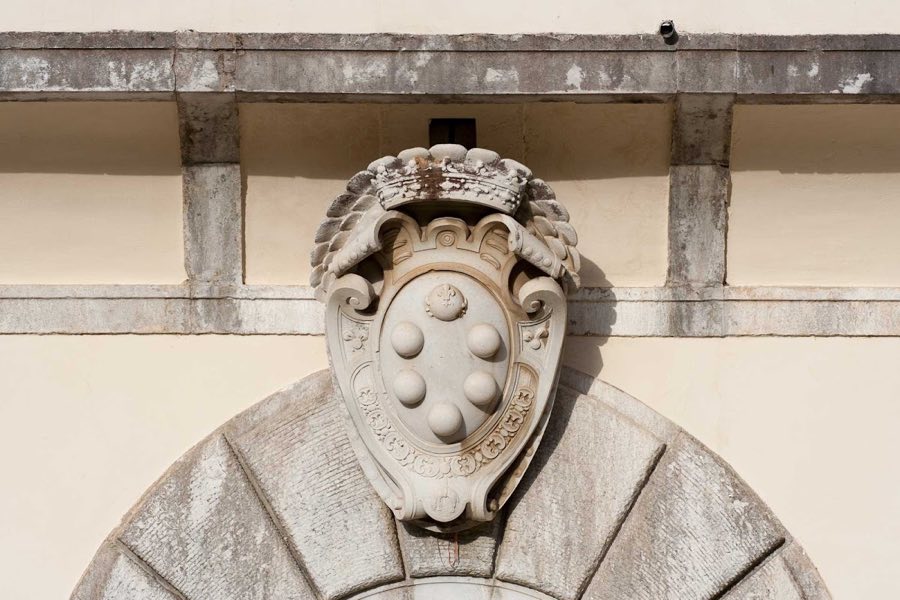
Ground-floor defensive openings remain visible and hint at the building’s military readiness when it was raised in the mid 16th century. Inside, a paved courtyard contains a well, and the courtyard ensemble retains a carved Medici coat of arms and a formal entrance gate. The on-site chapel continues to be part of the compound. Adjacent to the palace the former stables (scuderie, meaning stables) survive and were repaired in 2006, after which they have been used for temporary exhibitions and public events.
An industrial wing built around 1786 runs along the Vezza stream and includes former warehouses and administrative rooms that served an ironworks and foundry complex. Those later additions remain as a distinct part of the palace’s footprint and record the site’s late 18th- and early 19th-century role in regional metalworking. The foundry area shows the conversion of part of a grand-ducal residence into industrial support functions during the Lorraine period.
Sculptural and commemorative objects are on display around the building. A bust and commemorative plaque dedicated to Victor Emmanuel II, attributed to Giacomo Zilocchi, stands on the site. The interior now hosts museum installations that document local extraction and production: machines, tools and scale models illustrate marble removal from the Monte Altissimo quarries, methods of metal extraction and ironworking, domestic weaving equipment, and agricultural implements. These work tools are displayed across eleven rooms and date from the late 18th century through the mid-20th century, providing a continuous material record of the area’s economic activities.
No. 10412
No. 97437
No. 92102
No. 51483
Comments
Comments for Palazzo di Seravezza will require a verified account before posting.
We'll send a verification link before your first comment is published.