No. 97437
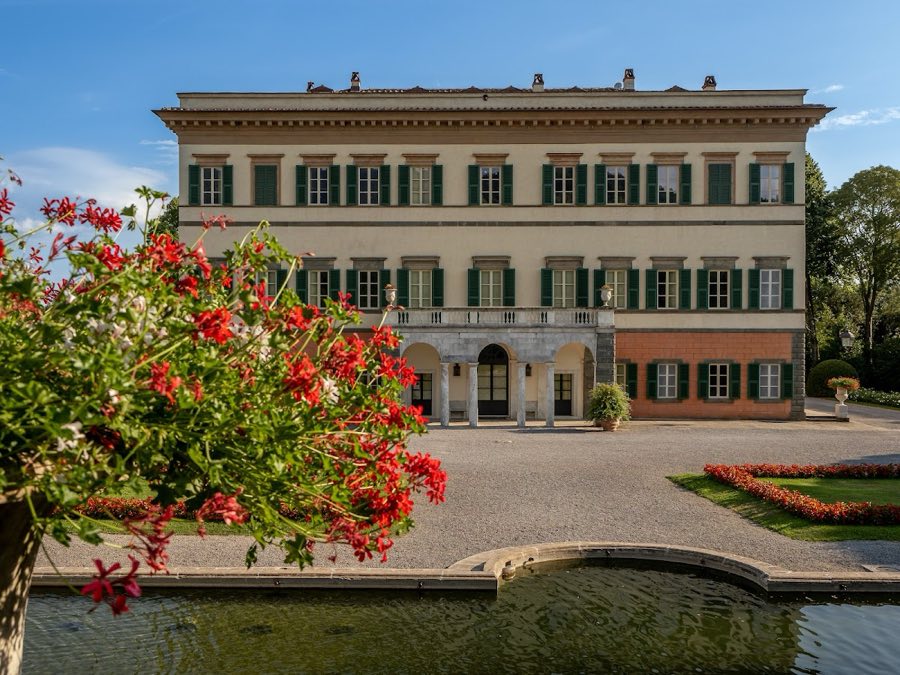
Villa Reale di Marlia
Italy
PalaceRestored15th century
No. 10412
Castle · Italy
No. 10412 · 43.819 N, 10.416 E
Quick summary
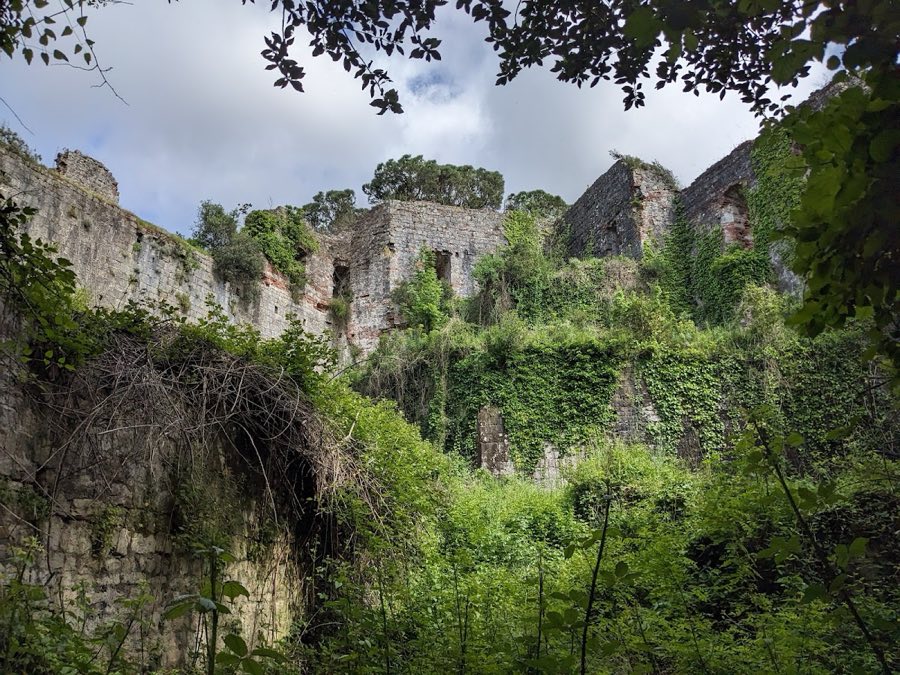
Rocca di Ripafratta is a castle in Italy with origins associated with the 10th century.
See all castles in ItalyRocca di Ripafratta stands above the village of Ripafratta in the municipality of San Giuliano Terme, Italy, and was established by the local noble Consorteria dei Da Ripafratta.
Human presence on Colle Vergario predates the medieval fortress. Intensive excavations in the 1980s uncovered remains dating to the Iron Age, along with prehistoric, Etruscan-Ligurian and Roman finds, indicating the hill was occupied long before the castle took shape.
A defensive tower existed on the hill by at least 970. From this early phase the Da Ripafratta family built up the rocca to control the locality known as Ripa and to regulate the road and river tolls that passed below. The family’s authority was initially linked to the bishop of Lucca.
Conflict over the rocca intensified in the early twelfth century. Lucca seized the site in 1104, and Pisa intervened during the fighting of 1104–1105 to recover it. An imperial decision later reinforced the Da Ripafratta right to levy tolls and confirmed Pisan influence. In 1109 the Da Ripafratta donated part of the castle to Archbishop Pietro Moriconi of Pisa, while laying down conditions on the appointment of the castellano and on how the property could be held.
Under Pisan communal control the hill was further fortified. Between 1162 and 1164 the stronghold was enlarged and reshaped into a true castle, and an outer ring of walls was erected to protect the small settlement beneath the fortress. During the later communal wars the rocca changed hands several times. After 1254 it passed to Florence, was transferred by the Florentines to the Lucchesi, and then Pisa retook it on 24 September 1261, installing a garrison. In 1314 a peace treaty was signed at the site after Pisan forces under Uguccione della Faggiola seized control.
In 1504 the Florentine administration adapted the rocca for the age of gunpowder. The military architect Antonio da Sangallo the Elder directed substantial works that included lowering some medieval towers and adding broad defensive slopes and triangular outworks, known as ravelins, to protect the single entrance. Contemporary accounts record the possibility of collaboration with Leonardo da Vinci during these modifications.
The fortress entered a period of decline in the early modern age. It was described as abandoned by 1607, and in 1628 Orazio Angelini had the site levelled to create a garden planted with fruit trees and vines. Ownership later passed through various hands and the noble Camici Roncioni family remained proprietors until municipal acquisition in the twenty-first century. Archaeological investigations by the University of Pisa took place in the 1980s and 1990s. From the 2000s onward local associations, studies and municipal efforts led to the Comune di San Giuliano Terme signing a deed of purchase on 1 February 2021, with the rocca becoming municipal property on 26 April 2021; the site now awaits urgent safety, conservation and restoration work.
The site layout is an irregular polygonal enclosure dominated by a central square tower. The enclosure sits to command the road and river approaches of the Serchio valley and formed part of a wider defensive network that linked nearby towers and fortifications, including Torre dell’Aquila near Filettole and Torre di Rosaiolo near Avane.
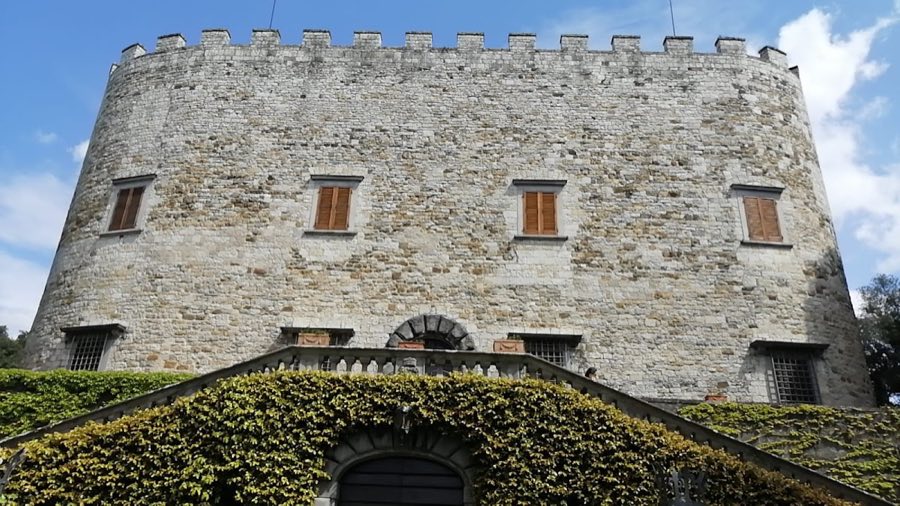
At the heart of the enclosure stands the quadrangular tower that dominates the plan, directly continuing the line of occupation represented by the early tower dated to at least 970. This central keep is documented as surviving and anchors the former castle’s internal space and defensive focus.
Two further towers rise adjacent to the curtain walls and once reinforced the enclosure’s flanks. Beyond the main fortification, three watch towers occupied surrounding heights to provide extended surveillance. Of these, Torre Centìno and Torre Niccolai are reported as still well conserved, while the anonymous hill tower survives only in a few ruined fragments.
A tower that functioned as a gate and blocked the pedemontana road formed part of the medieval defensive system; that tower-gate is recorded as having survived until the Second World War. The twelfth-century Pisan enlargement added an outer concentric ring of walls to shelter the village at the base of the rocca, and only limited vestiges of that concentric wall are visible today.
Sixteenth-century alterations made during Florentine works are visible in the way the medieval profile was changed: towers were lowered or trimmed, broad slopes were applied against the outer faces of the walls, and ravelins were laid out opposite the single access gate as part of the transition to gunpowder-era fortification. Archaeological excavations carried out in the 1980s and 1990s exposed stratified remains across the site, but the excavation area has suffered severe damage through neglect. Overall the central tower and some hilltop watch towers remain in a conserved state, while other elements survive only as fragments and the whole site requires urgent safety and conservation interventions.
No. 97437
No. 61295
No. 99142
No. 91196
Comments
Comments for Rocca di Ripafratta will require a verified account before posting.
We'll send a verification link before your first comment is published.