No. 64275
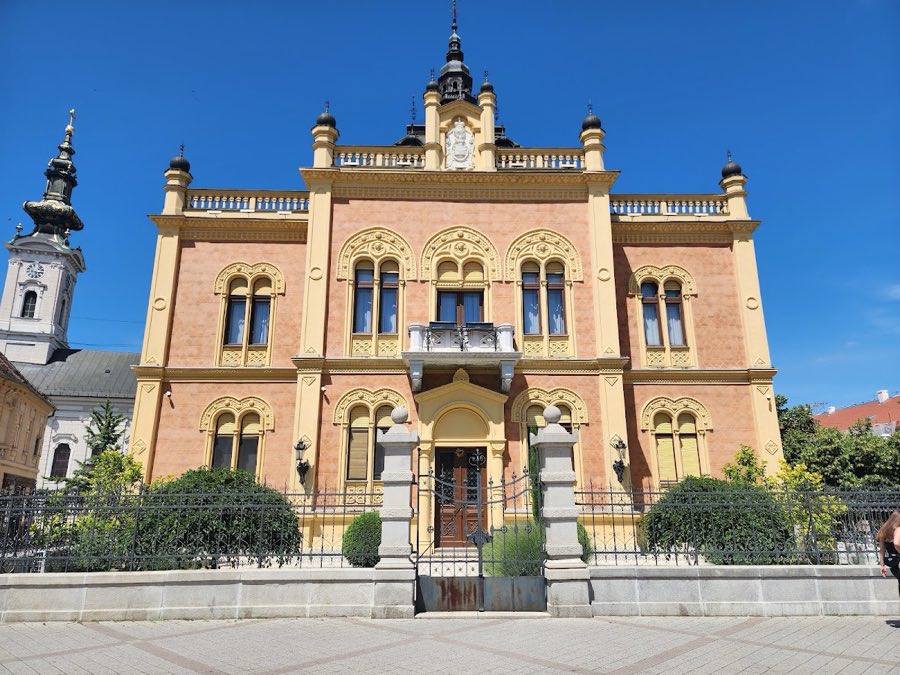
Vladičanski dvor (Novi Sad)
Serbia
PalaceIntact20th century
No. 43274
Palace · Serbia
No. 43274 · 45.203 N, 19.935 E
Quick summary
Patriarchate Court, Sremski Karlovci is a palace in Sremski Karlovci, Serbia with origins associated with the 19th century.
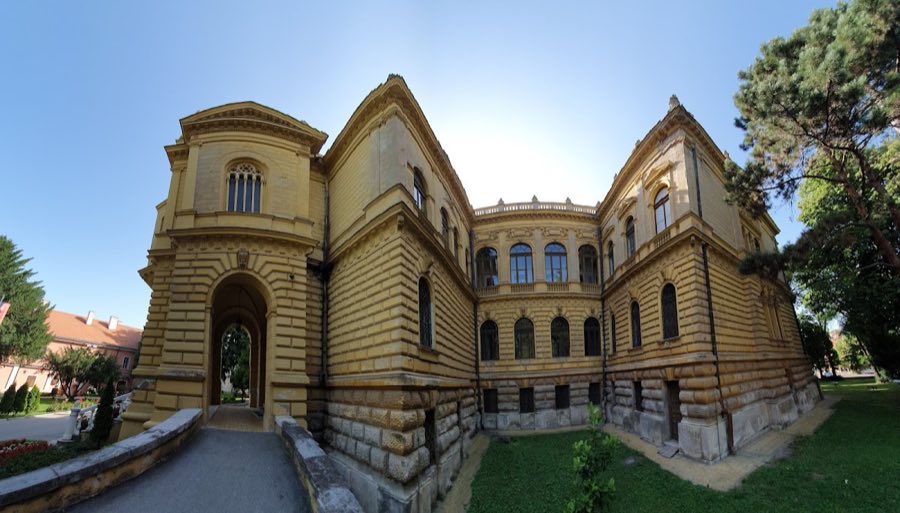
See all castles in SerbiaThe Patriarchate Court, Sremski Karlovci, Serbia, is the palace built for the Serbian Orthodox Church between 1892 and 1895 in a historicist blend of Neo‑Renaissance and Neo‑Baroque styles, and it is protected as a cultural monument of exceptional importance. The idea of replacing the earlier residence dates to the early nineteenth century, when Metropolitan Stefan Stratimirović set up a fund in 1817 to finance a new episcopal house. That long campaign for a purpose‑built palace was carried forward under Metropolitan (later Patriarch) Georgije Branković and culminated in the late nineteenth‑century construction on the site of the former Pasha’s Konak.
Before and after the nineteenth‑century rebuilding the complex functioned as the central seat of Serbian church government in the region. It served as the seat of the Patriarchate of Karlovci from 1848 until 1920, and it continued to act as an unofficial centre for the Serbian Orthodox Church after 1920 until 1930, when the Serbian Patriarch established his episcopal seat in Belgrade. From 1921 until 1944 the palace housed the administration of the Russian Orthodox Church outside Russia, giving the building an additional international ecclesiastical role in the interwar and wartime years.
Throughout the twentieth century the palace retained diocesan and patriarchal functions. It is the seat of the Eparchy of Srem, it serves as the summer residence of the Serbian Orthodox Patriarch, and it is also described as the permanent home of the Bishop of Srem. The building has long contained a church museum and a library; the museum displays icons and icon screens that have been retired from liturgical use, portraits of past metropolitans, decorative arts objects, manuscripts and rare printed books. The chapel decoration and some furnishings were created by the painter Uroš Predić, who worked at the palace until 1896.
The complex stands on three levels, with a basement, a ground floor and a single upper floor, arranged around a central spine. The overall plan has been described in two conventional shapes: one account compares it to the Cyrillic letter equivalent of a three‑pronged form, while another describes a form like the Cyrillic letter that has a covered carriage entrance placed in the middle. The exterior mixes grand palace elements and historicist ornament, following a late nineteenth‑century taste for Italianate palaces rendered with Neo‑Renaissance and Neo‑Baroque detail.
The inner wing contains the chapel dedicated to Saint Demetrius. A royal chapel above the main entrance is capped by a hemispherical dome with a small lantern on top. Inside, the chapel is fitted with an iconostasis (a painted screen separating the worship space from the sanctuary), bishop’s thrones, stained glass and frescoes. The painter Uroš Predić executed the chapel’s decorative program, completing the major interior work by 1896.
The front elevation is organized around a projecting central bay with a balcony, a broad stone stair and a small dome over that entrance axis. Corner projections mark the building’s ends. The façade displays first‑floor columns and pilasters that focus attention on the central projection, three larger windows across the middle, a terrace and a main approach guarded by two stone lions. A series of seventeen windows with rounded tops and shallow pilasters capped by Ionic console capitals establish a regular classical rhythm across the face of the palace.
A high boundary fence combines brick and cast iron to enclose the palace and its park. Inside, the palace houses a church treasury and library that include a porcelain stove made by the Zsolnay factory and a manuscript dated to the fifteenth century, as well as a permanent display of eighteenth‑ and nineteenth‑century objects salvaged from churches in Bosnia and Croatia. The building and its grounds are described as being kept in immaculate condition.
No. 64275
No. 37799
No. 19916
No. 35053
Comments
Comments for Patriarchate Court, Sremski Karlovci will require a verified account before posting.
We'll send a verification link before your first comment is published.