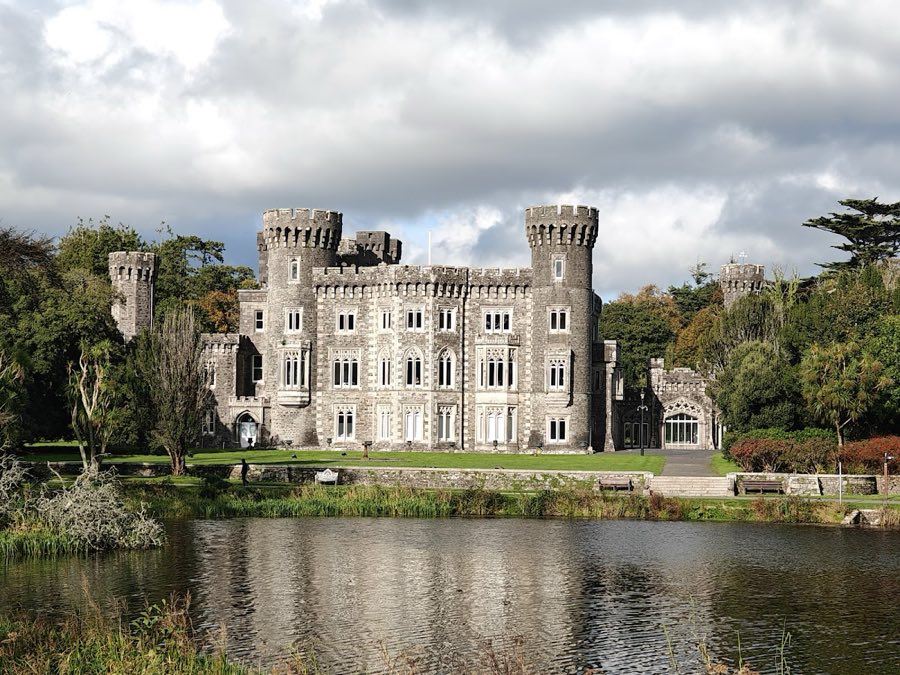
No. 31032
Johnstown Castle
Ireland
Tower houseRestored17th century
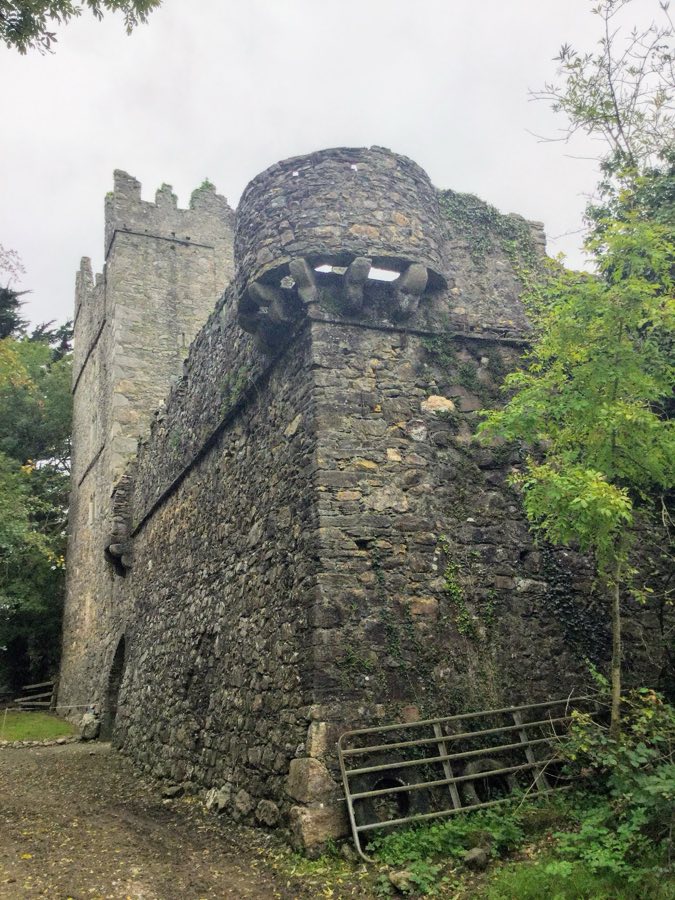
No. 24097
Tower house · Ireland
No. 24097 · 52.269 N, 6.490 W
Quick summary
Rathmacknee Castle is a tower house in Ireland with origins associated with the 15th century.
See all castles in IrelandRathmacknee Castle stands at Rathmacknee Great, and it was built by members of the Rosseter family in medieval times.
Construction is attributed either to John Rosseter, who was appointed seneschal of the Liberty of Wexford around 1415 (some sources give c.1451), or to his grandson Thomas Rossiter, who served as seneschal in 1493. The tower and its surrounding enclosure were the Rosseters’ stronghold and administrative centre in the later medieval period.
After the Reformation the family remained Roman Catholic, yet they continued to acknowledge the English crown and to hold their estates. During the Irish Confederate Wars Colonel Thomas Rosseter opposed Oliver Cromwell at Wexford, and as a result the castle and its lands were taken into state hands in 1654. The building continued to be occupied until the 1760s. In the nineteenth century the owner Hamilton Knox Grogan Morgan undertook repair work on the structure, though contemporary descriptions continue to call it a ruin. The site is designated as a National Monument.
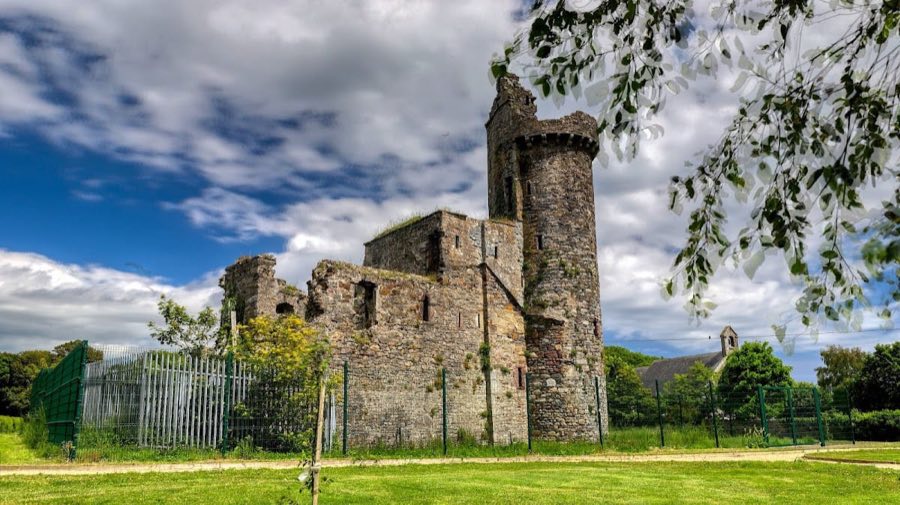
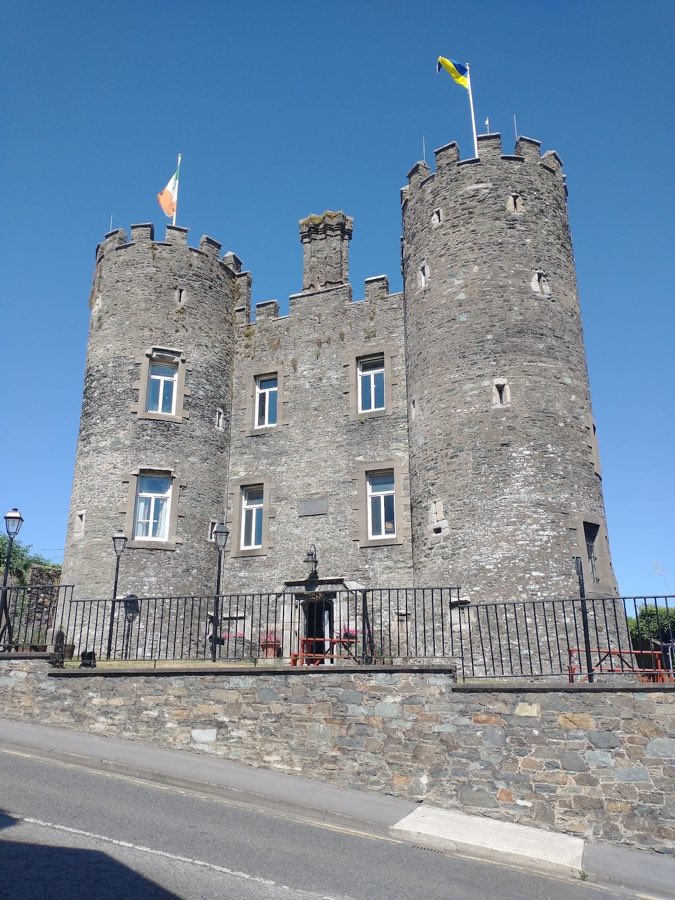
The site is laid out as a tower house set within a five-sided fortified enclosure, with the main tower occupying the southeast corner of that enclosure. The tower rises five storeys and is capped by a parapet with Irish-style battlements. The enclosure wall contains a small projecting corner turret that served as an additional defensive lookout.
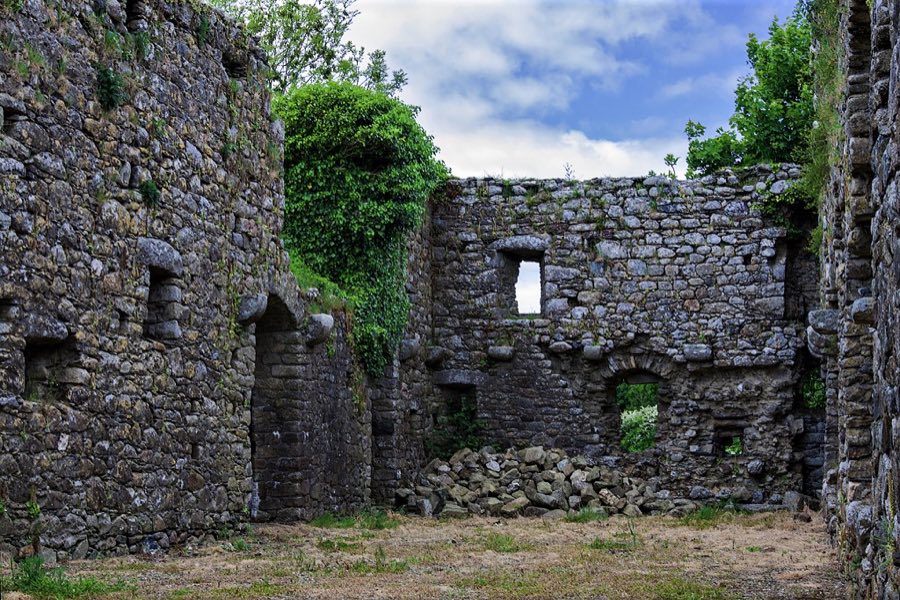
The main entrance to the tower shows evidence of a heavy wooden barrier, with a drawbar slot for securing the door and fittings associated with a drawbridge, and a passage provided for defenders above, including a murder-hole. A stairway rises from the entrance. Upper chambers display vaulted ceilings and are fitted with fireplaces for heating, and medieval garderobes, which served as latrines.
The castle occupies a location close to a river crossing and next to a holy well dedicated to St Martin. To the south of the tower lay a church and graveyard, while defensive earthworks were arranged to the north. The enclosure walls, turret, and tower survive in a condition described as ruinous despite nineteenth-century restoration work, and the ensemble remains recognised as a protected national monument.
No. 31032
No. 56984
No. 81269
No. 37160
Comments
Comments for Rathmacknee Castle will require a verified account before posting.
We'll send a verification link before your first comment is published.