No. 89601
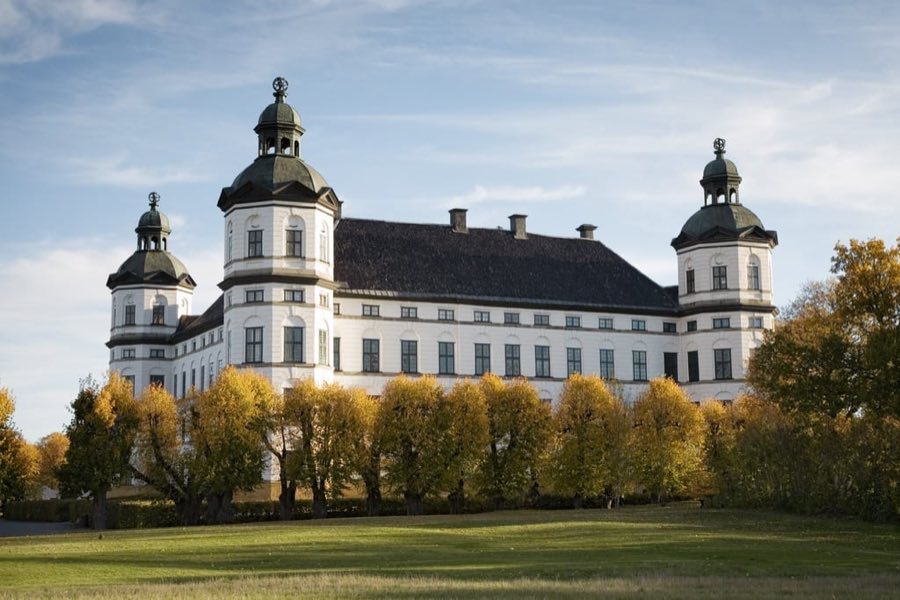
Skokloster Castle
Sweden
CastleIntactFor events17th century
No. 99659
Palace · Sweden
No. 99659 · 59.574 N, 17.844 E
For rent
Rosersberg Palace is marked for bookable castle accommodation. Nightly pricing, sleeps count, stay rules, and amenities are displayed only when public operator data is available.
Rental type: Hotel / bookable stay, Short-stay rental
Short-term availability: Bookable accommodation signal
For events
Rosersberg Palace is marked as a château or castle venue lead. Capacity, indoor/outdoor spaces, catering rules, and accommodation options are published only after public verification.
Event types: Private events, Cultural gatherings, Filming and photography
Accommodation: Accommodation signal present
Quick summary
Rosersberg Palace is a palace in Sweden with origins associated with the 18th century.
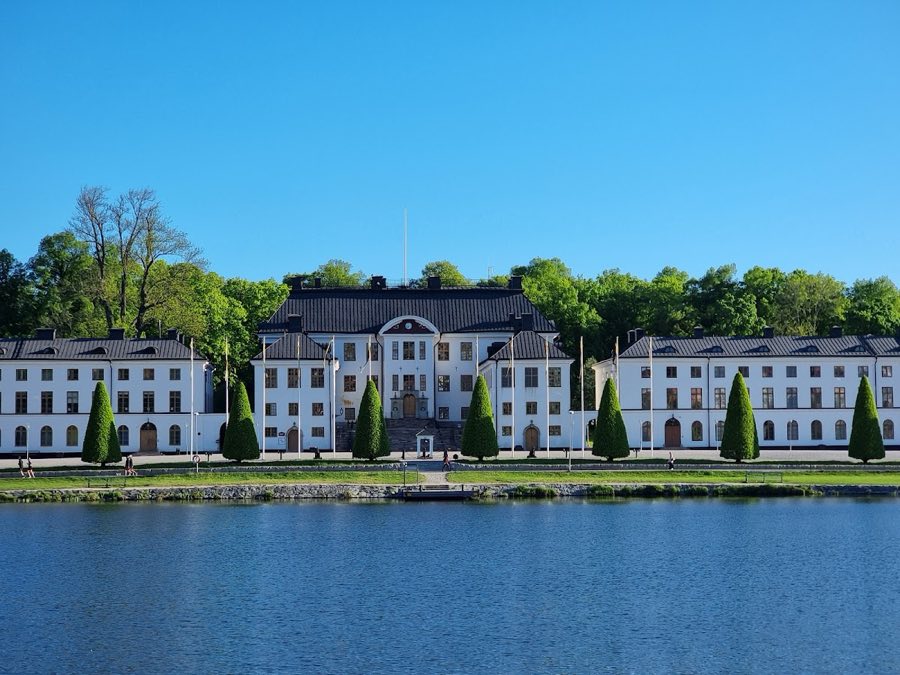
See all castles in SwedenRosersberg Palace in Rosersberg, Sweden, is a 17th‑century manor that was built by members of the Swedish nobility. Construction began in 1634 and the main house was finished in 1638 in a Renaissance manner, after which the site grew into a notable country residence closely connected to Sweden’s royal and military history. Its successive remakings and long use by royal, military and civil agencies mark its continued importance from the early modern period onward.
Archaeological evidence shows the place had been occupied long before the palace, with rural or manor‑farm structures on the site already in the Iron Age. These early settlement traces established a continuity of rural use that later owners transformed into a grand household in the 1600s.
The present palace core dates to the 1630s when Gabriel Bengtsson Oxenstierna, who gave the house a name linked to his mother’s family, raised the Renaissance residence. Late in the 1600s the building underwent a large Baroque conversion under the direction of the same family’s next generation, which reshaped the roofline and added substantial wings and a colonnaded gallery, bringing the house into line with contemporary tastes for grand, formal country palaces.
In the mid‑18th century a new owner carried out further modernisation and soon after his death the state took possession. In 1762 the estate was granted to Duke Charles, later King Charles XIII, who lived there and completed interior reworkings so the rooms reflected the late Gustavian and early Empire fashions current at the royal court.
During the first decades of the 19th century Rosersberg served as a favoured summer residence for the first Bernadotte monarchs, King Charles XIV John and Queen Desideria. The palace retained royal use into the 1800s, and parts of its chapel were used for Catholic services for Queen Desideria. After the queen’s death in 1860 the estate passed to the Swedish infantry and by 1874 the Infantry Gunnery School occupied the ground floor and the flanking wings.
In spring 1961 the military school moved elsewhere and on 1 July 1961 responsibility for the castle transferred to the national civil defence authority. That agency was restructured in 1986 and its successor used the palace and wings until 2006. From 1993 onward the National Property Board took over stewardship of the building. In the summer of 2008 a hotel and conference operator opened a café and small overnight accommodation within parts of the palace, and that same year the house served as the venue for a high‑level meeting involving the UN Secretary‑General, the Iraqi prime minister, and the United States Secretary of State to discuss the situation in Iraq.
The site presents a layered layout with a 17th‑century core that was expanded and refashioned in later centuries. The original house, erected between 1634 and 1638 in a Renaissance manner, forms the central block around which later wings and gallery spaces were added. In the late 1600s a Baroque remodelling removed the earlier stepped gables, introduced a new roofline and extended the plan with new wings and a colonnaded gallery; these changes remain legible in the building’s overall silhouette.
Interior fittings record the palace’s shifts in taste. Mid‑ and late‑18th‑century work produced rooms finished in the late Gustavian and the early Charles XIII Empire styles. Several reception rooms survive with much of their historic character: the Orange and Red drawing rooms retain their period appearance, and the Hogland Room (Hoglandssalen) is decorated with a large composition depicting the battle of Gogland by Louis Jean Desprez. A bedroom associated with Charles XIV John survives as a clear example of an early 19th‑century Swedish interior, and many furnishings from the period 1795–1825, along with other pieces dating before 1860, remain in place.
A chapel placed in the south‑eastern wing in 1695 continues to be a distinct feature. It contains organs produced by the workshop of Per Strand and was the setting for Roman Catholic masses for Queen Desideria in the 1800s. The chapel and its fittings have been kept as a discrete part of the palace fabric.
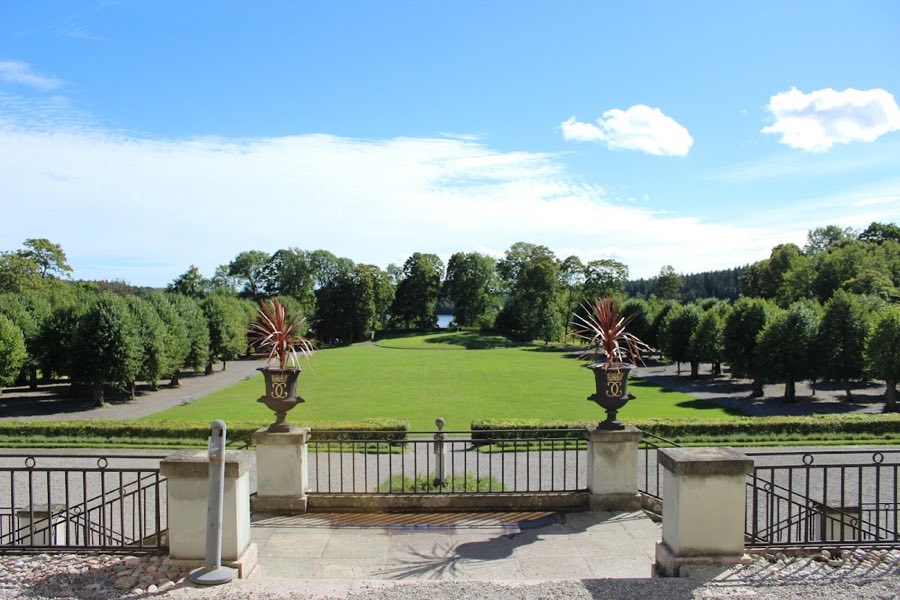
The grounds preserve large garden elements laid out in two major phases. At the end of the 17th century a formal French Baroque scheme established avenues and a long ornamental pond, and those principal axial walks and the pond, about 600 metres in length, survive in the landscape. Around 1800 Duke Charles commissioned a contrasting English‑style landscape in the western sector, known as Djurgården, which featured winding paths and constructed garden follies meant to resemble ancient temples, burial mounds, and ruins. That landscape once included the Kettila grotto, which was destroyed by fire in the 1990s, and a nearby boulder fashioned to look like a runestone remains close to the grotto site.
By the late 20th century parts of the palace’s interior rooms had been adapted for use as hotel accommodation, a reuse that altered some historic rooms while leaving many principal spaces and their furnishings preserved. Overall the surviving architectural and garden elements present a continuous record of the site’s transformation from an Iron Age settlement to a 17th‑century manor and then to a royal and institutional estate.
No. 89601
No. 88706
No. 48510
No. 44606
Comments
Comments for Rosersberg Palace will require a verified account before posting.
We'll send a verification link before your first comment is published.