No. 42389
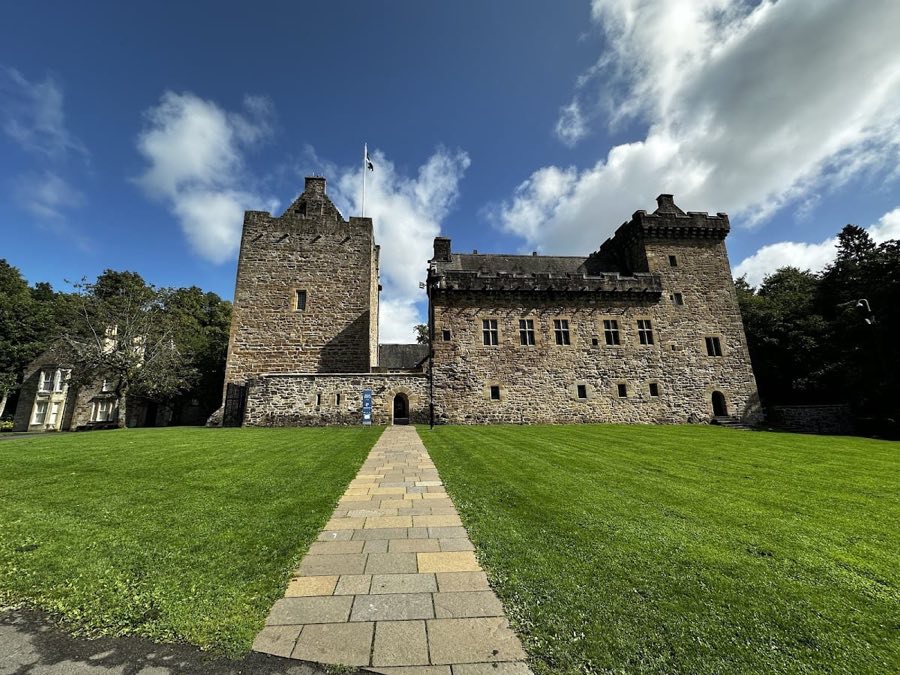
Dean Castle
United Kingdom
CastleRestoredFor events14th century
No. 35976
Tower house · United Kingdom
No. 35976 · 55.650 N, 4.489 W
Quick summary
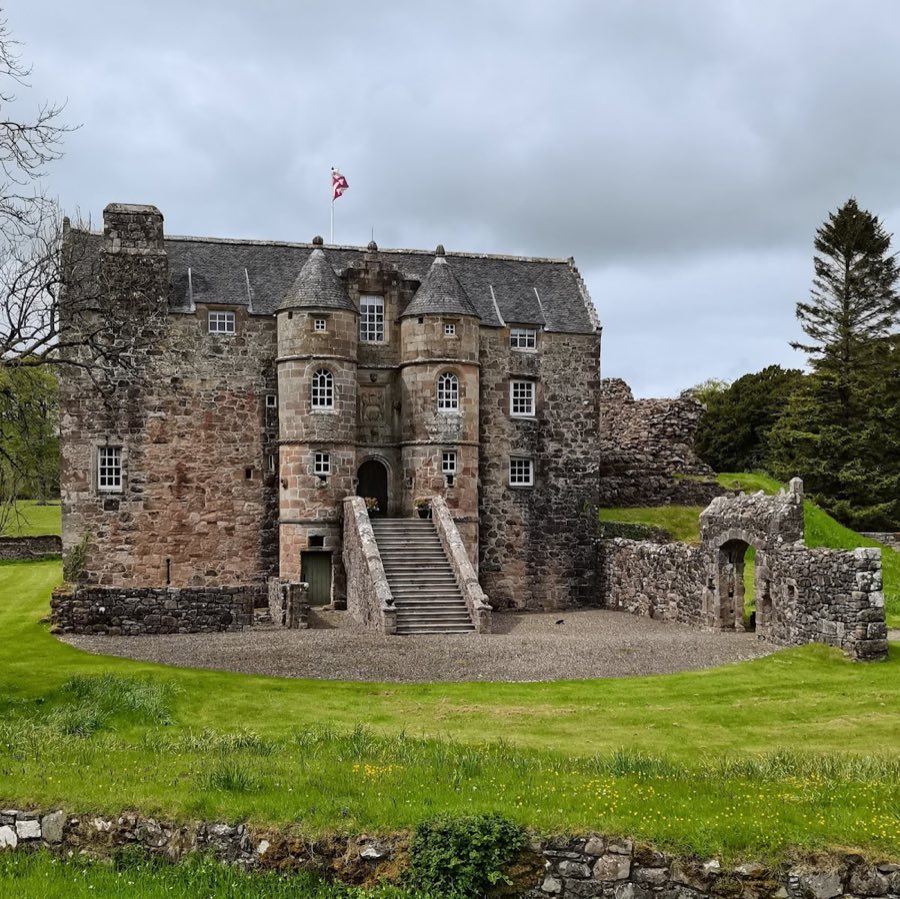
Rowallan Castle is a tower house in United Kingdom with origins associated with the 17th century.
See all castles in United KingdomRowallan Castle stands in Kilmaurs, Scotland, and it was built and occupied by medieval Scottish lords.
A settlement on the site can be traced to at least the mid-1100s. A substantial stone building is first recorded in 1263, and wooden support piles found beneath later masonry provide evidence that an earlier structure of a different character once stood here. In the late 1300s a new tower house was raised on these earlier foundations.
The estate underwent significant change in the early 1500s. The tower house was remodelled and extended at that time, and the estate is recorded as taking its present form in 1513. John Mure of Rowallan died at the Battle of Flodden in 1513. Elizabeth Mure, who became the wife of Robert the High Steward (later Robert II), is said to have been born at Rowallan before her death in the 1350s. A southern frontage carries a marriage stone dated 1562 inscribed Jon.Mvr. M.Cvgm. Spvsis 1562, and a stone above the ornamented gateway is marked 1616.
During the 1600s the castle was associated with covenanting activity and was linked with local conventicles, with a portion of the old castle known locally as the Auld Kirk. In the 1640s Alasdair Mac Colla plundered the surrounding area, and Sir William Mure was fined 1,000 merks after damage at Rowallan. Beginning in the late 1600s and continuing into the mid-1700s the building fell into intermittent use and decay, with several vaults collapsing and stone being taken from the fabric.
Later owners included the medieval Mure family, followed by the Earls of Glasgow (Boyle), the Earls of Loudoun (Campbell), and the Barons Rowallan (Corbett). A separate dower house, Dalmusternock, was built in 1615 by William Mure. In the early 1900s an Edwardian house was added and the policies were reworked between 1902 and 1906 by Sir Robert Lorimer for Archibald Corbett, while the older 16th/17th-century castle fabric was retained. The castle was placed in the guardianship of Historic Scotland by the third Baron Rowallan and was listed in the highest category in 1971. In June 2015 Scheduled Monument Consent was granted for a change of use to guest accommodation; once that change is complete the site’s Listed Building designation will take precedence over the Scheduled Monument status and protective conditions for work will remain. In 1989 Niall Campbell purchased the estate and it returned to the Campbell family.
Rowallan occupies a small knoll on the banks of the Carmel Water and stands where the burn once fed a shallow loch or marsh. The setting includes a nearby bank that forms a chasm through which the Carmel runs, and the castle group is arranged around this raised ground. The main building shows the result of successive medieval and post-medieval rebuilding, with a medieval tower core and later house additions set within formal policies established in the early 20th century.
The medieval tower house dates to the late 1300s and follows a roughly square plan, likely rising three storeys when complete. It is built of rubble masonry and was raised on top of earlier stone foundations that survive at least to the first-floor level after early 1500s remodelling. Evidence of wooden support piles under some of the older stonework indicates that timber structures underlay part of the initial phase. The 1691 hearth tax recorded twenty-two hearths within the castle together with eighteen in other dwellings on the lands, reflecting a complex of rooms and service spaces by the end of the 17th century.
Decorative and inscribed stonework records later occupations and owners. The southern front bears a marriage stone dated 1562 with the inscription Jon.Mvr. M.Cvgm. Spvsis 1562. A gateway carries an inscribed stone of 1616. Over the main entrance are sculpted royal arms of Scotland flanked by shields associated with the Cumin family and a sculpted Moore’s head identified with the Mure crest. Above the porch a Hebrew inscription quoting Psalm 16:5 can be read and was deciphered and translated by Doctor Bonar. Internal spaces are named in surviving descriptions, including Lord Loudoun’s sleeping apartment and a chamber called the Woman’s House.
Several external features and garden elements are noted in the historic record. A fine well with abundant water lies close to the castle and another spring known as King William’s well sits within the policies. At the front of the castle an old loupin-on-stane survives, and antiquarian accounts record a prominent box hedge and a “marriage tree” overlooking the Carmel. The dower house at Dalmusternock, erected in 1615 by William Mure, remains associated with the estate. Structural decline from the late 1600s into the mid-1700s caused collapse of various vaults in part through removal of stone, but the mansion was repaired in later periods and the 16th/17th-century building was kept when the Edwardian house was added and modernised in 1902–1906. The listed extent recorded for the site includes the castle and the access bridge to the east. Historic Scotland holds the older castle in care, and protective conditions applied to later works remain in force following the Scheduled Monument Consent granted in 2015.
No. 42389
No. 64366
No. 76326
No. 24521
Comments
Comments for Rowallan Castle will require a verified account before posting.
We'll send a verification link before your first comment is published.