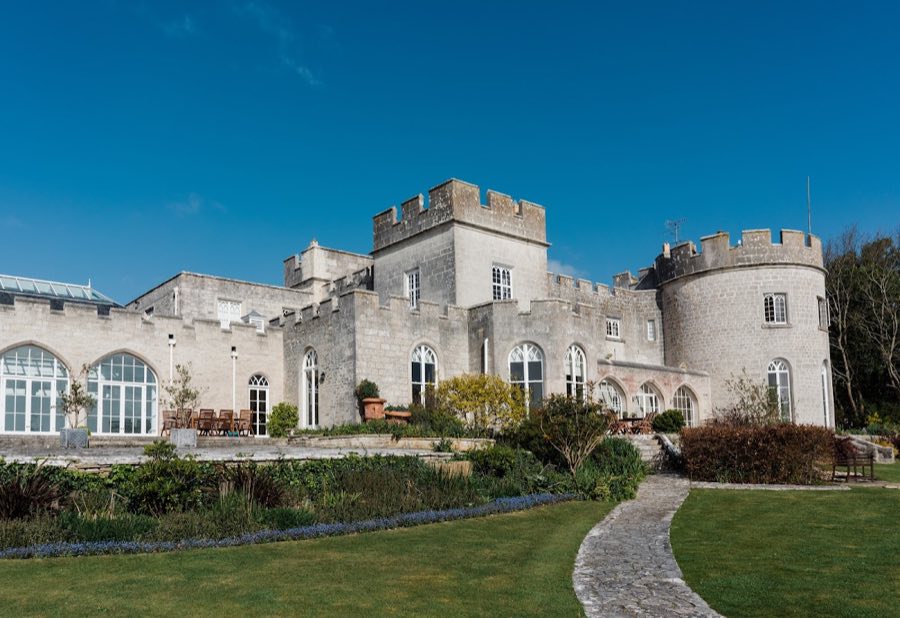
No. 75970
Pennsylvania Castle
United Kingdom
CastleRestoredFor rent18th century
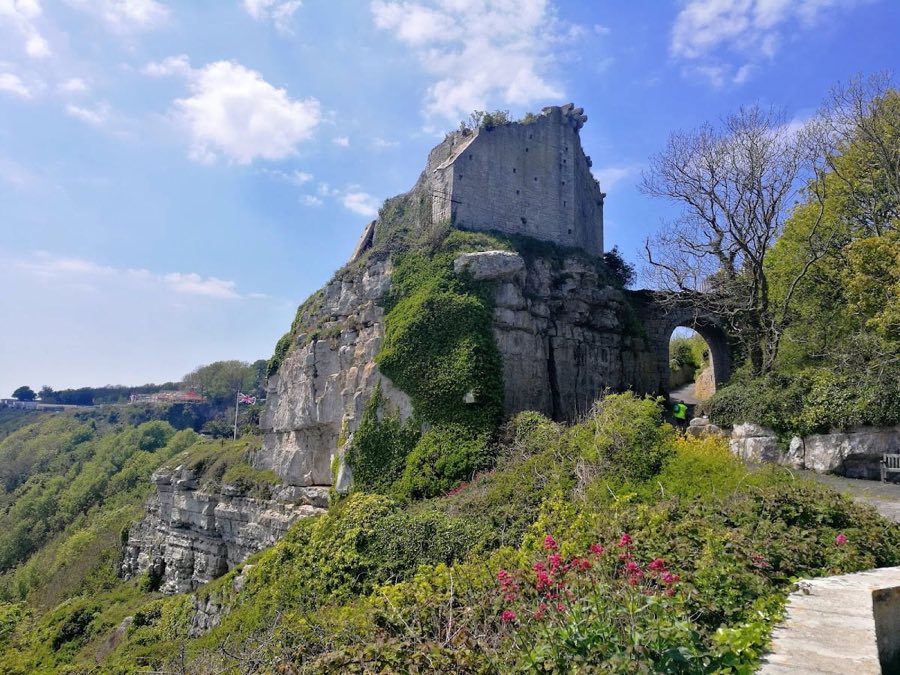
No. 98793
Castle · United Kingdom
No. 98793 · 50.538 N, 2.429 W
Quick summary
Rufus Castle is a castle in United Kingdom with origins associated with the 12th century.
See all castles in United KingdomRufus Castle, situated on the Isle of Portland in Portland DT5 1JA, United Kingdom, is a historic fortress originally constructed by the English during the medieval period. The castle takes its name from King William II, also known as William Rufus, under whose reign the first castle on the site was reportedly built.
The earliest fortifications likely date back to the 12th century, making Rufus Castle part of the regional defensive network during a time of political unrest. In 1142, during the civil war between King Stephen and Empress Matilda, the castle was captured by Robert, Earl of Gloucester. This reflects the castle’s early strategic value in controlling the area. By 1238, further strengthening occurred under Richard de Clare, with official royal permission granted around 1256 to ecclesiastical and noble figures like Aylmer de Lusignan and Robert, Earl of Gloucester to add battlements, a process known as crenellation. These enhancements reflect the castle’s ongoing military importance in the early medieval period.
The current ruins predominantly date from the late 15th century, when Richard, Duke of York, oversaw significant reconstruction between 1432 and 1460. The castle’s elevated position allowed it to oversee the valley below and the Church of St Andrews, as well as keep watch over the hazardous Shambles sandbank offshore, notorious for shipwrecks, including the loss of the Earl of Abergavenny in 1805.
In the late 18th century, the castle’s role shifted from military use to more aesthetic purposes. John Penn, owner of the nearby Pennsylvania Castle, incorporated Rufus Castle into his estate and altered the structure, modifying it into a picturesque ruin or folly. He added a distinctive arched bridge across Church Ope Road and replaced the original entrance with two large arches, blending medieval remains into a romantic landscape typical of the period.
By the 20th century, the castle had fallen into serious disrepair. It was officially protected in 1951 as a Grade I listed building and later designated as a scheduled monument under national heritage laws in 1979. However, ongoing erosion and structural failure led to its inclusion on the Heritage at Risk Register in 2010. Subsequent restoration, funded by English Heritage and overseen by architect Russ Palmer, took place between 2010 and 2012, focusing on stabilizing the north walls and preventing further deterioration.
Despite its ruined state and private ownership limiting access, Rufus Castle has inspired renowned artists and writers such as J. M. W. Turner, Thomas Hardy, Victor Hugo, and Gerald Seymour, attesting to its enduring cultural significance.
Rufus Castle is a pentagonal fortress primarily built of roughly squared Portland stone, a locally quarried limestone. The walls on the landward side are notably thick, measuring approximately seven feet (2.1 meters), demonstrating its defensive purpose. The castle’s irregular pentagon plan has three longer walls contrasted with shorter sides, built using a rough ashlar and rubble technique characteristic of medieval construction in the region.
Several medieval gun ports distinguish the castle’s walls, often misidentified as arrow loops, contributing to the alternate name “Bow and Arrow Castle.” These openings are chiefly circular, designed to accommodate small firearms rather than traditional arrows, illustrating adaptations to advancements in military technology during the late medieval period. Five embrasures with circular gunholes are located at the first-floor level along the north and west walls. At this height, stone corbels arranged in groups of three supported a projecting parapet, which would have provided defenders with better protection while firing.
The pentagonal tower is a prominent feature resting on earlier foundations. To the north, the base may incorporate parts of a 12th-century keep, while the west side sits atop a stepped plinth, both indicative of earlier construction phases beneath the visible late medieval walls. This layering reflects the castle’s development over several centuries.
A notable 19th-century addition is the round-arched bridge spanning Church Ope Road, constructed by John Penn during his incorporation of the ruin into his estate. This feature forms part of the romanticized landscape rather than a defensive element and replaced some of the castle’s original entrances.
Today, the castle is roofless and partially ruined, largely due to natural erosion and the collapse of sections. The seaward arch, once a structural highlight, fell in 1989. Archaeological investigation has recorded the remains of stone footings outside the south gateway. However, no visible traces survive of the “steppes of stone” that once connected the castle with the nearby parish church of St Andrews, a historical linkage mentioned in records.
Restoration efforts carried out between 2010 and 2012 focused on stabilizing the upper parts of the walls. Work included consolidation of wall tops, filling gaps between inner cores and outer faces, and repointing mortar joints to secure the masonry from further decay. These measures have helped preserve the existing fabric, allowing the ruins to remain as a tangible record of England’s medieval defensive architecture.
No. 75970
No. 62255
No. 83340

No. 95442
Comments
Comments for Rufus Castle will require a verified account before posting.
We'll send a verification link before your first comment is published.