No. 28768
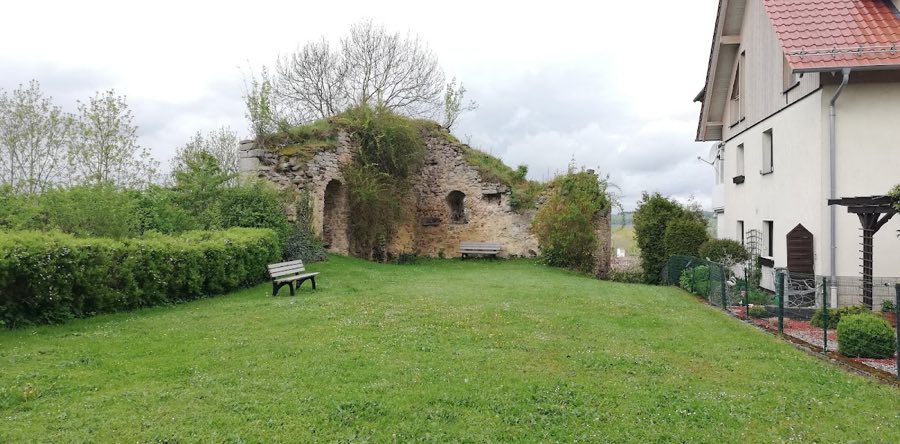
Castle Ropperhausen
Germany
CastleRuin13th century

No. 66618
Castle · Germany
No. 66618 · 50.911 N, 9.235 E
Quick summary
Ziegenhain Fortress is a castle in Germany with origins associated with the 10th century.
See all castles in GermanyZiegenhain Fortress stands in Schwalmstadt, Germany. Its earliest defensive tower was in place by about 950. In 1144 Count Gottfried of Reichenbach-Wegebach built a new residence between that early tower and an older circular fortification; his family thereafter took the title Counts of Ziegenhain and the site remained a noble seat through the later Middle Ages. In 1363 Werner II von Falkenberg added the building later called the Steinerne Haus.
The site passed into Hessian control after the death of Johann II, and in 1450 the county came under Landgrave Ludwig I of Hesse. In 1470 the complex was adapted for the landgrave as a hunting lodge. During the first half of the 1500s the palace received Renaissance stonework by Philipp Soldan, including a relief on the south façade and interior sculptural decoration attributed to him.
Between 1537 and 1546 Landgrave Philip the Magnanimous had the medieval stronghold and town reworked as a water-defended fortress following plans by fortress master Hans Jakob von Ettlingen and builder Balthasar von Germersheim; Heinz von Lüder took command in 1537. In 1539 Hessian theologians gathered at the castle with reformers Adam Krafft and Martin Butzer and, under the influence of Philipp Melanchthon, approved what became known as the Ziegenhain church discipline. Philip issued a fortification peace for the place in 1542. Throughout the Schmalkaldic War and the landgrave’s captivity from 1547 to 1552 Heinz von Lüder remained commander, and Emperor Charles V ordered that his post not be slighted.
A later local tale says Lüder was symbolically hanged on a gold chain at the gate that now bears his name and that he received a gold chain; that story was treated by August Kopisch in a poem about Landgrave Philip and set to music by Carl Loewe in 1856.
In 1622 and 1623 the fortifications were strengthened with four external hornworks and the suburb called Weichaus was enclosed by a wall. The fortress held during much of the Thirty Years’ War, but in October 1631 Bavarian troops under Tilly entered the district, plundered, and partly burned Weichaus. Axel Oxenstierna visited in 1633. On 15 November 1640 Imperial general Johann Rudolf von Breda was killed at Riebelsdorfer Berg by the Ziegenhain civic marksman Velten Muhly; the sword associated with that incident, the Bredaschwert, is kept in the town hall.
A military supply depot known as the Schafhof was built in 1669 and served as a logistics magazine. During the Seven Years’ War the fortress surrendered without resistance to French forces in 1758; in 1761 Hessian artillery bombarded the position, damaging houses and the local cloth manufactory. Civic works followed: the Paradeplatz and the building called the Neue Wache date to 1769. From 1776 to 1783 the Paradeplatz functioned as a gathering point for Hessian troops recruited under subsidy for service in the American Revolutionary War, and by order of Landgrave Friedrich II the fortress served as a recruiting depot. A new entrance with its bridge was built in that later decade.
In November 1806 the garrison surrendered without fighting to Napoleon’s army on the instructions of Electoral Hesse’s Wilhelm I. In 1807 Napoleon ordered the fortress slighted; casemates were blown up and the gates knocked down. At the insistence of local people a new south gate was erected in 1819. The Electoral Hessian garrison was disbanded in 1832, and the last fortress commander, Colonel von Harras, died in 1836.
From the mid-1800s the former stronghold was used for penal purposes. In 1842 a forced-labour prison for 400 inmates was established in the castle. The Hessian State Archive was moved from the site to Marburg in 1857. A women’s prison opened in 1882 and the military guard command was withdrawn in 1905. The former fortress now forms much of the Schwalmstadt-Ziegenhain penal institution; the Hezbollah operative Mohammed Ali Hamadi was held there in 1989. After 2003 detention at the site was limited to closed custody. The ensemble is protected as a historic monument.
The plan of the fortress reflects its sixteenth-century conversion into a water-defended stronghold, with a continuous earthen rampart encircling both castle and town, raised defensive bastions at the main corners, and a wide, gently sloping glacis separating the works from surrounding land. Engineers arranged the works so that water from the Schwalm could be used to flood the approaches; access originally depended on a single wooden drawbridge.
The rampart reached roughly six metres in height and incorporated rounded defensive platforms at the four principal corners. Built into or along the enclosing wall were vaulted casemates, and inside the defended area were an arsenal, two grain stores, a brewery, an archive, barracks, and a horse-driven mill. The casemates were demolished when Napoleon ordered the fortress slighted in 1807 and the gates were knocked down at that time. A new south gate constructed in 1819 remains part of the site’s later silhouette.
The outer works were augmented in 1622–1623 with four detached hornworks and the suburb Weichaus was brought within a wall. The Schafhof, raised in 1669, served as the military logistics depot and continued in that function. Late-eighteenth-century parade and guard buildings such as the Paradeplatz and the Neue Wache reflect the site’s final military phase, with the redesigned entrance and bridge completed between 1776 and 1783.
Among the medieval and later buildings the house built in 1363 known as the Steinerne Haus survives and since 1938 has housed the Schwalm museum. The layout of the former fortress, its barracks and supply buildings, and traces of the earthworks remain visible. Much of the area is occupied by the local penal institution, while preserved elements such as the Steinerne Haus and the gate named for Heinz von Lüder survive as historic fabric and stand under monument protection.
No. 28768
No. 69244
No. 37766
No. 42841
Comments
Comments for Ziegenhain Fortress will require a verified account before posting.
We'll send a verification link before your first comment is published.