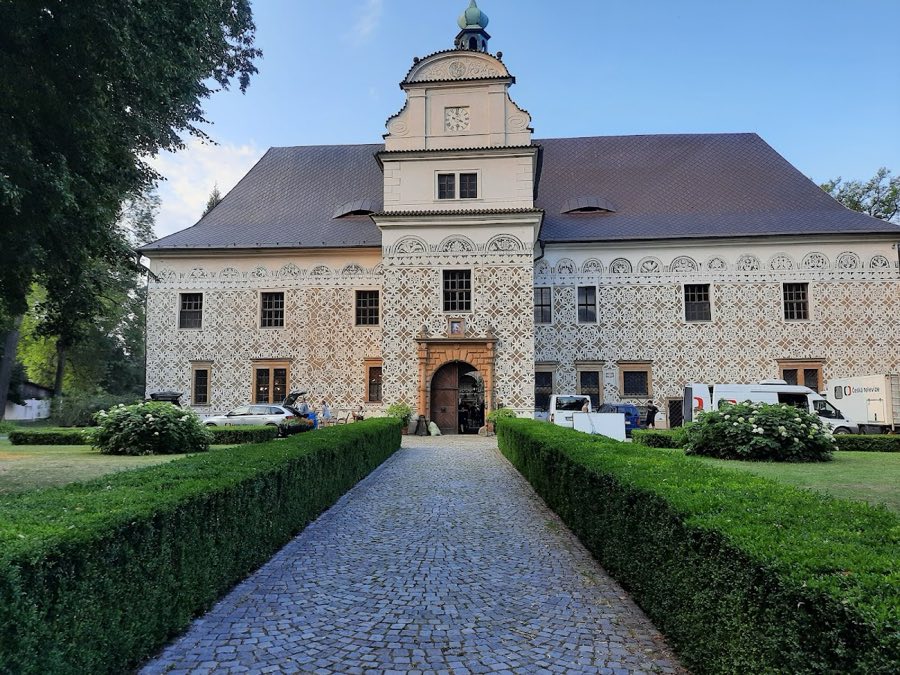
No. 54467
Doudleby Castle
Czechia
CastleRestored17th century
No. 22336
Castle · Czechia
No. 22336 · 50.166 N, 16.275 E
Quick summary
Rychnov Castle is a castle in Czechia with origins associated with the 17th century.
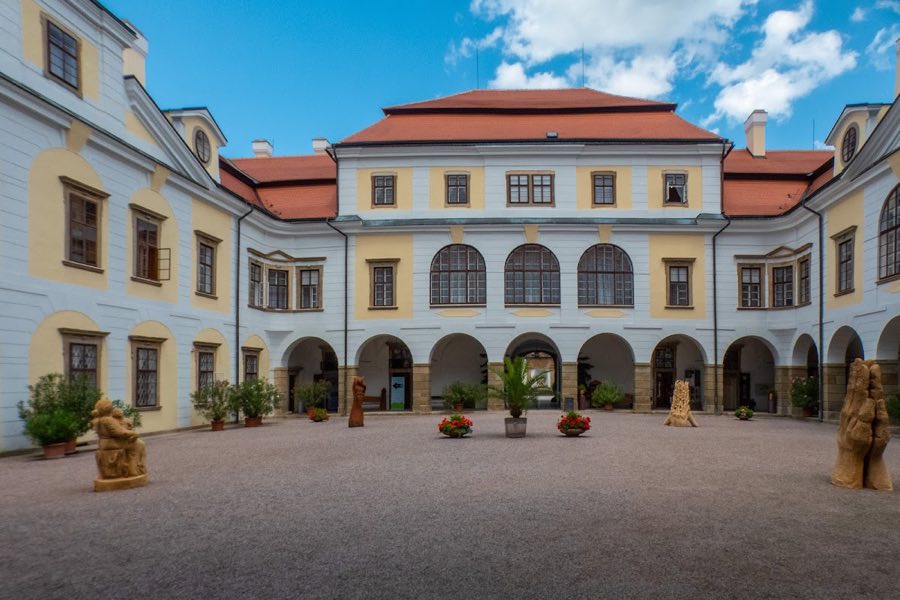
See all castles in CzechiaRychnov Castle in Rychnov nad Kněžnou, Czechia, was created by the Kolowrat noble family of the Margraviate of Moravia within the Habsburg lands, built in the late 17th century in the Baroque manner. The estate became a seat for regional administration and family representation, and over the following centuries it served as both a noble residence and a repository for an important picture collection and historic furnishings.
The estate entered Kolowrat hands in 1640, during the upheavals of the Thirty Years’ War, when the town’s population suffered religious persecution and some inhabitants were driven into emigration. A previous family stronghold in the Burjanen valley was judged unsuitable for formal reception by Karl Libštehnský von Kolowrat, who as a capable diplomat and regional governor sought a new residence that matched his office and social role.
Work on the present Baroque residence proceeded in stages. A building site was prepared in 1670 on a gentle slope beneath the Church of the Holy Trinity, but major construction did not begin until 1676. The main phase of building continued through to about 1690, producing the four-winged palace that frames two ordered courtyards and faces the Kněžna valley.
In the 18th century Count Norbert Leopold brought in the architect Jan Blažej Santini-Aichel, already engaged to modify the nearby church façade, to enlarge the residence. The later works added an extra floor to the house and provided new stables with a riding hall; these alterations were finished during that century. After the enlargement the castle housed an extensive 18th-century picture gallery of family portraits and European paintings of the 17th and 18th centuries, and the collection was later opened for public viewing.
The Kolowrat family retained ownership until the Second World War, when the German military occupation authorities confiscated the property. After 1945 the state took the castle into public ownership, and in 1948 Count Otmar Kolowrat was formally expropriated. In 1992 the estate returned to the Kolowrat family, to Count Kryštof Jaroslav Kolowrat Krakowský, along with the castle and its collections and roughly 5,000 hectares of forest and about 875 hectares of farmland and fishponds. The castle reopened in 2008. The complex, together with the surrounding park and the Church of the Holy Trinity, is protected as a national cultural monument of the Czech Republic (catalog number 1000142157).
The castle stands as a four-winged Baroque complex arranged around two successive courtyards. The inner court is framed by covered arches, an arcaded (lined with covered arches) courtyard that leads along its central axis to a second, perfectly symmetrical yard with a fountain. These paired courtyards form the heart of the building and reflect the original late 17th-century plan completed and reshaped during the 18th century.
To the north of the town’s historic core the palace occupies a gentle slope beneath the Church of the Holy Trinity, where the grounds descend toward the Kněžna valley. A perimeter wall with formal entrance gates encloses the castle park, and that walled enclosure remains an integral element of the ensemble. Within the park stands a historic Marian column topped and accompanied by statues of saints.
Service buildings survive as part of the complex. New stables and a riding hall were added in the 18th-century enlargement, and these service ranges continue to mark the courtyard sequence and support the estate’s former equestrian functions. The castle interior preserves Baroque fittings and house furnishings from the same period, and an expansive 18th-century picture gallery displays family portraits alongside European paintings dating to the 17th and 18th centuries. Other preserved interiors hold historic furniture, porcelain, collections of arms and glass, and a library containing manuscript material.
Adjacent to the palace the Church of the Holy Trinity retains an imposing bell tower that preserves the third-largest bell in the Czech Republic, a bell weighing seven tonnes. The overall complex of church, castle and park survives as a coherent historic group, with the primary rooms, collections and formal garden elements maintained and accessible following restoration and the site’s reopening in the early 21st century.
No. 54467
No. 90554
No. 35595
No. 38226
Comments
Comments for Rychnov Castle will require a verified account before posting.
We'll send a verification link before your first comment is published.