No. 31488
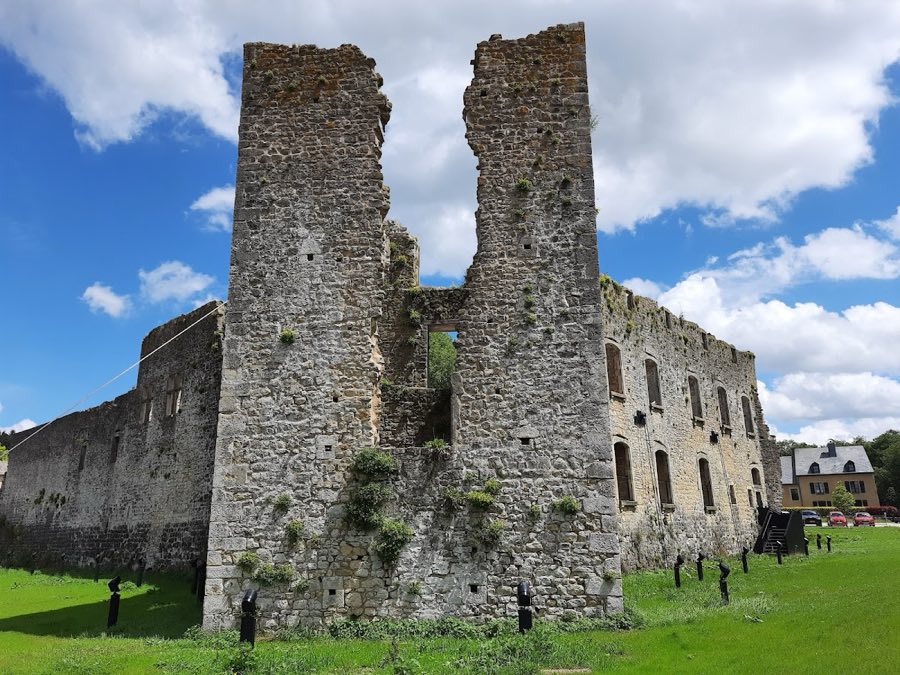
Koerich Castle
Luxembourg
CastleRuin13th century
No. 59123
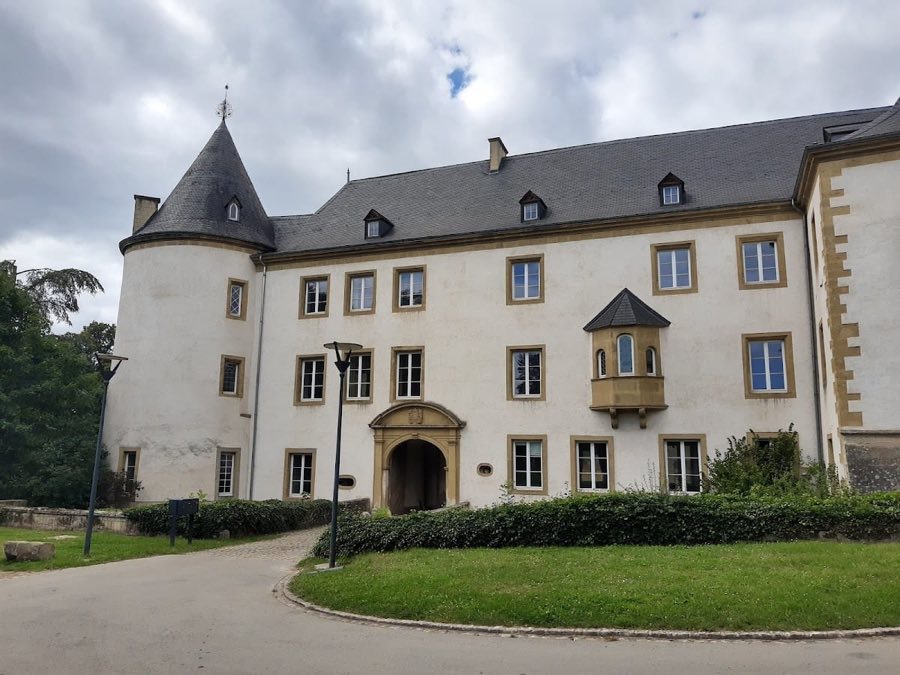
Castle · Luxembourg
No. 59123 · 49.543 N, 5.926 E
For rent
Sanem Castle is marked for bookable castle accommodation. Nightly pricing, sleeps count, stay rules, and amenities are displayed only when public operator data is available.
Rental type: Hotel / bookable stay, Short-stay rental
Short-term availability: Bookable accommodation signal
Quick summary
Sanem Castle is a castle in Luxembourg with origins associated with the 13th century.
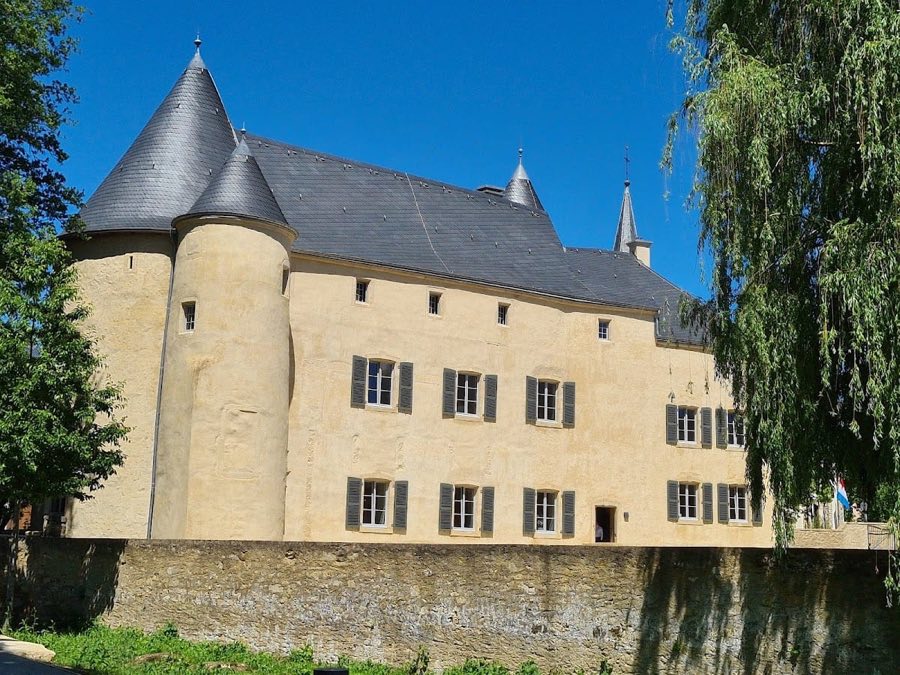
See all castles in LuxembourgSanem Castle stands in the municipality of Sanem, Luxembourg, and traces its origins back to the medieval period when it was established by European settlers in the late 13th century. Around 1270, brothers Wilhelm and Johann constructed the first fortress on the site, transforming an earlier fortified farmhouse into a water castle, an important form of stronghold surrounded by a moat.
During the 16th century, the castle underwent significant turmoil and transformation. In the 1550s, it was heavily damaged by attacks from French forces. Subsequently, around 1567, Frédéric de Hagen-Fleckenstein undertook a comprehensive rebuilding effort. He redesigned the complex in the Renaissance style, drawing inspiration from late 15th-century Italian architecture. This reconstruction introduced new buildings arranged around a large rectangular courtyard, while importantly preserving the original Gothic square tower from the medieval structure.
The 17th century saw further conflict as the castle was burned, after which it was rebuilt once more. At this time, it also served a military role, becoming occupied by Polish troops aligned with the imperial army.
Ownership shifted in the mid-18th century when, in 1753, descendants of the castle’s original lords sold the property to Baron Arnold François de Tornaco for 62,000 gulden. The Tornaco family maintained possession for approximately two centuries, with one notable figure being Victor de Tornaco, who served as Luxembourg’s prime minister from 1860 to 1867.
The castle’s role transitioned again in the 20th century. In 1950, the Tornaco heirs sold it to the municipality of Esch-sur-Alzette. It was then repurposed as a children’s home known as Kannerschlass, operating for nearly five decades. During this period, a pavilion was built in 1965 in the adjacent park to provide living quarters for the home’s director.
Recognizing its historical value, the castle, its surrounding park, and nearby chapel were designated a national monument in 1971. Ownership passed to the Luxembourg state in 1985. After the Kannerschlass service vacated the premises in 1999, extensive renovation took place, though the rear building was excluded from this work. From 2002 until 2016, the castle hosted the Centre Virtuel de la Connaissance sur l’Europe (CVCE), a center dedicated to research and documentation on European integration.
Since the late 1990s, the pavilion built in the park has been used as accommodation for asylum seekers. In 2021, new plans were announced to develop an annex of the Luxembourg Hotel School within the castle, marking the latest chapter in its long and varied history.
Sanem Castle preserves a distinctive quadrangular layout centered on a spacious rectangular courtyard. This arrangement reflects the Renaissance redesign of the 16th century, inspired by architectural traditions from late 15th-century Italy. The buildings surrounding the courtyard were erected during Frédéric de Hagen-Fleckenstein’s reconstruction, providing a cohesive Renaissance ensemble that replaced much of the medieval complex.
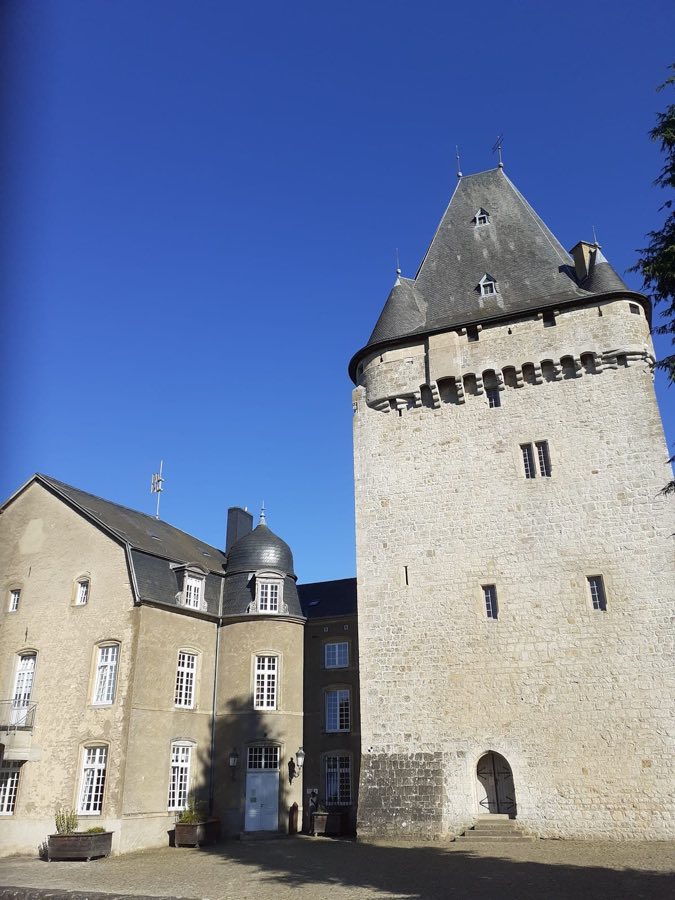
One prominent feature that remains from the original medieval fortress is the large square tower, measuring 12.5 by 12.5 meters. This Gothic tower, constructed around 1270, was integrated into later expansions and renovations, serving as a physical link between the castle’s medieval and Renaissance phases. Its sturdy form offers insight into the site’s fortified origins as a water castle protected by a moat.
While the castle originally functioned as a fully fortified stronghold complete with defensive walls and a surrounding moat, these defensive elements persist today mainly in the form of the overall quadrangular shape and the ditch encircling the complex, which recall its fortified past.
The castle is set within a landscaped park developed during the 18th century. This park features mature trees such as linden, beech, oak, and ash, extending along Escher road (CR110) and contributing to the historic atmosphere of the site. Within this park stands a pavilion built in 1965 originally to house the director of the Kannerschlass children’s home. This building now serves as housing for asylum seekers, continuing its residential function into the present era.
Since 1971, the castle together with its park and a chapel nearby have held the status of a classified national monument, ensuring their protection and preservation. Renovation efforts completed in the late 1990s restored much of the castle’s fabric, though the rear building was excluded from these works, leaving it in its previous condition. Today, the ensemble remains a well-documented testament to the site’s continuous transformation from a medieval fortress to a Renaissance residence and beyond.
No. 31488
No. 12840
No. 19285
No. 73369
Comments
Comments for Sanem Castle will require a verified account before posting.
We'll send a verification link before your first comment is published.